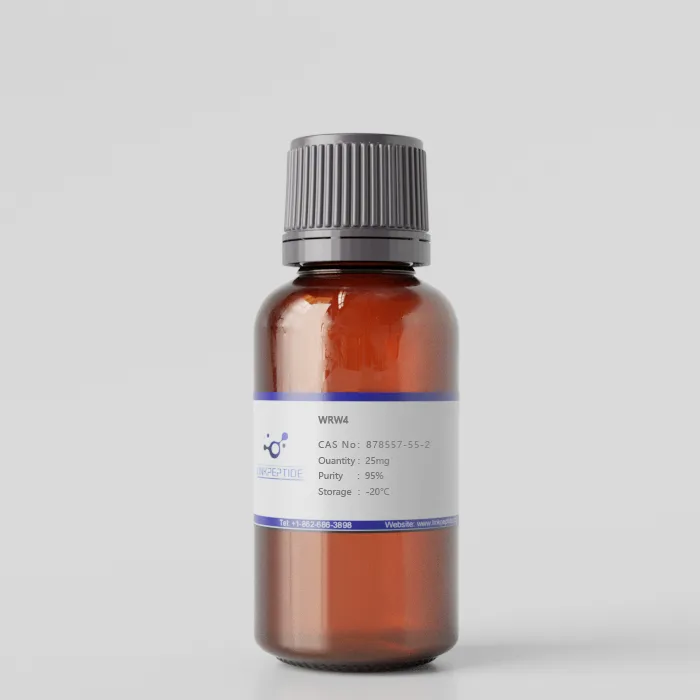
Product Name:WRW4
CAS No:878557-55-2
Purity:95%
Molar Mass:1104.28
Chemical Formula:C61H65N15O6
Storage:Store at -20 degrees Celsius
Sequence:WRWWWW
Target:selective antagonist of formyl peptide receptor 2
Application:
WRW4 is a synthetic peptide that functions as an antagonist of the formyl peptide receptor-like 1 (FPRL1), also known as ALX/FPR2, a receptor involved in inflammatory responses. WRW4 specifically inhibits the activation of this receptor, which is known to bind to various ligands, including lipoxins, serum amyloid A, and other pro-inflammatory molecules. By blocking FPRL1, WRW4 helps researchers study the role of this receptor in immune modulation, inflammation, and the resolution of inflammatory processes. This peptide is particularly useful in research focused on understanding the mechanisms of chronic inflammation, autoimmune diseases, and other conditions where FPRL1 signaling plays a critical role.
Current Research:
WRW4 (CAS: 878557-55-2) is a synthetic hexapeptide that functions as a selective antagonist of formyl peptide receptor-like 1 (FPRL1), also known as formyl peptide receptor 2 (FPR2). It inhibits the binding of the agonist WKYMVm to FPRL1 with an IC₅₀ of 0.23 μM, effectively blocking receptor activation and subsequent intracellular signaling pathways.
Mechanism of Action
WRW4 specifically binds to FPRL1, preventing the receptor's interaction with its natural agonists. This antagonistic action inhibits downstream signaling events, such as the increase in intracellular calcium levels typically induced by FPRL1 activation. WRW4 has been shown to inhibit responses elicited by various FPRL1 agonists, including MMK-1, amyloid beta42 (Aβ42) peptide, and F peptide.
Biological Activity
Inhibition of Calcium Mobilization: WRW4 effectively suppresses the rise in intracellular calcium levels triggered by FPRL1 agonists, thereby modulating cellular responses dependent on calcium signaling.
Reduction of Superoxide Generation: It inhibits Aβ42-induced superoxide production in neutrophils, indicating potential anti-inflammatory properties.
Blockade of Chemotactic Migration: WRW4 impedes the chemotactic movement of neutrophils in response to Aβ42, suggesting a role in controlling immune cell recruitment.
Prevention of Peptide Internalization: It completely inhibits the internalization of Aβ42 in human macrophages, highlighting its potential in modulating peptide uptake and processing.
Research Applications
Due to its selective antagonism of FPRL1, WRW4 is utilized in research to:
Investigate the physiological and pathological roles of FPRL1 in immune responses and inflammation.
Explore therapeutic strategies for conditions involving aberrant FPRL1 activity, such as neurodegenerative diseases and chronic inflammatory disorders.
Study the mechanisms underlying receptor-mediated signaling pathways and their modulation.
Handling and Storage
For optimal stability, WRW4 should be stored desiccated at -20°C. It is soluble in water up to 1 mg/mL, facilitating its use in various experimental protocols.
Conclusion
WRW4 serves as a potent and selective tool for modulating FPRL1-mediated signaling pathways, offering valuable insights into receptor function and potential therapeutic targets in related diseases.
Reference:
Get a Quote
 LinkPeptide