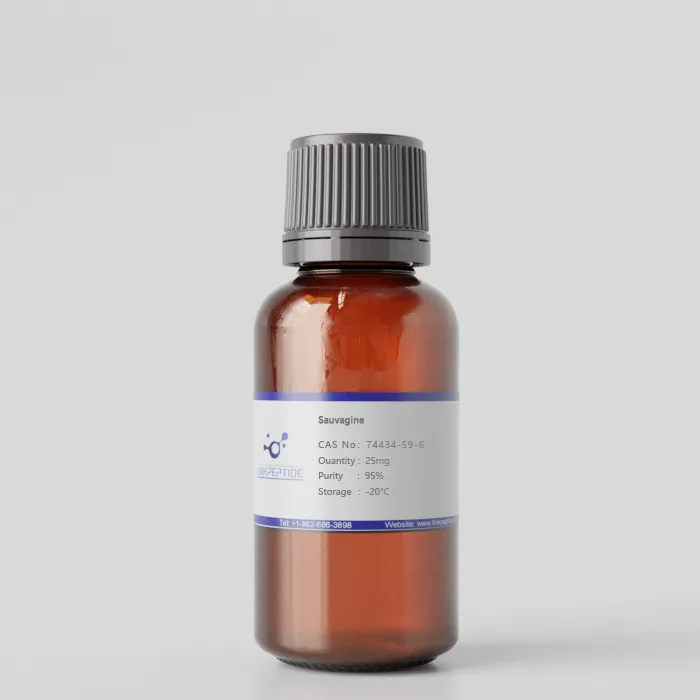
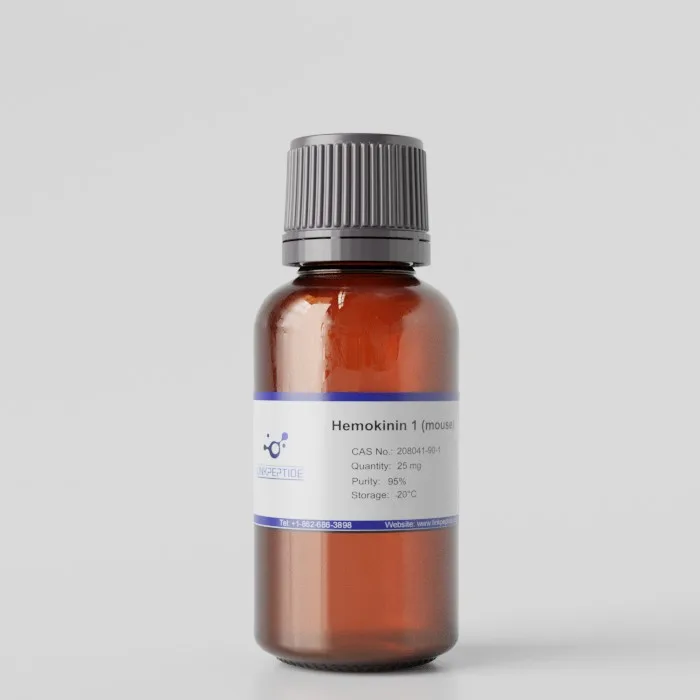
Product Name:Sauvagine
Synonyms:Sauvagin
CAS No:74434-59-6
Purity:95%
Molar Mass:4599
Chemical Formula:C202H346N56O63S
Storage:Store at -20 degrees Celsius
Sequence:XGPPISIDLSLELLRKMIEIEKQEKEKQQAANNRLLLDTI
Target:CRF
Application:
Sauvagine is a bioactive peptide known for its role as a potent vasodilator and stress response modulator. Derived from amphibian sources, this peptide acts on corticotropin-releasing factor (CRF) receptors, making it a critical tool for studying the physiological and behavioral responses to stress. Sauvagine is particularly valuable in research related to the hypothalamic-pituitary-adrenal (HPA) axis, cardiovascular regulation, and anxiety disorders. With its high purity and stability, Sauvagine ensures reliable experimental outcomes, offering researchers a robust and effective means of investigating stress-related pathways and potential therapeutic interventions.
Current Research:
Sauvagine, a 40-amino-acid neuropeptide originally isolated from the skin of the frog Phyllomedusa sauvagei, is a member of the corticotropin-releasing factor (CRF) family, which includes CRF, urocortins, and urotensin I. This peptide exhibits significant physiological effects by interacting with CRF receptors 1 and 2 (CRF1 and CRF2), as well as the CRF-binding protein.
Recent research has expanded the understanding of sauvagine's role in stress-related physiological processes. Studies have demonstrated that sauvagine can modulate cardiovascular function, leading to pronounced hypotensive effects accompanied by tachycardia. These cardiovascular responses are attributed to its interaction with CRF receptors, influencing autonomic regulation and vascular tone.
In the context of neuroendocrinology, sauvagine has been shown to inhibit the release of prolactin and thyroid-stimulating hormone, while stimulating the secretion of adrenocorticotropic hormone and ??-endorphin. These actions suggest a pivotal role in the hypothalamic-pituitary-adrenal (HPA) axis, implicating sauvagine in the modulation of stress responses and homeostasis.
The discovery of sauvagine analogs, such as PD-sauvagine from the Mexican giant leaf frog (Pachymedusa dacnicolor), has provided further insights into the structural and functional diversity within the CRF peptide family. These analogs exhibit unique primary structures and biological activities, offering valuable tools for dissecting the specific roles of CRF-related peptides in various physiological systems.
Ongoing research continues to explore the therapeutic potential of targeting CRF receptors with sauvagine and its analogs. The development of selective CRF2 receptor agonists, inspired by sauvagine's structure, holds promise for novel treatments of conditions such as skeletal muscle atrophy and stress-related disorders. These advancements underscore the importance of sauvagine as both a biological modulator and a template for drug development.
In summary, sauvagine serves as a critical component in the study of CRF-related peptides, providing profound insights into stress physiology and offering avenues for therapeutic innovation. Its multifaceted roles in cardiovascular regulation, neuroendocrine function, and receptor interaction continue to be pivotal in advancing pharmacological research and clinical applications.
Reference:
Amano, M. (2021). Sauvagine. In Handbook of Hormones (pp. 53-54). Academic Press.
Get a Quote
 LinkPeptide