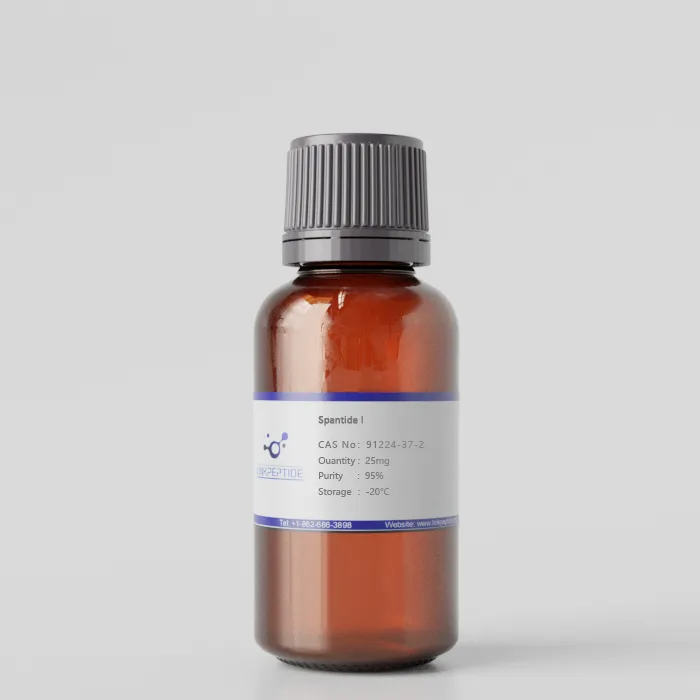
Product Name:Spantide I
Synonyms:D-ARG-PRO-LYS-PRO-GLN-GLN-D-TRP-PHE-D-TRP-LEU-LEU-NH2 HYDROCHLORIDE
CAS No:91224-37-2
Purity:95%
Molar Mass:1497.8
Chemical Formula:C75H108N20O13
Storage:Store at -20 degrees Celsius
Sequence:RPKPQQWFWLL
Target:neurokinin NK1 receptor
Application:
Spantide I is a synthetic peptide known for its role as a potent antagonist of neurokinin NK1 receptors. This peptide is particularly useful in research focused on blocking the actions of substance P, a neuropeptide involved in pain transmission, inflammation, and stress responses. Spantide I is instrumental in studies investigating the therapeutic potential of targeting NK1 receptors in conditions such as chronic pain, depression, and anxiety. With its high specificity and stability, Spantide I ensures reliable results, making it a valuable tool for researchers exploring neurokinin-related pathways and their implications in various disorders.
Current Research:
Spantide I is a synthetic peptide analog of substance P, specifically designed to function as a selective antagonist of the neurokinin-1 (NK₁) receptor. Its structure incorporates modifications, including D-arginine at position 1, D-tryptophan residues at positions 7 and 9, and leucine at position 11, enhancing its receptor affinity and stability. Binding studies have demonstrated that Spantide I exhibits a high affinity for NK₁ receptors, with a Kᵢ value of approximately 230 nM, while showing significantly lower affinity for NK₂ receptors (Kᵢ ≈ 8150 nM), indicating its selectivity.
The pharmacological profile of Spantide I has been extensively characterized in various experimental models. In vivo studies have shown that administration of Spantide I can modulate neurogenic inflammation and pain transmission by inhibiting NK₁ receptor-mediated pathways. For instance, in rodent models, Spantide I effectively attenuated responses to noxious stimuli, underscoring its potential therapeutic applications in conditions associated with excessive substance P activity.
Beyond its role in pain modulation, Spantide I has been investigated for its immunomodulatory effects. Research indicates that Spantide I can decrease the expression of pro-inflammatory cytokines, such as interferon-gamma (IFN-γ), while enhancing anti-inflammatory cytokines like interleukin-10 (IL-10). This cytokine modulation has been associated with reduced tissue damage in models of infection and inflammation. For example, in a study involving Pseudomonas aeruginosa-induced keratitis in mice, treatment with Spantide I led to a significant reduction in corneal perforation, correlating with decreased levels of type I cytokines and increased IL-10 expression.
Despite its research utility, Spantide I has been withdrawn from commercial sale by certain suppliers for unspecified reasons. Researchers interested in utilizing this compound may need to explore alternative sources or consider synthesizing the peptide independently.
In summary, Spantide I serves as a valuable tool in neuropharmacological research, offering insights into NK₁ receptor-mediated processes. Its ability to selectively inhibit NK₁ receptors has advanced the understanding of substance P's role in pain, inflammation, and immune responses, highlighting its potential in therapeutic development.
Reference:
Get a Quote
 LinkPeptide

![SCYLLATOXIN [Tyr2]-](https://www.linkpeptide.com/wp-content/uploads/2024/10/SCYLLATOXIN-Tyr2-jpg-2.webp "SCYLLATOXIN [Tyr2]-")