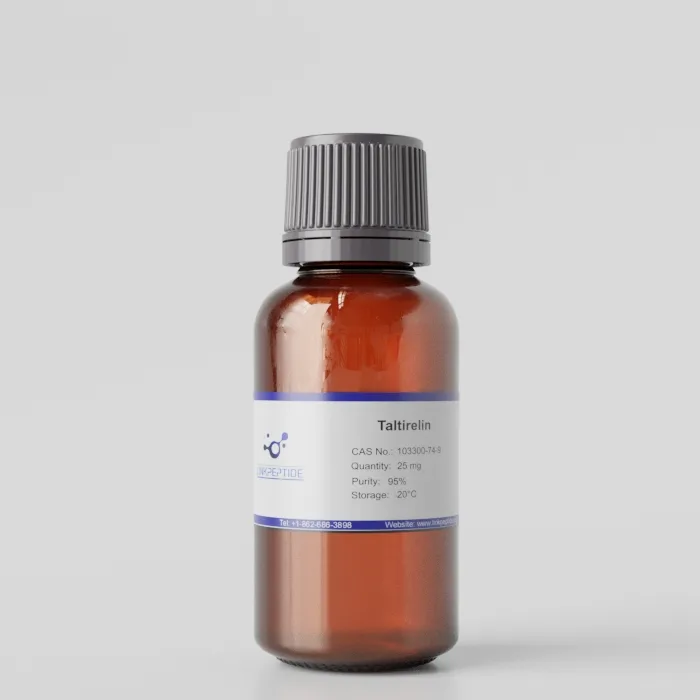
Product Name: Taltirelin
Form: Free base
CAS No: 103300-74-9
Molar Mass: 405.41
Chemical Formula: C17H23N7O5
Synonyms: TA0910
Storage: Store at -20℃
Target: thyrotropin-releasing hormone receptor
Application:
Taltirelin (CAS: 103300-74-9) is a synthetic thyrotropin-releasing hormone (TRH) analog used in the treatment of central hypothyroidism, a condition characterized by insufficient thyroid hormone production due to dysfunction of the hypothalamus or pituitary gland. It functions by binding to TRH receptors in the anterior pituitary gland, stimulating the release of thyroid-stimulating hormone (TSH), which in turn promotes the synthesis and secretion of thyroid hormones from the thyroid gland. Taltirelin helps to restore thyroid hormone levels and alleviate symptoms associated with hypothyroidism, such as fatigue, weight gain, and cold intolerance. In pharmaceutical chemistry, taltirelin's structural similarity to TRH and selective activation of TRH receptors represent a targeted approach to managing central hypothyroidism, offering a specific and effective therapeutic option for patients with this condition. Its application underscores its importance in endocrinology and improving hormonal balance in individuals with central hypothyroidism. Additionally, ongoing research explores taltirelin's potential in other endocrine disorders and its role in combination therapies, demonstrating its versatility in hormone replacement therapy.
Current Research:
Taltirelin is a synthetic thyrotropin-releasing hormone (TRH) analog that has been explored for the treatment of various thyroid-related and neurological conditions. It primarily acts as a central nervous system agent, influencing the hypothalamic-pituitary-thyroid axis and exhibiting neuroprotective properties. Taltirelin has been studied for its potential therapeutic role in treating hypothyroidism, cognitive disorders, and other neurodegenerative diseases such as spinocerebellar ataxia. By enhancing the release of thyroid-stimulating hormone (TSH) and influencing brain activity, Taltirelin has shown promise in improving neurological function and regulating thyroid hormone levels.
Mechanism of Action
Taltirelin acts as a selective TRH receptor agonist. Thyrotropin-releasing hormone (TRH) naturally stimulates the release of TSH and prolactin from the pituitary gland. By mimicking TRH's action, Taltirelin increases TSH secretion, which in turn stimulates the thyroid gland to produce thyroid hormones such as thyroxine (T4) and triiodothyronine (T3). In addition to its effects on the thyroid axis, Taltirelin has demonstrated neuroprotective effects in the central nervous system, likely through the modulation of excitatory neurotransmitter systems, reduction of oxidative stress, and protection of neuronal cells. These combined actions contribute to its potential therapeutic uses in conditions like hypothyroidism and neurodegenerative diseases.
Indications and Uses
Taltirelin is primarily studied for its potential in treating hypothyroidism, where it helps regulate thyroid hormone levels by stimulating TSH production. Additionally, it has shown therapeutic potential in treating neurological conditions such as spinocerebellar ataxia, a rare, progressive neurodegenerative disorder characterized by impaired coordination and motor function. Taltirelin's neuroprotective effects make it a candidate for addressing cognitive decline, motor dysfunction, and other symptoms associated with neurodegenerative diseases. Clinical trials have also investigated Taltirelin for conditions like Alzheimer's disease and Parkinson's disease, where it may help reduce symptoms or slow disease progression.
Efficacy and Clinical Benefits
Clinical studies have demonstrated that Taltirelin can effectively increase TSH levels and normalize thyroid hormone production in patients with hypothyroidism. In neurodegenerative conditions, Taltirelin has shown potential in improving motor function, cognitive abilities, and overall quality of life. In patients with spinocerebellar ataxia, Taltirelin has led to improvements in coordination and motor skills, offering a promising avenue for treatment. Additionally, its neuroprotective effects suggest that it may slow the progression of certain neurological diseases, particularly those associated with oxidative stress and neuronal damage. However, further research is needed to fully understand its efficacy in broader neurodegenerative conditions.
Safety and Tolerability
Taltirelin has been generally well tolerated in clinical trials, with side effects typically being mild and transient. The most commonly reported adverse effects include headache, dizziness, and mild gastrointestinal discomfort. These side effects are generally manageable and tend to resolve as the body adjusts to the treatment. Given its action on the thyroid axis, patients receiving Taltirelin may need to be monitored for any changes in thyroid function, although the drug's impact on thyroid hormone levels is typically well-controlled. Serious adverse effects are rare, but as with any drug that influences the endocrine system, caution should be exercised in patients with thyroid disorders or those on other thyroid medications.
Advantages and Limitations
Taltirelin offers several advantages, including its dual action on the thyroid axis and the central nervous system. Its ability to regulate thyroid hormone production while potentially providing neuroprotective effects makes it an attractive option for conditions that involve both metabolic and neurological dysfunction. Furthermore, Taltirelin’s action on the brain may offer a novel approach to treating neurodegenerative diseases that currently lack effective therapies. However, the drug's full clinical potential remains under investigation, and its use may be limited to certain patient populations, particularly those with hypothyroidism or specific neurological conditions. Long-term safety and efficacy data are needed to confirm its place in the therapeutic landscape for chronic diseases.
Future Directions
Ongoing research is focused on exploring the broader applications of Taltirelin in treating neurodegenerative diseases such as Alzheimer's disease, Parkinson's disease, and Huntington's disease. Researchers are investigating how Taltirelin's neuroprotective properties can be optimized to slow the progression of these diseases and improve patients' cognitive and motor functions. Additionally, Taltirelin may have potential applications in other thyroid-related disorders and in improving overall brain health, particularly in aging populations. Studies are also examining whether combining Taltirelin with other neuroprotective agents could enhance its therapeutic effects in neurodegenerative diseases. Future clinical trials will help define the optimal dosing regimens and long-term benefits of Taltirelin for these conditions.
Reference:
Get a Quote


 LinkPeptide