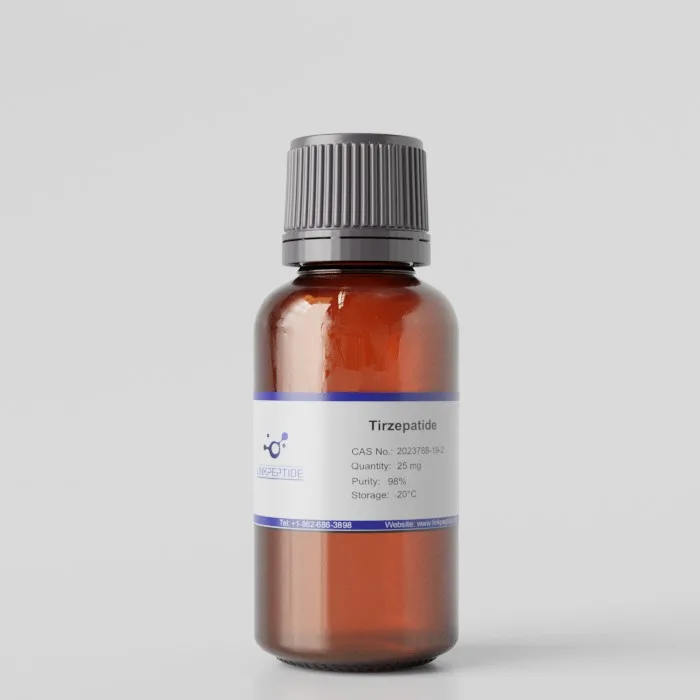
Product Name: Taspoglutide
Form: Acetate salt
CAS No: 275371-94-3
Molar Mass: 3339.71
Chemical Formula: C152H232N40O45
Synonyms: DB14027, ITM077
Storage: Store at -20℃
Sequence: HXEGTFTSDVSSYLEGQAAKEFIAWLVKXR
Target: GLP-1 RA
Application:
Taspoglutide (CAS: 275371-94-3) is a long-acting glucagon-like peptide-1 (GLP-1) receptor agonist developed for the treatment of type 2 diabetes mellitus. As a GLP-1 receptor agonist, taspoglutide mimics the action of the endogenous hormone GLP-1, which is involved in regulating glucose homeostasis by stimulating insulin secretion, inhibiting glucagon release, slowing gastric emptying, and promoting satiety. By activating GLP-1 receptors, taspoglutide helps lower blood glucose levels, improve glycemic control, and reduce the risk of hyperglycemia in patients with type 2 diabetes. Taspoglutide is designed to have an extended duration of action, allowing for once-weekly dosing, which may improve patient adherence to treatment regimens. Clinical trials have demonstrated the efficacy of taspoglutide in reducing hemoglobin A1c levels and promoting weight loss in patients with type 2 diabetes, with a favorable safety profile.
Current Research:
Taspoglutide is a novel glucagon-like peptide-1 (GLP-1) receptor agonist, developed as a treatment for type 2 diabetes mellitus (T2DM). It belongs to a class of medications that mimic the action of GLP-1, a natural hormone involved in regulating blood glucose levels, enhancing insulin secretion, and promoting satiety. Taspoglutide’s unique feature is its extended half-life, allowing for less frequent dosing compared to earlier GLP-1 agonists, making it an attractive option for patients with diabetes who require more convenient therapies for long-term management.
Mechanism of Action
GLP-1 is a hormone secreted by the intestines in response to food intake. It has several key effects on glucose metabolism:
Enhances insulin secretion: GLP-1 stimulates the pancreas to release insulin in a glucose-dependent manner, meaning that insulin is released only when blood glucose levels are elevated, reducing the risk of hypoglycemia.
Suppresses glucagon release: Glucagon is a hormone that typically raises blood glucose levels by stimulating glucose production in the liver. GLP-1 reduces glucagon secretion, helping to lower blood glucose levels.
Delays gastric emptying: By slowing down the movement of food from the stomach to the small intestine, GLP-1 promotes feelings of fullness (satiety) and reduces postprandial (after-meal) blood glucose spikes.
Promotes weight loss: The appetite-suppressing effects of GLP-1 contribute to modest weight loss, a significant benefit for people with type 2 diabetes, as weight reduction is often a key part of managing the disease.
Taspoglutide works by activating the GLP-1 receptor, producing these effects. Its extended half-life—achieved through modifications to the GLP-1 peptide—allows for less frequent administration (typically once-weekly) compared to other GLP-1 agonists like liraglutide or exenatide, which require daily or twice-weekly dosing. This long-acting feature enhances patient adherence to treatment regimens.
Current Research and Development
Taspoglutide is currently undergoing clinical trials for its efficacy and safety in the management of type 2 diabetes. Several key studies have demonstrated its ability to significantly reduce hemoglobin A1c (HbA1c) levels, a marker of long-term blood glucose control. In addition to improving glycemic control, taspoglutide has also been shown to promote weight loss and reduce systolic blood pressure in patients with T2DM—important benefits for many individuals with diabetes who often experience co-morbidities like obesity and hypertension.
The Phase 3 trials of taspoglutide are particularly focused on comparing its efficacy and safety with existing GLP-1 receptor agonists like semaglutide and liraglutide, both of which have established their role in diabetes treatment. Early results have indicated that taspoglutide provides similar or superior glucose-lowering effects with the added benefit of once-weekly dosing, which could offer better patient convenience and adherence.
In addition to its use in T2DM, there is ongoing exploration of taspoglutide in the treatment of cardiovascular risk in diabetic patients. Cardiovascular disease is a major complication of diabetes, and drugs that can improve both glycemic control and cardiovascular health are in high demand. Taspoglutide’s potential to lower blood pressure, promote weight loss, and reduce the risk of cardiovascular events makes it an attractive candidate in this context.
Advantages Over Other GLP-1 Agonists
The primary advantage of taspoglutide over earlier GLP-1 agonists lies in its longer half-life, which enables once-weekly administration. This longer duration of action means fewer injections and greater convenience for patients, which can lead to improved adherence and more consistent treatment outcomes.
Another potential advantage is its efficacy in weight loss. Weight management is an important part of T2DM treatment, and many GLP-1 agonists have shown benefits in promoting weight loss. Taspoglutide’s weight-reducing effects, combined with its glucose-lowering capabilities, may make it particularly effective in treating overweight or obese patients with diabetes—who represent a significant portion of the diabetic population.
Taspoglutide also has potential cardiovascular benefits, with research suggesting that it may reduce blood pressure and improve markers of heart health. As many people with diabetes are at increased risk for cardiovascular diseases, taspoglutide could offer additional protective benefits in this regard, setting it apart from other treatments.
Safety and Tolerability
In clinical studies, taspoglutide has generally been well tolerated. The most common side effects reported for GLP-1 agonists include gastrointestinal symptoms, such as nausea, vomiting, and diarrhea, especially during the initiation of therapy. These side effects typically subside over time as the body adjusts to the medication.
Serious side effects, although rare, can include pancreatitis and gallbladder disease. However, these risks are common across the GLP-1 class and are typically manageable with appropriate monitoring.
Because taspoglutide’s long-acting formulation allows for less frequent dosing, it may reduce the incidence of dose-dependent side effects often seen with shorter-acting GLP-1 agonists.
Future Directions
Beyond its primary application in type 2 diabetes, taspoglutide is being investigated for use in cardiovascular and renal outcomes. The CVD-REAL studies, which have looked at the effects of GLP-1 agonists on heart disease in diabetes, have shown that these medications can reduce major adverse cardiovascular events (MACE), making taspoglutide an interesting candidate for improving cardiovascular risk profiles in diabetic patients.
Additionally, there is growing interest in using GLP-1 receptor agonists like taspoglutide in the prevention of type 2 diabetes in high-risk populations, such as those with prediabetes or metabolic syndrome. The role of GLP-1 agonists in improving insulin sensitivity and reducing the risk of diabetes progression is an area of ongoing research.
Conclusion
Taspoglutide is a promising long-acting GLP-1 receptor agonist that offers significant potential in the management of type 2 diabetes. Its extended half-life allows for once-weekly administration, which improves patient adherence and simplifies treatment regimens. Clinical studies have shown that it effectively lowers blood glucose levels, promotes weight loss, and provides potential cardiovascular benefits, making it a strong contender in the diabetes treatment landscape. Ongoing research will likely further define its place in therapy, especially in cardiovascular and renal outcomes.
Reference:
Get a Quote
 LinkPeptide