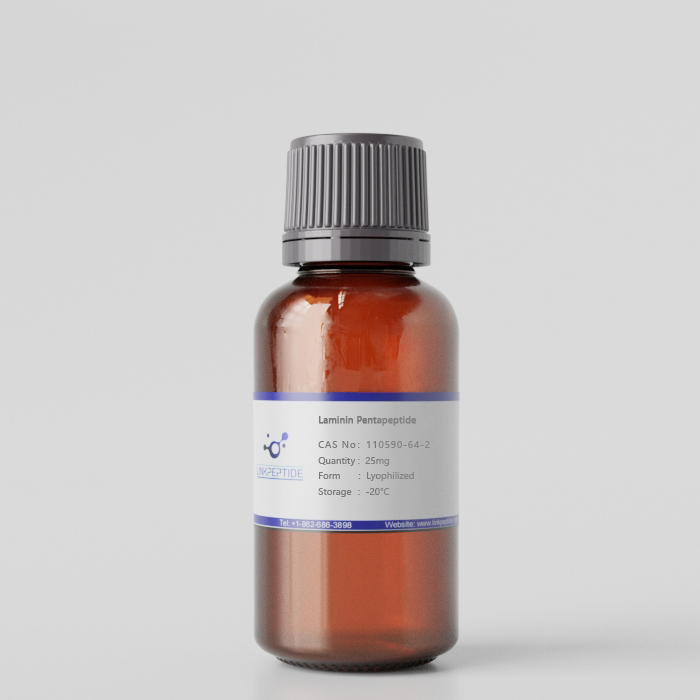
Product Name:Tripeptide-29
Cas No:2239-67-0
Purity:95%
Chemical Formula:C12H19N3O5
Molar Mass:285.3
Synonyms:H-Gly-Pro-Hyp-OH; 2239-67-0; Glycylprolylhydroxyproline; Tripeptide-29
IUPAC Name:(2S,4R)-1-[(2S)-1-(2-aminoacetyl)pyrrolidine-2-carbonyl]-4-hydroxypyrrolidine-2-carboxylic acid
SMILES:C1C[C@H](N(C1)C(=O)CN)C(=O)N2C[C@@H](C[C@H]2C(=O)O)O
InChIKey:SZEOBSAZWJLOGY-VGMNWLOBSA-N
InChI:InChI=1S/C12H19N3O5/c13-5-10(17)14-3-1-2-8(14)11(18)15-6-7(16)4-9(15)12(19)20/h7-9,16H,1-6,13H2,(H,19,20)/t7-,8+,9+/m1/s1
Storage:-20 degree Celsius
Sequence:GPX
Application:Tripeptide-29 is a synthetic peptide composed of three amino acids (Gly–Pro–Hyp), designed to mimic fragments of collagen type I. It functions as a collagen-signaling molecule, stimulating dermal fibroblasts to increase collagen synthesis, thereby improving skin elasticity, firmness, and texture. Tripeptide-29 also supports wound healing and extracellular matrix (ECM) renewal, making it ideal for use in anti-aging skincare, scar repair, and post-procedure recovery products. It is well-tolerated, non-irritating, and can be formulated into creams, serums, and hydrogels to help reduce wrinkles, fine lines, and other signs of cutaneous aging.
Current Research:
Introduction: What Is Tripeptide-29?
Tripeptide-29 is a synthetic signal peptide composed of the amino acid sequence glycine–proline–hydroxyproline (Gly–Pro–Hyp). This tripeptide mimics naturally occurring fragments of collagen, particularly collagen type I, the most abundant structural protein in the dermis. When applied to the skin, Tripeptide-29 acts as a biomimetic signal, stimulating dermal fibroblasts to increase their production of new collagen, thereby promoting skin repair and rejuvenation.
This peptide is widely researched in the context of cosmetic dermatology, anti-aging treatments, and scar reduction protocols, thanks to its ability to promote extracellular matrix renewal and support structural skin integrity.
Mechanism of Action: Collagen Stimulation and ECM Remodeling
Tripeptide-29 interacts with fibroblast receptors in the dermal layer, triggering signaling pathways that:
Stimulate type I collagen production
Promote synthesis of fibronectin and elastin
Reduce degradation of structural proteins by downregulating matrix metalloproteinases (MMPs)
Enhance wound closure and re-epithelialization
The presence of hydroxyproline, a key amino acid found in native collagen, makes Tripeptide-29 particularly effective in mimicking collagen breakdown products, which naturally serve as feedback signals for tissue repair and remodeling.
Applications in Anti-Aging and Skin Firmness
Aging skin shows a progressive decline in collagen density, leading to:
Wrinkles and fine lines
Loss of elasticity
Thinning of the dermis
Tripeptide-29 addresses these changes by:
Increasing collagen fiber density
Improving skin hydration and plumpness
Reducing surface roughness and wrinkle depth
Supporting skin tensile strength
In clinical and ex vivo skin models, topical application of Tripeptide-29 has demonstrated visible improvements in skin texture and firmness after several weeks of regular use.
Wound Healing and Scar Support
Tripeptide-29 plays a supportive role in wound healing by:
Enhancing fibroblast proliferation
Stimulating new collagen formation in wound beds
Promoting balanced ECM deposition, reducing risk of hypertrophic scarring
Aiding in post-laser or microneedling recovery
Because it does not cause inflammation or irritation, it is suitable for sensitive or compromised skin, including post-treatment regimens or chronic wound care research.
Formulation and Cosmetic Use
Tripeptide-29 is water-soluble and compatible with a wide range of pH conditions and formulation types, including:
Moisturizers
Anti-aging serums
Eye contour creams
Sheet masks and peptide-enriched gels
Recommended concentrations range from 0.5% to 2%, depending on desired activity and formulation goals. It is often used alongside hyaluronic acid, niacinamide, or vitamin C to enhance its effects on skin tone, hydration, and collagen remodeling.
Safety and Tolerability
Tripeptide-29 is:
Non-toxic and non-sensitizing
Suitable for daily, long-term use
Effective in both young and mature skin
Compatible with sensitive skin types and post-treatment applications
Its stability and biocompatibility make it a favored ingredient in clean-label and advanced cosmetic formulations.
Conclusion
Tripeptide-29 is a highly effective collagen-boosting peptide that mimics the body’s own signaling molecules to enhance skin regeneration, elasticity, and texture. Its excellent tolerability, stability, and proven bioactivity make it a valuable component of modern anti-aging and skin-repair strategies, with broad applications in cosmeceutical science and dermal health research.
Reference:
Get a Quote
 LinkPeptide

![Cyclo-[GRGESP]](https://www.linkpeptide.com/wp-content/uploads/2026/05/Cyclo-GRGESP.jpg "Cyclo-[GRGESP]")