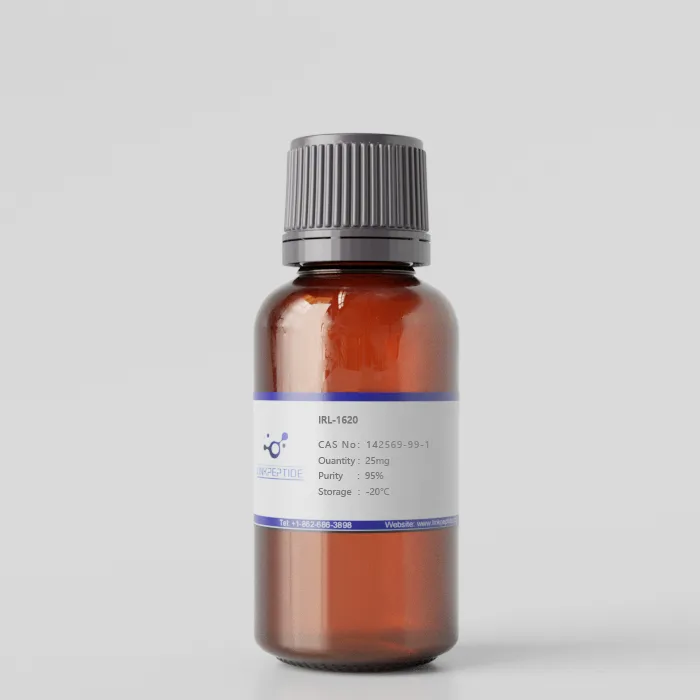
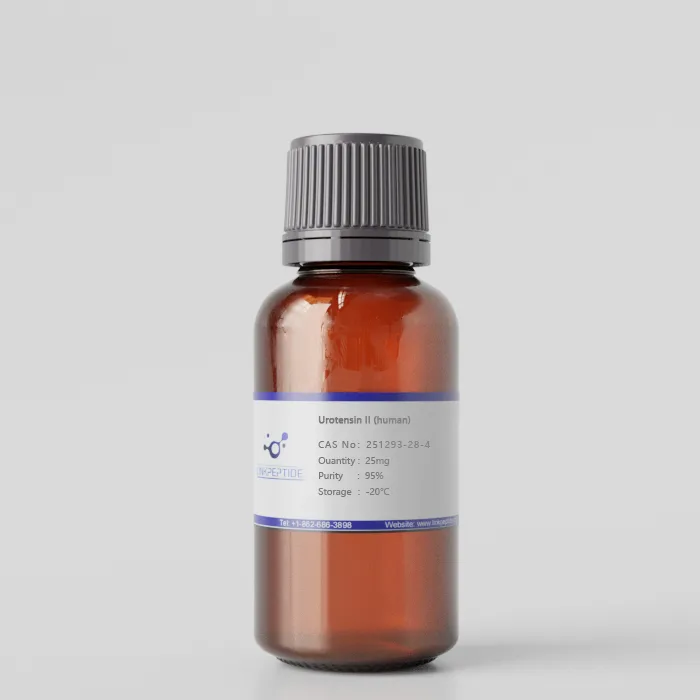
Product Name:Urotensin II (human)
CAT No:P200319
CAS No:251293-28-4
Purity:95%
Molar Mass:1448.6
Chemical Formula:C66H89N13O20S2
Storage:Store at -20 degrees Celsius
Sequence:ETPDCFWKYCV
Application:
Urotensin II (human) is a powerful vasoactive peptide, recognized for its role in modulating cardiovascular functions. As an endogenous ligand for the G-protein-coupled receptor UT, this peptide is pivotal in studies exploring vascular tone, cardiac function, and blood pressure regulation. Urotensin II (human) is especially relevant in research focused on hypertension, heart failure, and vascular disease. Its high purity and consistent biological activity ensure accurate and reproducible results, making it an essential tool for researchers investigating the complex mechanisms of cardiovascular health and potential therapeutic targets.
Current Research:
Urotensin II (UII) is an 11-amino-acid cyclic peptide recognized as one of the most potent endogenous vasoconstrictors. It exerts its effects through the urotensin II receptor (UT), a G-protein-coupled receptor that activates intracellular signaling pathways, including phospholipase C and protein kinase C, leading to increased intracellular calcium levels and subsequent smooth muscle contraction.
UII and its receptor are expressed in various human tissues, notably within the cardiovascular system, kidneys, and central nervous system. This widespread distribution suggests a multifaceted role in physiological processes such as vascular tone regulation, cardiac function, and possibly central nervous system activities.
Elevated plasma levels of UII have been observed in several pathological conditions, including heart failure, renal dysfunction, diabetes mellitus, and hypertension. These associations indicate that UII may contribute to the pathophysiology of these diseases, particularly through its vasoconstrictive properties and potential pro-fibrotic effects.
Recent research has focused on mapping the UII/UT signaling network, revealing its involvement in various cellular events such as activation/inhibition, catalysis, molecular associations, gene regulation, protein expression, and translocation. Key downstream pathways include RhoA/ROCK, MAPKs, and PI3K/AKT, which are implicated in processes like cell proliferation, migration, and inflammation.
The development of UT receptor antagonists, such as palosuran, has provided insights into the therapeutic potential of modulating the UII system. Clinical studies have shown that UT receptor antagonism can reduce albumin excretion in diabetic patients with macroalbuminuria, likely by enhancing renal blood flow. These findings suggest that targeting the UII/UT pathway could be beneficial in treating conditions like diabetic nephropathy and other cardiovascular diseases.
In summary, Urotensin II plays a significant role in cardiovascular regulation and disease. Ongoing research into its signaling mechanisms and interactions continues to uncover its complex involvement in health and disease, highlighting its potential as a therapeutic target.
Reference:
Get a Quote
 LinkPeptide

![[Orn5]-URP](https://www.linkpeptide.com/wp-content/uploads/2024/10/Orn5-URP-jpg-3.webp "[Orn5]-URP")