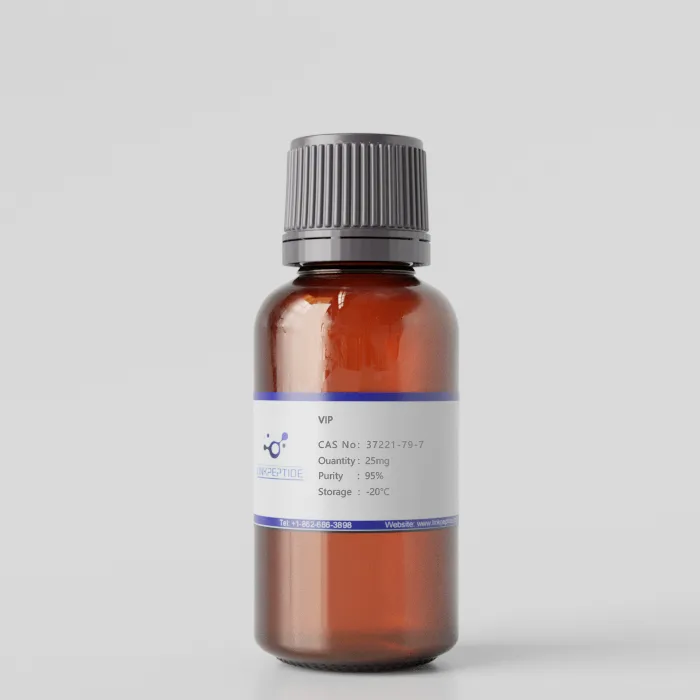
Product Name:VIP
Cas No:37221-79-7
Purity:95%
Chemical Formula:C147H237N43O43S
Molar Mass:3326.8
Synonyms:VASOACTIVE INTESTINAL PEPTIDE; 37221-79-7; UNII-6J2WVD66KR
IUPAC Name:(2S)-4-amino-2-[[(2S)-2-[[(2S,3S)-2-[[(2S)-2-[[(2S)-4-amino-2-[[(2S)-2-[[(2S)-2-[[(2S)-6-amino-2-[[(2S)-6-amino-2-[[(2S)-2-[[(2S)-2-[[(2S)-2-[[(2S)-5-amino-2-[[(2S)-6-amino-2-[[(2S)-2-[[(2S)-2-[[(2S)-2-[[(2S,3R)-2-[[(2S)-2-[[(2S)-4-amino-2-[[(2S)-2-[[(2S,3R)-2-[[(2S)-2-[[(2S)-2-[[(2S)-2-[[(2S)-2-[[(2S)-2-[[(2S)-2-amino-3-(1H-imidazol-4-yl)propanoyl]amino]-3-hydroxypropanoyl]amino]-3-carboxypropanoyl]amino]propanoyl]amino]-3-methylbutanoyl]amino]-3-phenylpropanoyl]amino]-3-hydroxybutanoyl]amino]-3-carboxypropanoyl]amino]-4-oxobutanoyl]amino]-3-(4-hydroxyphenyl)propanoyl]amino]-3-hydroxybutanoyl]amino]-5-carbamimidamidopentanoyl]amino]-4-methylpentanoyl]amino]-5-carbamimidamidopentanoyl]amino]hexanoyl]amino]-5-oxopentanoyl]amino]-4-methylsulfanylbutanoyl]amino]propanoyl]amino]-3-methylbutanoyl]amino]hexanoyl]amino]hexanoyl]amino]-3-(4-hydroxyphenyl)propanoyl]amino]-4-methylpentanoyl]amino]-4-oxobutanoyl]amino]-3-hydroxypropanoyl]amino]-3-methylpentanoyl]amino]-4-methylpentanoyl]amino]-4-oxobutanoic acid
SMILES:CC[C@H](C)[C@@H](C(=O)N[C@@H](CC(C)C)C(=O)N[C@@H](CC(=O)N)C(=O)O)NC(=O)[C@H](CO)NC(=O)[C@H](CC(=O)N)NC(=O)[C@H](CC(C)C)NC(=O)[C@H](CC1=CC=C(C=C1)O)NC(=O)[C@H](CCCCN)NC(=O)[C@H](CCCCN)NC(=O)[C@H](C(C)C)NC(=O)[C@H](C)NC(=O)[C@H](CCSC)NC(=O)[C@H](CCC(=O)N)NC(=O)[C@H](CCCCN)NC(=O)[C@H](CCCNC(=N)N)NC(=O)[C@H](CC(C)C)NC(=O)[C@H](CCCNC(=N)N)NC(=O)[C@H]([C@@H](C)O)NC(=O)[C@H](CC2=CC=C(C=C2)O)NC(=O)[C@H](CC(=O)N)NC(=O)[C@H](CC(=O)O)NC(=O)[C@H]([C@@H](C)O)NC(=O)[C@H](CC3=CC=CC=C3)NC(=O)[C@H](C(C)C)NC(=O)[C@H](C)NC(=O)[C@H](CC(=O)O)NC(=O)[C@H](CO)NC(=O)[C@H](CC4=CNC=N4)N
InChIKey:VBUWHHLIZKOSMS-RIWXPGAOSA-N
InChI:InChI=1S/C147H237N43O43S/c1-18-75(12)115(142(229)180-96(56-72(6)7)131(218)183-104(145(232)233)63-110(155)200)188-139(226)106(68-192)185-134(221)101(62-109(154)199)177-130(217)95(55-71(4)5)174-132(219)97(58-81-37-41-84(195)42-38-81)175-125(212)88(33-23-26-49-149)167-123(210)89(34-24-27-50-150)171-140(227)113(73(8)9)186-118(205)76(13)164-121(208)93(47-53-234-17)170-127(214)92(45-46-107(152)197)169-122(209)87(32-22-25-48-148)166-124(211)90(35-28-51-161-146(156)157)168-129(216)94(54-70(2)3)173-126(213)91(36-29-52-162-147(158)159)172-143(230)116(78(15)193)189-136(223)98(59-82-39-43-85(196)44-40-82)176-133(220)100(61-108(153)198)178-135(222)103(65-112(203)204)182-144(231)117(79(16)194)190-137(224)99(57-80-30-20-19-21-31-80)181-141(228)114(74(10)11)187-119(206)77(14)165-128(215)102(64-111(201)202)179-138(225)105(67-191)184-120(207)86(151)60-83-66-160-69-163-83/h19-21,30-31,37-44,66,69-79,86-106,113-117,191-196H,18,22-29,32-36,45-65,67-68,148-151H2,1-17H3,(H2,152,197)(H2,153,198)(H2,154,199)(H2,155,200)(H,160,163)(H,164,208)(H,165,215)(H,166,211)(H,167,210)(H,168,216)(H,169,209)(H,170,214)(H,171,227)(H,172,230)(H,173,213)(H,174,219)(H,175,212)(H,176,220)(H,177,217)(H,178,222)(H,179,225)(H,180,229)(H,181,228)(H,182,231)(H,183,218)(H,184,207)(H,185,221)(H,186,205)(H,187,206)(H,188,226)(H,189,223)(H,190,224)(H,201,202)(H,203,204)(H,232,233)(H4,156,157,161)(H4,158,159,162)/t75-,76-,77-,78+,79+,86-,87-,88-,89-,90-,91-,92-,93-,94-,95-,96-,97-,98-,99-,100-,101-,102-,103-,104-,105-,106-,113-,114-,115-,116-,117-/m0/s1
Storage:-20 degree Celsius
Sequence:HSDAVFTDNYTRLRKQMAVKKYLNSILN
Application:Vasoactive Intestinal Peptide (VIP) is a 28-amino acid neuropeptide and hormone widely expressed in the central and peripheral nervous systems, as well as in the gastrointestinal tract, lungs, and immune tissues. VIP plays crucial roles in vasodilation, smooth muscle relaxation, circadian rhythm regulation, and anti-inflammatory immune signaling. It acts through VPAC1 and VPAC2 receptors to modulate cytokine production, T-cell responses, and neuroendocrine balance. VIP is a key molecule in studies of autoimmune disorders, asthma, neurodegeneration, IBD, and cardiopulmonary function, offering a broad-spectrum, endogenous regulatory mechanism for immune homeostasis and tissue protection.
Current Research:Introduction: What Is VIP?
Vasoactive Intestinal Peptide (VIP) is a highly conserved neuropeptide composed of 28 amino acids, first identified in the gut but now known to be distributed widely in the nervous, immune, endocrine, and cardiovascular systems. VIP functions both as a neurotransmitter and neurohormone, playing pivotal roles in smooth muscle regulation, vasodilation, immunomodulation, and neuronal signaling.
It is primarily synthesized by parasympathetic neurons, including those in the enteric nervous system, and exerts its effects via VPAC1 and VPAC2 receptors, which are G protein-coupled receptors expressed in a wide array of tissues.
Mechanism of Action: Receptor Signaling and Gene Modulation
VIP acts through VPAC1 and VPAC2 receptors to initiate cyclic AMP (cAMP)-dependent signaling pathways, which regulate numerous physiological processes. VIP binding activates:
Adenylyl cyclase, increasing intracellular cAMP
Protein kinase A (PKA) activation
Downstream transcription factors like CREB, influencing gene expression
Through these signaling cascades, VIP modulates:
Cytokine secretion
Smooth muscle tone
Neurotransmitter release
Cell survival and apoptosis
Its pleiotropic nature allows it to influence diverse physiological domains, including immune balance, vascular tone, and neuroendocrine regulation.
Immunomodulatory Effects
VIP is a potent anti-inflammatory and immunoregulatory peptide, known to:
Inhibit pro-inflammatory cytokines such as TNF-α, IL-1β, IL-6
Promote anti-inflammatory cytokines like IL-10
Induce differentiation of regulatory T cells (Tregs)
Suppress Th1 and Th17 responses, which are implicated in autoimmunity
These actions have positioned VIP as a therapeutic target in autoimmune diseases such as:
Rheumatoid arthritis
Multiple sclerosis
Inflammatory bowel disease (IBD)
Type 1 diabetes
Its ability to rebalance immune tone without broad immunosuppression is a major advantage in peptide immunotherapy.
Neuroprotective and Neurological Roles
In the central nervous system, VIP contributes to:
Neuronal survival and plasticity
Regulation of circadian rhythms via the suprachiasmatic nucleus (SCN)
Modulation of cognition, learning, and behavior
Reduction of oxidative stress and excitotoxicity
It has shown promise in models of:
Alzheimer’s disease
Parkinson’s disease
Amyotrophic lateral sclerosis (ALS)
Epilepsy and stroke recovery
VIP protects neurons through anti-apoptotic signaling, modulation of glial cell activation, and enhancement of cerebral blood flow.
Pulmonary and Cardiovascular Applications
VIP is also a potent vasodilator and bronchodilator, acting on vascular and airway smooth muscle. In pulmonary research, it has shown value in:
Asthma and COPD, by relaxing bronchial smooth muscle and reducing airway inflammation
Pulmonary arterial hypertension (PAH), by decreasing vascular resistance and improving perfusion
Enhancing microcirculation and cardiovascular resilience under hypoxic stress
Its role in systemic vascular tone regulation makes it a candidate for managing vascular inflammation, hypertension, and ischemic events.
Gastrointestinal and Endocrine Functions
Originally isolated from the gut, VIP regulates:
Gastrointestinal motility
Secretion of digestive enzymes and bicarbonate
Inhibition of gastric acid secretion
Pancreatic endocrine balance, including stimulation of insulin release
VIP contributes to maintaining gut epithelial integrity, modulating enteric inflammation, and supporting gut-brain communication.
Conclusion
Vasoactive Intestinal Peptide (VIP) is a multifunctional regulatory peptide with far-reaching effects across the immune, nervous, cardiovascular, and gastrointestinal systems. Its ability to promote anti-inflammatory signaling, protect neurons, and regulate smooth muscle and endocrine function makes it a key target in regenerative medicine, immunotherapy, and neuroendocrinology. As a natural, endogenous peptide, VIP offers broad therapeutic potential for restoring homeostasis and resilience in complex disease states.
Reference:
Get a Quote
 LinkPeptide