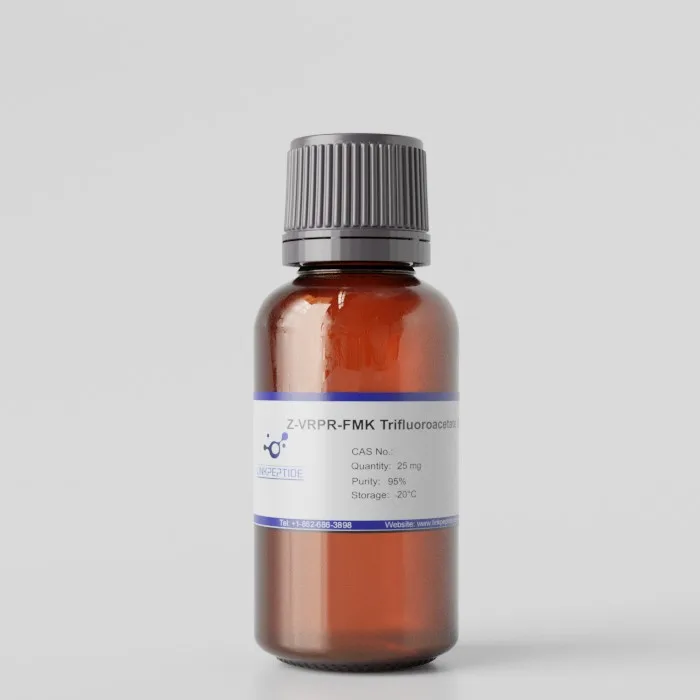
Product Name: Z-VRPR-FMK trifluoroacetate salt
Purity: 95%
Molar Mass: 676.8
Chemical Formula: C31H49FN10O6.xCF3CO2H
Storage: Store at -20 degrees Celsius
Sequence: VRPR
Target: MALT1 inhibitor
Application: Z-VRPR-FMK trifluoroacetate salt is a synthetic peptide inhibitor designed to irreversibly bind to caspase-3, an important enzyme involved in apoptosis (programmed cell death). The "Z" prefix indicates the N-terminal benzyloxycarbonyl protecting group, which enhances cell permeability. By covalently binding to the active site of caspase-3, Z-VRPR-FMK trifluoroacetate salt inhibits its activity, thereby blocking the apoptotic process. This peptide is widely used in cell biology and pharmacological research to study apoptosis mechanisms, screen for potential therapeutic agents targeting caspase-3, and explore pathways involved in cell death regulation.
Current Research:
Spleen tyrosine kinase (Syk) is a non-receptor tyrosine kinase integral to various cellular signaling pathways, particularly in hematopoietic cells. It plays a pivotal role in immune cell activation, differentiation, and proliferation. Identifying specific peptide substrates for Syk is essential for understanding its enzymatic activity and regulatory mechanisms. Identified Peptide Substrates Research has identified several peptide substrates that Syk phosphorylates: Immunoreceptor Tyrosine-based Activation Motif (ITAM) Peptides: Syk is activated by binding to phosphorylated ITAM sequences present in immune receptors. Synthetic peptides mimicking these phosphorylated ITAMs can serve as substrates for Syk, facilitating studies on its activation and function. Biotin-Gastrin Precursor (Tyr87) Peptide: Commercial kinase assay kits utilize biotinylated peptides, such as the Biotin-Gastrin Precursor (Tyr87), as substrates to measure Syk activity. These peptides, upon phosphorylation by Syk, can be detected using phospho-tyrosine-specific antibodies, enabling quantitative analysis of kinase activity. Applications in Research Utilizing these peptide substrates allows researchers to: Assess Syk Activity: By measuring the phosphorylation levels of these substrates, scientists can evaluate Syk's kinase activity under various experimental conditions. Screen Inhibitors: Peptide substrates are employed in high-throughput screening assays to identify potential Syk inhibitors, which could serve as therapeutic agents for diseases involving aberrant Syk activity. Elucidate Signaling Pathways: Studying the phosphorylation of specific substrates helps delineate the signaling cascades mediated by Syk, enhancing our understanding of immune cell regulation. Conclusion Identifying and utilizing specific peptide substrates for Syk kinase are fundamental for probing its biological functions and regulatory mechanisms. These substrates not only facilitate the assessment of Syk activity but also aid in the development of targeted therapies for conditions where Syk plays a critical role.
Reference:
Get a Quote
 LinkPeptide