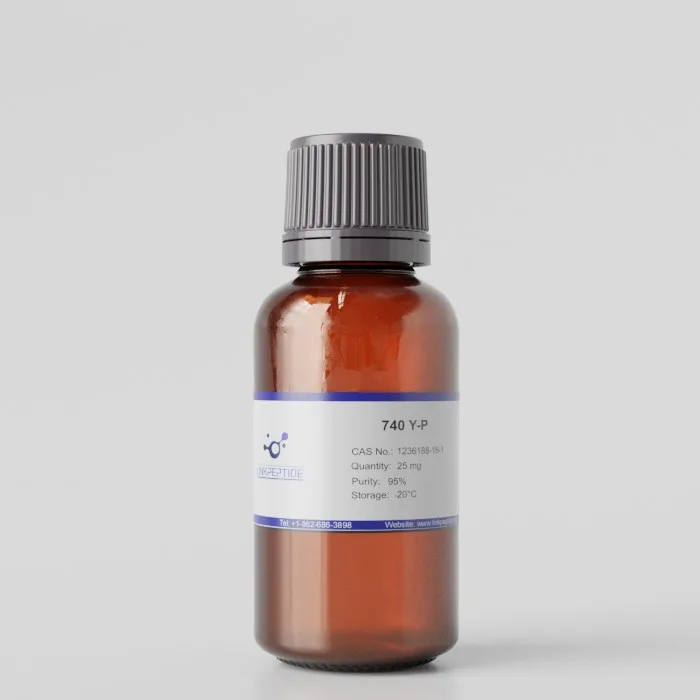
Product Name: 740 Y-P
CAS No: 1236188-16-1
Purity: 95%
Molar Mass: 3270.7
Chemical Formula: C141H222N43O39PS3
Synonyms: 740 Y-P, 1236188-16-1, PDGFR 740Y-P
Storage: Store at -20??
Sequence: RQIKIWFQNRRMKWKKSDGGXMDMS
Application:
740 Y-P is a synthetic phosphopeptide that mimics a specific phosphorylated tyrosine residue found in signaling proteins. This peptide interacts with SH2 domains, which are key components in various intracellular signaling pathways, including the PI3K/Akt pathway. By binding to these domains, 740 Y-P activates PI3K, promoting cell growth, survival, and metabolism. In pharmaceutical and biochemical research, 740 Y-P is utilized to study signal transduction mechanisms, investigate cellular responses to growth factors, and screen potential inhibitors of PI3K signaling, which are relevant in cancer and other proliferative diseases.
Current Research:
740 Y-P, also known as PDGFR 740Y-P, is a synthetic, cell-permeable phosphopeptide that functions as a potent activator of phosphoinositide 3-kinase (PI3K). This peptide comprises a 16-amino acid sequence derived from the third helix of the Antennapedia protein, linked to a 9-amino acid phosphopeptide mimetic corresponding to the high-affinity p85 binding site on the platelet-derived growth factor receptor (PDGFR). Its unique structure enables high-affinity binding to the SH2 domains of the p85 regulatory subunit of PI3K, thereby facilitating PI3K activation. The activation of PI3K by 740 Y-P initiates the phosphorylation of Akt, a critical component of the PI3K/Akt signaling pathway, which is integral to various cellular processes, including cell proliferation, survival, and metabolism. In vitro studies have demonstrated that 740 Y-P promotes mitogenic activity in C2 muscle cells and enhances the survival of rat cerebellar granule neurons under serum-deprived conditions. These effects are attributed to the PI3K-dependent phosphorylation of Akt, underscoring the peptide's potential in modulating cell survival pathways. Recent research has expanded the application of 740 Y-P to neurodegenerative disease models. In an Alzheimer's disease rat model, intraperitoneal administration of 740 Y-P at a dosage of 10 mg/kg over six weeks resulted in a reduction of reactive oxygen species levels in A??(25-32)-treated hippocampal tissues. Additionally, there was an observed increase in the phosphorylation levels of Akt and PI3K, indicating the activation of neuroprotective signaling pathways. The ability of 740 Y-P to specifically activate PI3K without the need for receptor-mediated mechanisms presents significant implications for drug discovery. Its application as a molecular tool allows for the dissection of PI3K/Akt pathway dynamics, providing insights into the development of therapeutic strategies targeting diseases characterized by dysregulated PI3K signaling, such as cancer and neurodegenerative disorders. Ongoing studies are focused on elucidating the detailed mechanisms of 740 Y-P's action and optimizing its stability and bioavailability for potential therapeutic applications. The specificity and efficacy of 740 Y-P in activating PI3K position it as a valuable asset in the advancement of targeted therapies within the realm of drug discovery.
Get a Quote
 LinkPeptide