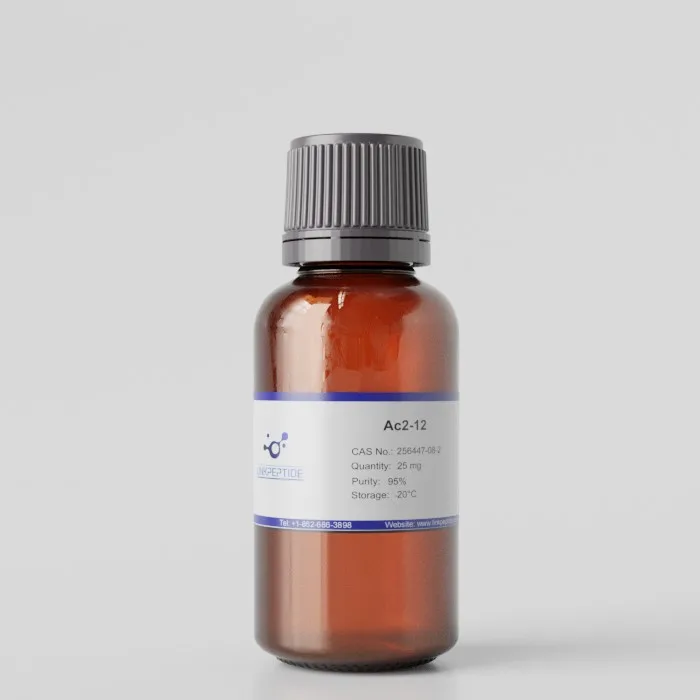
Product Name: Ac2-12
CAS No: 256447-08-2
Purity: 95%
Molar Mass: 1351.6
Chemical Formula: C63H94N14O17S
Synonyms: GLXC-15094
Storage: Store at -20??
Sequence: AMVSEFLKQAW
Application: Ac2-12 is a synthetic peptide derived from the annexin A1 protein, known for its anti-inflammatory properties. This peptide exerts its effects by binding to the formyl peptide receptor 2 (FPR2), modulating immune cell activity and reducing the production of pro-inflammatory cytokines. In pharmaceutical research, Ac2-12 is investigated for its potential to treat inflammatory diseases, such as rheumatoid arthritis and inflammatory bowel disease. Its specific action on FPR2 makes it a valuable tool for understanding immune responses and developing new anti-inflammatory therapies.
Current Research:
Ac2-12, a synthetic peptide derived from annexin A1, has gained significant attention in recent years due to its regulatory role in inflammation and tissue repair. This bioactive peptide exhibits remarkable pharmacological potential, particularly in modulating immune responses, making it an attractive candidate for drug discovery in inflammation-mediated diseases and cancer research.
Recent studies have emphasized Ac2-12's ability to activate the formyl peptide receptor 2 (FPR2), a G-protein-coupled receptor involved in cellular signaling pathways that regulate immune cell trafficking and cytokine release. By binding to FPR2, Ac2-12 induces anti-inflammatory effects, characterized by reduced neutrophil recruitment and enhanced macrophage-driven tissue repair. This receptor specificity has positioned Ac2-12 as a potential therapeutic agent for diseases such as rheumatoid arthritis, asthma, and inflammatory bowel disease.
In oncology, Ac2-12 has demonstrated promising effects in preclinical models, where its modulation of the tumor microenvironment has led to improved outcomes in cancer therapy. By dampening chronic inflammation, Ac2-12 could potentially inhibit cancer progression and metastasis. Additionally, its role in angiogenesis and tissue remodeling further underscores its multifaceted applications in tumor biology.
Moreover, Ac2-12's role in drug discovery extends to its utility as a molecular probe for understanding FPR2-related signaling pathways. Its stability and specificity make it a valuable tool for delineating the mechanistic underpinnings of inflammation and immune regulation, aiding in the identification of novel therapeutic targets.
Ongoing research is directed toward optimizing the pharmacokinetics and bioavailability of Ac2-12, ensuring its transition from experimental models to clinical applications. As interest in peptide-based therapeutics continues to rise, Ac2-12 stands out as a crucial molecule driving innovation in the fields of immunology, oncology, and regenerative medicine.
Get a Quote
 LinkPeptide