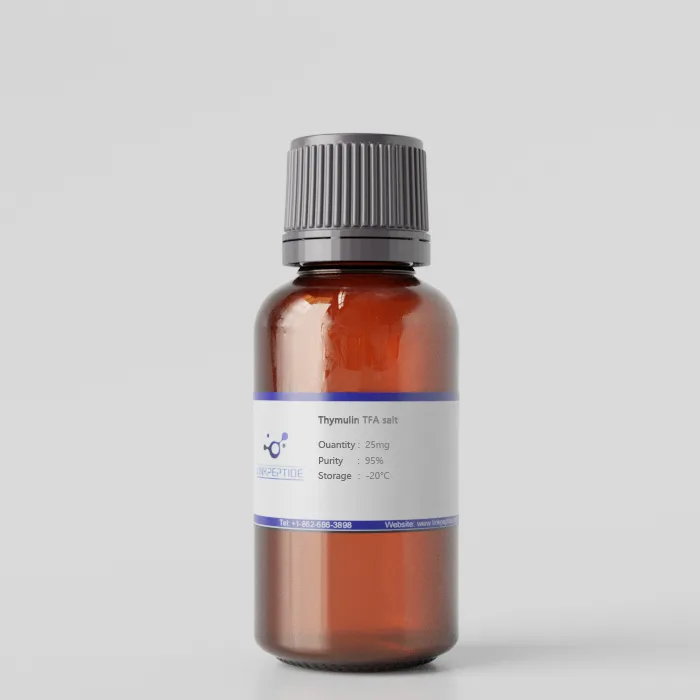
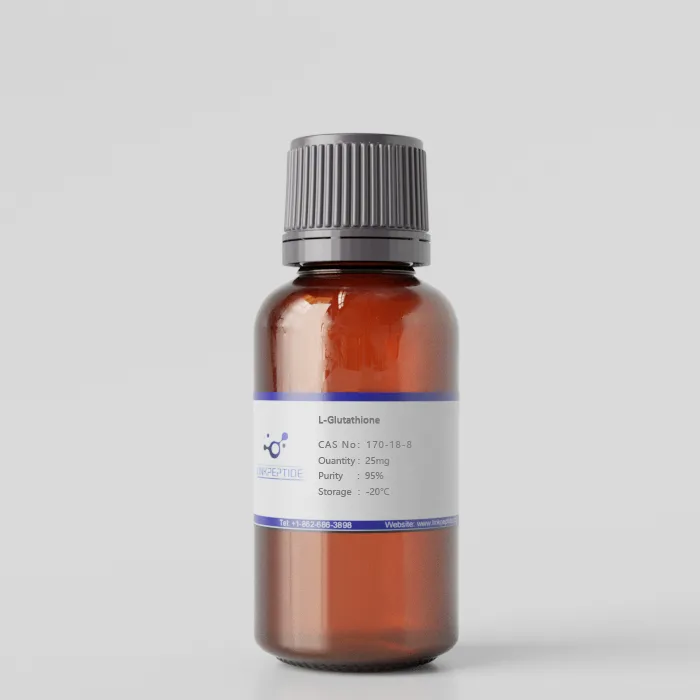
Product Name:Thymulin TFA salt
Synonyms:RGH-0205 TFA; TP3 TFA
Purity:95%
Molar Mass:531.48
Chemical Formula:C18H32F3N7O8
Storage:Store at -20 degrees Celsius
Application:
Thymulin TFA salt is a synthetic form of the thymic peptide thymulin, which plays an essential role in the immune system by regulating T-cell differentiation and activity. Thymulin is also involved in modulating neuroendocrine-immune interactions. The trifluoroacetate (TFA) salt form enhances its stability and solubility for use in research. Thymulin is often studied for its potential therapeutic applications in immune disorders, aging, and inflammatory conditions. Researchers use Thymulin TFA salt to investigate its immunoregulatory properties and explore its role in maintaining immune homeostasis and developing immune-based therapies.
Current Research:
Thymulin, also known as serum thymic factor, is a nonapeptide hormone produced by thymic epithelial cells. Its amino acid sequence is H-Pyr-Ala-Lys-Ser-Gln-Gly-Gly-Ser-Asn-OH. Thymulin requires zinc for its biological activity and plays a crucial role in modulating immune functions, including the differentiation of T-cells and the enhancement of T and natural killer (NK) cell actions.
In research and therapeutic applications, thymulin is often utilized in the form of its trifluoroacetate (TFA) salt. The TFA salt form enhances the peptide's stability and solubility, facilitating its use in various experimental settings.
Biological Functions
Thymulin exhibits several immunomodulatory functions:
T-Cell Differentiation: It promotes the maturation and differentiation of T-lymphocytes, which are essential for adaptive immunity.
Enhancement of Immune Cell Activity: Thymulin enhances the actions of T-cells and NK cells, thereby bolstering the body's immune response.
Neuroendocrine Interactions: Thymulin has been shown to interact with the hypothalamus-pituitary axis, indicating its involvement in neuroendocrine regulation.
Therapeutic Potential
Due to its immunoregulatory properties, thymulin has been investigated for potential therapeutic applications in conditions such as:
Immune Disorders: Thymulin's ability to modulate immune responses makes it a candidate for treating various immune-related conditions.
Inflammatory Conditions: Its anti-inflammatory effects suggest potential use in managing inflammatory diseases.
Age-Related Immune Decline: Thymulin may help counteract the decline in immune function associated with aging.
Handling and Storage
Thymulin TFA salt is typically supplied as a lyophilized powder. For optimal stability, it should be stored at -20 degrees Celsius. Reconstitution should be performed using sterile, deionized water or appropriate buffer solutions. Avoiding repeated freeze-thaw cycles is recommended to maintain peptide integrity.
Conclusion
Thymulin TFA salt serves as a valuable tool in immunological research and holds promise for therapeutic applications targeting immune modulation. Its role in T-cell differentiation and interaction with the neuroendocrine system underscores its significance in maintaining immune homeostasis.
Reference:
Get a Quote
 LinkPeptide