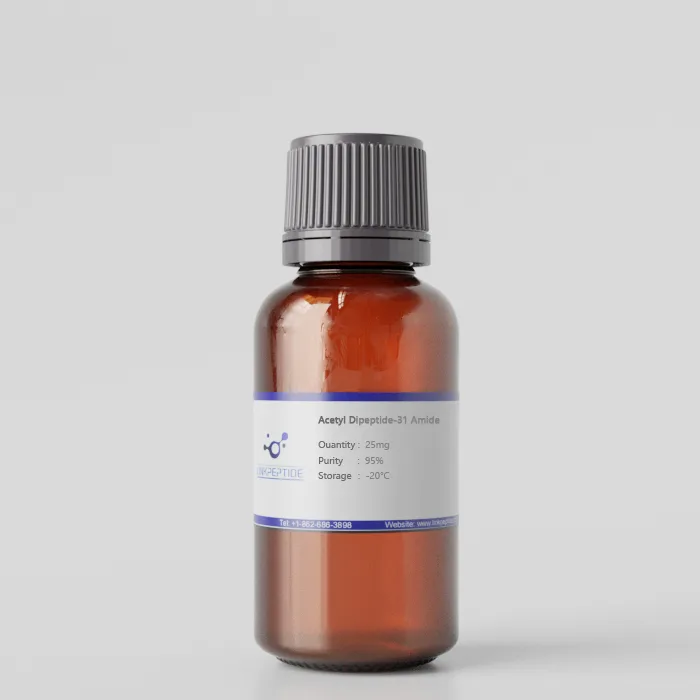
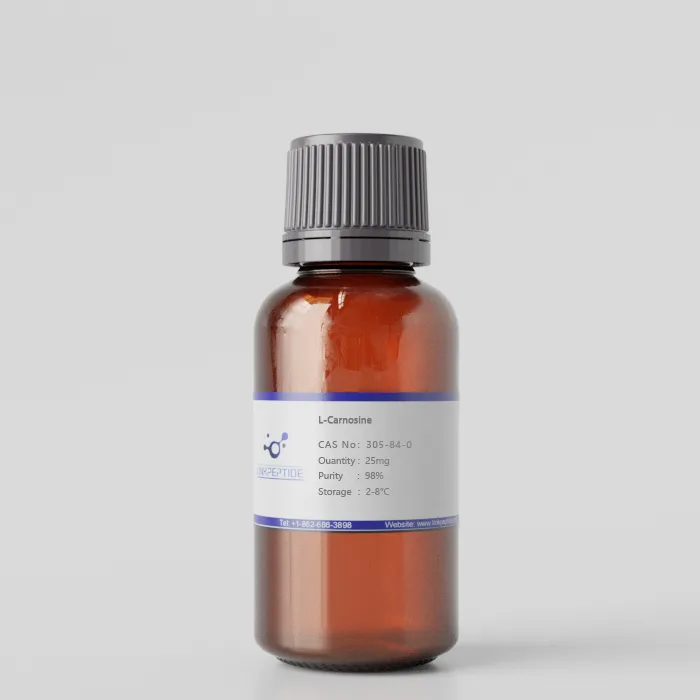
Product Name: Acetyl Dipeptide-31 Amide
Purity: 95%
Storage: Keep in dark and cool dry place -5~8 degree Celsius
Application:
Acetyl Dipeptide-31 Amide is a next-generation biomimetic dipeptide designed to support skin firmness, resilience, and a smoother overall appearance. Known for its ability to help reinforce the skin’s structural proteins, this peptide is widely used in cosmetic research targeting improved elasticity and reduced visible signs of aging. It supports studies on enhancing skin density, refining texture, and promoting a more lifted, youthful look. With excellent stability and water solubility, Acetyl Dipeptide-31 Amide integrates easily into serums, creams, and advanced anti-aging formulations aimed at strengthening the skin and restoring a firmer, revitalized complexion.
Current Research:
Acetyl Dipeptide-31 Amide: Research Overview
Acetyl Dipeptide-31 Amide is a synthetic micro-dipeptide formed by acetylation at the N-terminus and amidation at the C-terminus of a two–amino-acid sequence. Its molecular weight is approximately 229 Da, placing it well below the typical 500-Da barrier threshold, which is relevant to topical penetration potential. The small size is a central feature in current research, as micro-dipeptides can access epidermal and superficial dermal compartments more efficiently than longer peptides.
From a biochemical perspective, Acetyl Dipeptide-31 Amide is categorized as a multi-pathway regulatory peptide affecting inflammation, oxidative stress response, and extracellular matrix (ECM) biology. Research emphasizes its relevance to “inflammaging,” a chronic, low-grade inflammatory state that accelerates structural and functional aging of the skin.
Studies using keratinocytes, dermal fibroblasts, vascular endothelial cells, and immune-derived cells demonstrate that Acetyl Dipeptide-31 Amide suppresses multiple inflammatory mediators. Reported reductions include interleukins such as IL-4, IL-6, IL-8, and IL-17, as well as TNF-α. These cytokines are key components in signaling cascades that drive cellular stress, matrix degradation, and impaired barrier recovery.
The peptide also down-regulates COX-2, an inducible enzyme responsible for prostaglandin formation during cutaneous inflammation. By limiting COX-2 expression and downstream mediators, Acetyl Dipeptide-31 Amide contributes to mitigation of acute and chronic inflammatory responses. This anti-inflammatory profile is central to its positioning in research as an agent that addresses the biochemical roots of age-associated tissue decline.
Oxidative stress studies indicate that Acetyl Dipeptide-31 Amide enhances the activity of endogenous antioxidant systems rather than acting as a direct radical scavenger. In fibroblast cultures exposed to oxidative challenge, the peptide increases the levels of superoxide dismutase, an enzyme involved in converting reactive oxygen species into less reactive intermediates.
Comparative studies using UVA-exposed fibroblasts from young and aged donors suggest that the peptide reduces oxidative damage while supporting cellular viability. These findings connect Acetyl Dipeptide-31 Amide to broader cytoprotective mechanisms relevant to early intervention in photoaging and environmental stress-related damage.
A major research focus centers on the peptide’s influence on the dermal ECM. In vitro fibroblast work shows increased synthesis of procollagen, elastin, fibronectin, hyaluronic acid, and decorin when cells are treated with Acetyl Dipeptide-31 Amide. These proteins and polysaccharides contribute to dermal firmness, elasticity, and hydration capacity.
Ex vivo skin-explants confirm ECM stimulation in a more physiologically complex tissue environment. Enhanced matrix deposition suggests normalization or acceleration of remodeling processes that decline with age or oxidative burden. The peptide also influences gene pathways associated with epidermal barrier reinforcement, hydration regulation, and dermal–epidermal junction organization.
Studies conducted on reconstructed human skin equivalents report multi-pathway activity, including modulation of barrier-related genes, hydration regulators, stress-response elements, and markers associated with epidermal turnover. This genomic profile suggests that Acetyl Dipeptide-31 Amide has a broad regulatory role rather than acting through a single biochemical axis.
Clinical assessments using formulations containing Acetyl Dipeptide-31 Amide document improvements in parameters associated with structural aging. These include changes in jawline definition, nasolabial fold visibility, surface roughness, textural irregularity, and uneven tone. Longitudinal studies of younger subjects presenting early signs of “pre-aging” show benefits in skin clarity, surface uniformity, early fine lines, and biochemical markers associated with glycation stress.
Across multiple studies, the peptide is characterized as non-irritating and well tolerated. These findings align with its biological profile, which emphasizes reduction of inflammatory signals and enhancement of cellular resilience.
Acetyl Dipeptide-31 Amide is hydrophilic, fully water-soluble, and compatible with serums, emulsions, aqueous gels, and vesicular delivery systems such as niosomes. Due to its low molecular weight, it is often deployed in formulations intended for deeper epidermal access. Stability is maintained within typical cosmetic pH ranges, especially when incorporated during cool-down phases and protected with standard stabilizers.
Summary
Research describes Acetyl Dipeptide-31 Amide as a micro-regulatory peptide combining anti-inflammatory action, oxidative-stress modulation, and extracellular-matrix stimulation. Its small molecular size supports topical delivery, while its multi-pathway profile aligns it with current areas of interest in cosmetic science, including inflammaging control, structural preservation, and early-stage skin aging intervention.
Reference:
Get a Quote
 LinkPeptide