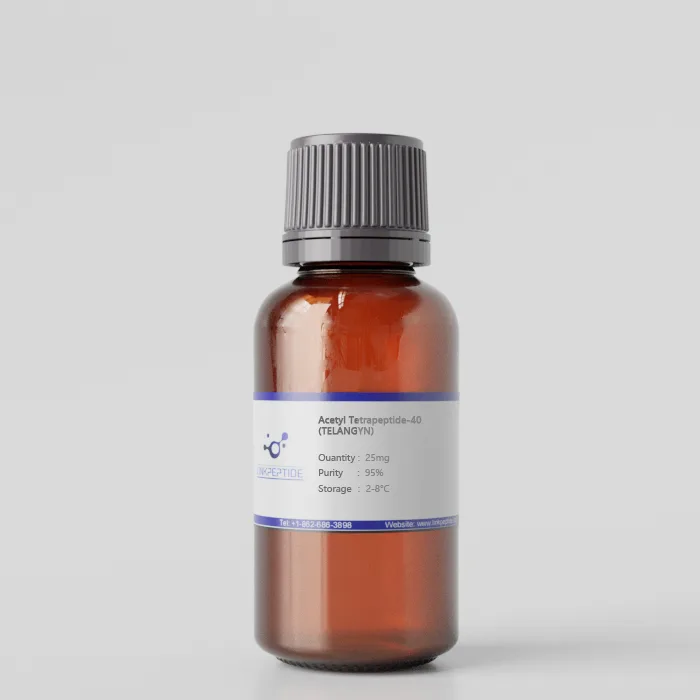
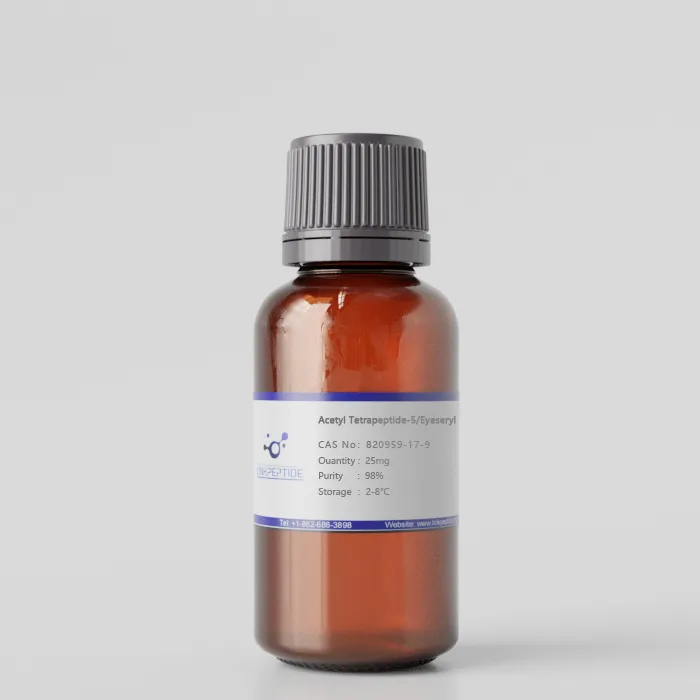
Product Name: Acetyl Tetrapeptide-40 (TELANGYN)
Purity: 95%
Storage: Keep in dark and cool dry place -5~8 degree Celsius
Sequence: Acetyl-Ala-Thr-Asn-Thr
Molar Mass: 447.44
Application:
Acetyl Tetrapeptide-40 (Telangyn) is a soothing biomimetic peptide specifically developed to help reduce the appearance of facial redness and visible discoloration associated with irritation or environmental stress. By targeting key inflammatory mediators, Telangyn supports calmer, more balanced skin while helping to even tone and improve overall clarity. In cosmetic research, it is valued for reducing redness-prone concerns, strengthening the skin’s resilience, and promoting a smoother, healthier-looking complexion. With excellent formulation stability, Acetyl Tetrapeptide-40 is ideal for serums, creams, and sensitive-skin treatments aimed at achieving long-lasting comfort and visible redness reduction.
Current Research:
Acetyl Tetrapeptide-40 (Telangyn): Current Research Overview
Acetyl Tetrapeptide-40, marketed as Telangyn?, is a synthetic anti-inflammatory tetrapeptide developed to target facial redness, erythema, and visible capillaries (telangiectasia), especially in sensitive and rosacea-prone skin. Chemically, it’s a short sequence (Acetyl–Ala–Thr–Asn–Thr) designed for good water solubility and easy incorporation into serums and creams.
The peptide is positioned as a precision redness-control active that intervenes in the inflammatory cascade upstream, helping normalize the skin’s response instead of simply masking redness.
Mechanism of Action: LL-37 / IL-6 / IL-8 Modulation
Modern research into chronic facial redness and rosacea-like conditions highlights the role of abnormally high levels of the cathelicidin peptide LL-37 and an associated surge in pro-inflammatory interleukins, particularly IL-6 and IL-8. These mediators drive vasodilation, vessel fragility, and persistent erythema.
Acetyl Tetrapeptide-40 was designed specifically to counter this pathway:
Inhibiting the inflammatory effects of LL-37
LL-37 is a 37-amino-acid antimicrobial peptide. When overexpressed, it amplifies inflammation and triggers excessive IL-6 and IL-8 release. Telangyn has been shown in vitro to reduce the LL-37–induced release of IL-6 and IL-8, thereby calming the inflammatory environment that underlies chronic redness and telangiectasia.
Normalizing the inflammatory response
By decreasing IL-6 and IL-8 output, Acetyl Tetrapeptide-40 helps normalize the skin’s immune response, rather than shutting it down completely. This balance is important for sensitive and rosacea-prone skin, where even mild triggers can lead to exaggerated flushing, burning, and visible vessels.
Downstream benefits: vessels, pigmentation, and matrix protection
Technical reviews also note that by limiting excessive inflammation, the peptide:
Reduces the appearance of dilated capillaries and spider veins.
Helps prevent post-inflammatory hyperpigmentation, often seen after flares or sunburn.
Limits activation of matrix metalloproteinases (MMPs) that break down collagen, indirectly helping preserve firmness and elasticity in chronically red, inflamed skin.
Photoprotective and After-Sun Benefits
Beyond baseline redness control, Acetyl Tetrapeptide-40 is also described as a photoprotective peptide:
In vitro and technical data show that it modulates UV-induced inflammation, reducing dermal cell damage after simulated sun exposure.
By dampening the inflammatory response to UV, it helps limit erythema, swelling, and long-term photoaging effects such as broken capillaries and uneven tone.
This makes Telangyn particularly attractive for after-sun repair products and daytime redness serums used under sunscreen.
Role in Modern Cosmetic Peptide Science
Within the peptide family, Acetyl Tetrapeptide-40 can be classified as:
An anti-inflammatory / anti-redness signal peptide,
A vascular appearance–modulating active, and
A supportive anti-aging peptide through MMP control and photoprotection.
It fits into the broader trend of precision neuro-immuno-cosmetics for sensitive and reactive skin, often used alongside:
Neuro-soothing peptides like Acetyl Tetrapeptide-15 or Acetyl Hexapeptide-49,
Barrier-support ingredients (ceramides, cholesterol, fatty acids, ectoine),
Gentle antioxidants and UV filters.
The combined story is one of calming, protecting, and structurally preserving redness-prone skin.
In Vitro and Application-Level Data
Most publicly available data are from supplier and technical sources, but they are consistent:
In vitro
Significant reduction of LL-37–induced IL-6 and IL-8 release, confirming targeted anti-inflammatory action.
Evidence of reduced cell damage under inflammatory/UV challenge, consistent with photoprotective claims.
Cosmetic-style evaluations
Formulas with Telangyn are reported to decrease the visible intensity and area of facial redness and erythema, and to reduce the look of telangiectasia (surface capillaries) over several weeks of regular use.
These studies are typical cosmetic tests (small–medium sample size, short duration), so claims should remain clearly appearance- and comfort-focused, not medical.
Safety and Formulation Considerations
Acetyl Tetrapeptide-40 (CAS 1472633-28-5) is supplied as a high-purity lyophilized powder or pre-diluted peptide solution (often in water with caprylyl glycol as preservative).
Key practical points:
Usage levels: typically around 0.05% active peptide in finished products, via ~1–5% of a commercial Telangyn solution.
Formats: well suited to serums, creams, gels, and targeted redness treatments, including products for rosacea-prone and post-procedure skin.
Tolerance: Safety documents and ingredient guides describe a good irritation profile at recommended levels, compatible with sensitive-skin formulations.
It is intended strictly for topical, cosmetic use and should not be marketed as a treatment for diagnosed rosacea or vascular disease.
Get a Quote
 LinkPeptide