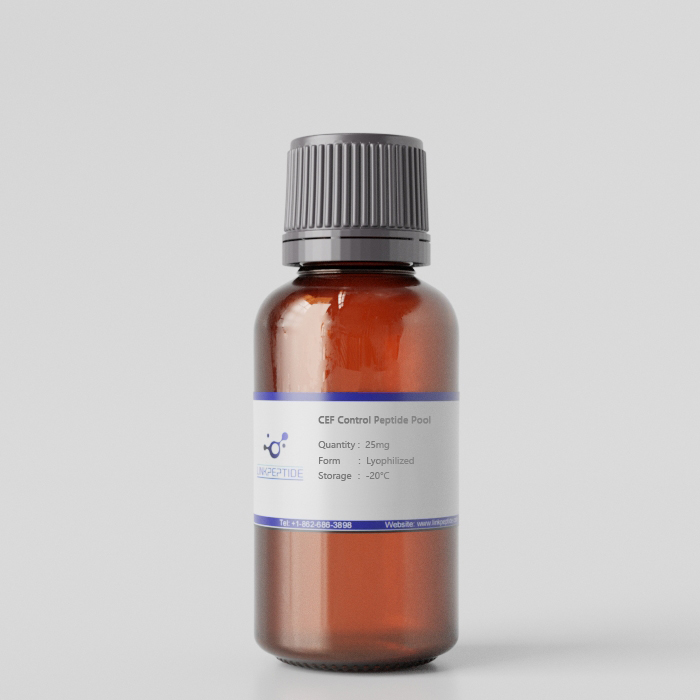
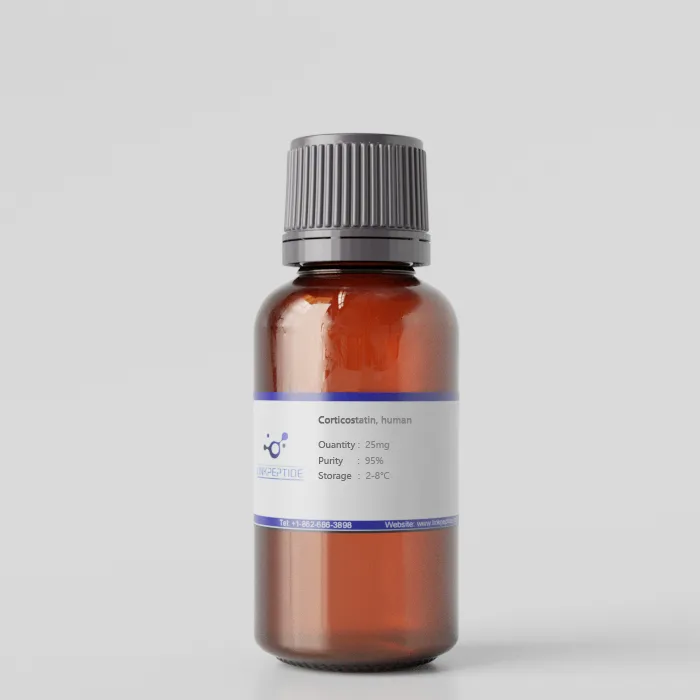
Product Name: CEF Control Peptide Pool - 16 mg
Purity: 95%
Form: Lyophilized
Storage Conditions: - 20 °C
Research Area: Inflammation and Immunology Research
Source / Species: CMV, EBV, Influenza
Conjugation: Unconjugated
Code Nacres: NA.26
Application: CEF Control Peptide Pool is a standardized mixture of 32 synthetic peptides (8–12 amino acids) derived from well-defined CD8⁺ T cell epitopes of human cytomegalovirus (CMV), Epstein–Barr virus (EBV), and influenza virus. Designed to provide broad HLA class I coverage, the peptides are efficiently recognized by antigen-specific CD8⁺ T cells in individuals with compatible HLA backgrounds. The CEF pool consistently stimulates interferon-γ (IFN-γ) production and serves as a validated positive control in cellular immune assays. It is widely applied in ELISPOT, intracellular cytokine staining, and cytotoxic T lymphocyte (CTL) assays to evaluate T cell responsiveness, immune competence, and overall assay performance in clinical and translational immunology studies.
Current Research: CEF Control Peptide Pool is a standardized mixture of 32 synthetic peptides (8–12 amino acids) derived from well-characterized CD8⁺ T cell epitopes of human cytomegalovirus (CMV), Epstein–Barr virus (EBV), and influenza virus. These viral epitopes were selected based on their immunodominance and high prevalence of prior exposure in human populations, ensuring that a substantial proportion of individuals harbor memory CD8⁺ T cells specific to at least one component of the pool. Engineered for broad HLA class I coverage, the CEF peptide pool enables efficient stimulation of antigen-specific CD8⁺ T cells in donors with compatible HLA haplotypes. Upon short-term in vitro stimulation of peripheral blood mononuclear cells (PBMCs) or whole blood samples, the pool reliably induces interferon-γ (IFN-γ) secretion, making it a widely accepted antigen-specific positive control in cellular immune assays. Scientific Rationale CMV and EBV establish lifelong latent infections, while influenza virus exposure occurs repeatedly through seasonal infection or vaccination. As a result, most immunocompetent adults possess established memory CD8⁺ T cell responses against immunodominant epitopes from these pathogens. By leveraging this predictable immunological memory, the CEF pool provides a physiologically relevant method to confirm: Functional integrity of CD8⁺ T cells Viability and responsiveness of PBMC samples Proper performance of assay reagents and detection systems Unlike polyclonal mitogens (e.g., PHA or PMA/ionomycin), which activate T cells in a non-specific manner, CEF stimulation reflects antigen-dependent, MHC-restricted T cell activation, offering greater biological relevance in immune monitoring contexts. Key Applications 1. IFN-γ ELISPOT Assays CEF peptides are extensively used as a positive control in ELISPOT workflows. A robust spot-forming response confirms: Adequate PBMC quality Functional antigen-specific CD8⁺ T cell compartments Sensitivity of the assay platform This application is particularly important in vaccine trials and immunotherapy studies. 2. Intracellular Cytokine Staining (ICS) In flow cytometry-based assays, CEF stimulation induces cytokine production (e.g., IFN-γ, TNF-α, IL-2) in memory CD8⁺ T cells. This allows quantitative assessment of: Cytokine-producing cell frequency Polyfunctional T cell profiles Activation marker expression 3. Cytotoxic T Lymphocyte (CTL) Assays CEF peptides can be used to pulse target cells in CTL assays, enabling evaluation of antigen-specific killing capacity, granzyme release, or CD107a mobilization. 4. Clinical and Translational Immune Monitoring The CEF pool is routinely incorporated into studies involving: Cancer immunotherapy Vaccine immunogenicity testing Transplantation research Immunodeficiency evaluation Infectious disease monitoring Its inclusion helps distinguish true antigen-specific non-responsiveness from generalized immune dysfunction or technical assay failure. Experimental Considerations Response magnitude depends on donor viral exposure history and HLA genotype. Therefore, absence of response in rare cases may reflect lack of relevant HLA restriction rather than impaired immune competence. Optimal peptide concentration and incubation duration should be determined according to assay format and cell density.
Get a Quote
 LinkPeptide