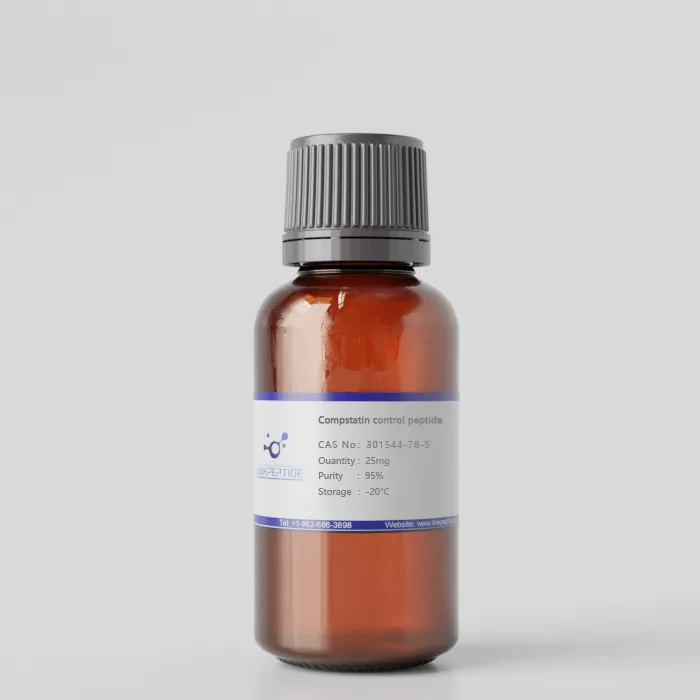
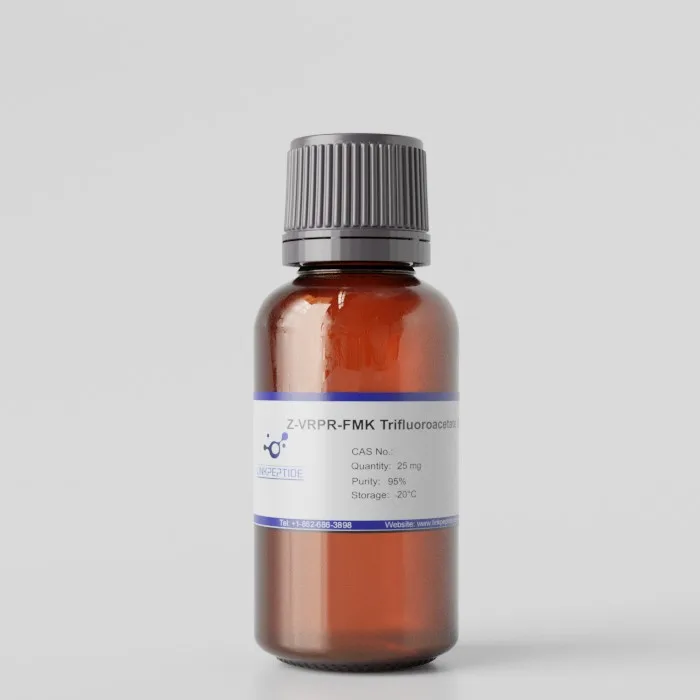
Product Name:Compstatin control peptide
CAS No:301544-78-5
Purity:95%
Molar Mass:1488.67
Chemical Formula:C66H101N23O17
Storage:Store at -20 degrees Celsius
Sequence:IAVVQDWGHHRAT
Target:Compstatin
Application:
The Compstatin control peptide is a non-active variant of the Compstatin peptide, which is a potent inhibitor of the complement system, specifically targeting complement component C3. The control peptide typically has a scrambled or modified sequence that does not interact with C3 or inhibit complement activation. It is used as a negative control in experiments to ensure that observed effects are due to the specific action of the active Compstatin peptide rather than non-specific effects. This control helps validate the specificity and efficacy of Compstatin in research related to complement-mediated diseases and immune responses.
Current Research:
Compstatin is a cyclic tridecapeptide renowned for its ability to inhibit the complement system by binding to the central component, C3. This interaction prevents the activation of both the classical and alternative complement pathways, making Compstatin a valuable therapeutic candidate for complement-mediated diseases. To ensure the specificity of its inhibitory effects, researchers use a scrambled version of Compstatin, known as the Compstatin control peptide.
The control peptide is designed with the same amino acid composition as Compstatin but in a randomized sequence, rendering it unable to bind to C3. This lack of activity allows it to serve as a negative control in experimental assays, ensuring that observed effects are due to Compstatin’s sequence-specific interaction with C3. For instance, while Compstatin has demonstrated efficacy in reducing complement activation and prolonging graft survival in xenotransplantation models, the control peptide exhibits no such effects. This contrast underscores the functional specificity of Compstatin and highlights the importance of using control peptides in rigorous experimental design.
Beyond xenotransplantation, the Compstatin control peptide is utilized in diverse applications, including studies on complement-driven inflammation and autoimmune disorders. By distinguishing nonspecific peptide interactions from targeted complement inhibition, it provides a robust framework for validating therapeutic mechanisms.
In conclusion, the Compstatin control peptide is an indispensable tool in complement research. Its role in confirming the specificity of Compstatin’s effects enhances the reliability of experimental findings and supports the ongoing development of complement inhibitors for therapeutic use.
Reference:
Get a Quote
 LinkPeptide