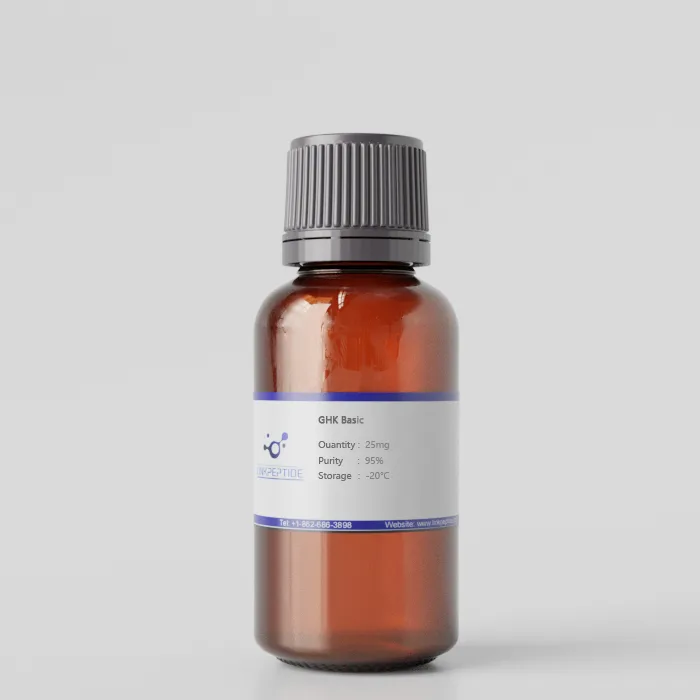
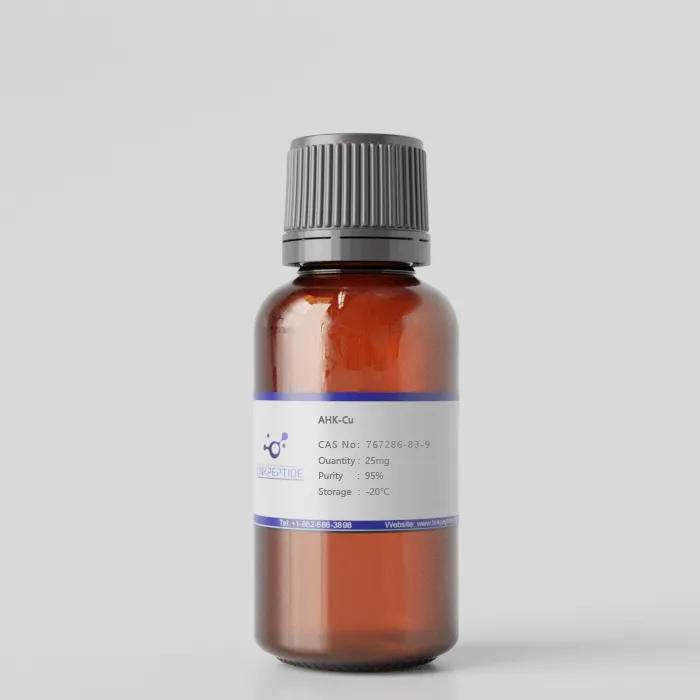
Product Name:GHK Basic
Purity:95%
Chemical Formula:C14H24N6O4
Molar Mass:340.4
Synonyms:Glycyl-L-histidyl-L-lysine, Tripeptide 1, NSC 379527, Copper peptide
Storage:-20 degree Celsius
Application:GHK (Basic) is a naturally occurring tripeptide (Gly-His-Lys) known for its potent regenerative, antioxidant, and anti-inflammatory properties. As a copper-binding peptide, GHK supports wound healing, tissue remodeling, hair growth, and skin repair by modulating gene expression and stimulating stem cell activity. GHK has been extensively studied for its ability to promote collagen synthesis, inhibit fibrosis, and reduce signs of aging at the molecular level.
Current Research:
Introduction to GHK Peptide
GHK (glycyl-L-histidyl-L-lysine) is a naturally occurring tripeptide first identified in human plasma and later in various tissues and bodily fluids. It is best known in its copper-bound form (GHK-Cu), but the basic (non-copper) form also exhibits independent biological activity. GHK plays a fundamental role in tissue remodeling, DNA repair, antioxidant defense, and cellular signaling, and is being actively researched for applications in skin regeneration, anti-aging, wound healing, and even cancer suppression.
GHK levels naturally decline with age, and its reintroduction in experimental systems restores youthful gene expression patterns and improves tissue resilience.
Mechanism of Action: Peptide Signaling and Gene Regulation
GHK binds to cell surface receptors and interacts with nuclear proteins, influencing the expression of hundreds of human genes. Key actions include:
Upregulation of regenerative genes (e.g., collagen, elastin, fibronectin)
Downregulation of pro-inflammatory and tissue-degrading genes (e.g., MMPs, IL-6, TNF-α)
Stimulation of proteoglycan and glycosaminoglycan synthesis
Copper transport and antioxidant enzyme activation (when bound to Cu²⁺)
GHK appears to function as a master modulator of tissue remodeling, restoring physiological balance and enhancing healing in response to injury or aging.
Wound Healing and Tissue Regeneration
One of the most well-documented uses of GHK is in wound healing. In both in vitro and in vivo models, GHK:
Increases keratinocyte and fibroblast migration and proliferation
Stimulates angiogenesis and granulation tissue formation
Enhances collagen type I and III production
Accelerates re-epithelialization and reduces scar formation
It also exhibits anti-fibrotic activity, reducing the overproduction of collagen in conditions like keloids or scleroderma.
GHK's ability to promote orderly tissue regeneration makes it a popular peptide for exploring burn recovery, diabetic ulcer treatment, and surgical wound healing in laboratory studies.
Skin Aging and Cosmetic Research
GHK is considered a gold-standard peptide in anti-aging dermatology research due to its ability to:
Improve skin elasticity and firmness
Reduce fine lines and wrinkles
Boost hydration and barrier function
Normalize pigmentation and reduce photoaging
These effects are attributed to its modulation of over 400 skin-related genes, including those responsible for collagen synthesis, antioxidant protection, and anti-inflammatory signaling.
In a notable human study, topical application of GHK led to a 30% reduction in wrinkle depth and skin density improvements, supporting its potential use in non-invasive skin rejuvenation strategies.
Hair Growth and Follicle Health
GHK has also shown promising results in hair follicle regeneration. It:
Prolongs the anagen (growth) phase of the hair cycle
Increases follicular cell proliferation
Improves vascularization around hair follicles
These actions are believed to be driven by GHK’s capacity to modulate Wnt and VEGF signaling, both key to hair follicle activation and maintenance. Research suggests GHK may outperform traditional agents like minoxidil in some models when paired with copper.
Anti-Cancer and Systemic Effects
Interestingly, GHK has demonstrated anti-cancer properties in preclinical studies. It downregulates oncogenes and promotes apoptosis in cancerous cells while preserving healthy ones. This selective gene modulation is under active investigation for therapeutic implications in lung, colon, and breast cancer research.
In broader regenerative medicine, GHK supports stem cell activity, immune modulation, and organ protection under oxidative stress, with evidence of benefit in lung fibrosis, liver injury, and cardiac repair models.
Conclusion: A Versatile Regenerative Peptide
GHK (Basic) is a powerful tripeptide with far-reaching biological activity. From cosmetic science to wound care and tissue engineering, GHK’s ability to restore youthful gene expression, reduce inflammation, and accelerate healing makes it a highly valuable tool in modern research.
Whether used alone or in combination with its copper form (GHK-Cu), GHK Basic provides a strong foundation for advancing peptide-based therapies in regeneration, anti-aging, and systemic repair.
Reference:
Get a Quote
 LinkPeptide