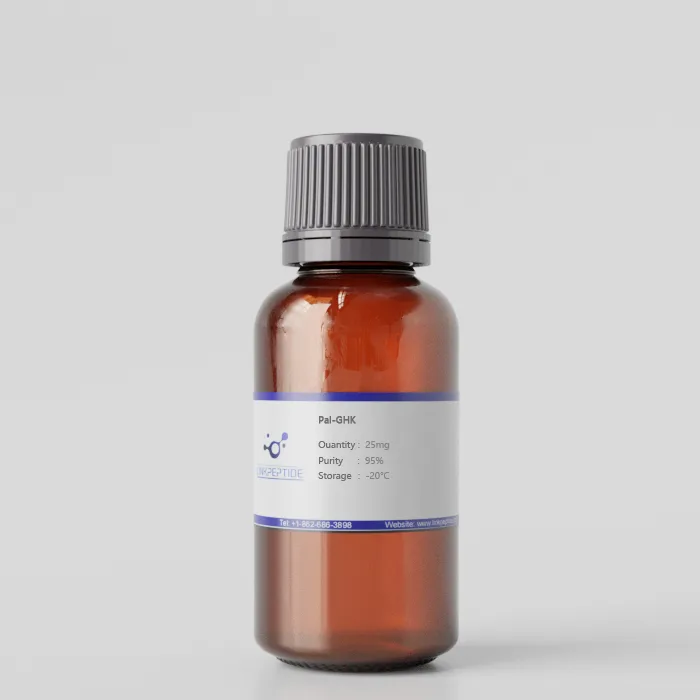
Product Name:Pal-GHK
Cas No:NA
Purity:95%
Chemical Formula:C30H54N6O5
Molar Mass:578.8
Synonyms:Palmitoyl Tripeptide-1, Palmitoyl oligopeptide, Biopeptide-CL
Storage:-20 degree Celsius
Application:Pal-GHK (Palmitoyl-Gly-His-Lys), also known as Palmitoyl Tripeptide-1, is a bioactive peptide formed by conjugating the GHK tripeptide (glycine-histidine-lysine) to a palmitoyl fatty acid for enhanced skin penetration and biostability. This cosmetic peptide mimics natural skin repair signals, stimulating collagen and glycosaminoglycan synthesis, improving skin elasticity, and reducing wrinkle depth. Pal-GHK has also demonstrated antioxidant and wound healing properties by promoting ECM regeneration and reducing oxidative stress markers. It is frequently used in anti-aging serums, dermal fillers, and post-procedure topicals, making it a foundational compound in cosmeceutical and dermatological research.
Current Research:Introduction: The Origin and Structure of Pal-GHK Pal-GHK is a synthetic signal peptide created by linking the naturally occurring GHK tripeptide (Gly-His-Lys) with a palmitic acid chain. This modification enhances the peptide’s ability to penetrate the skin barrier, making it more effective for topical applications. GHK itself is a well-studied wound healing and anti-aging molecule, known for its ability to bind copper ions, stimulate collagen synthesis, and modulate gene expression. Pal-GHK retains the bioactivity of GHK while significantly improving skin delivery and resistance to enzymatic breakdown. Mechanism of Action: Regeneration and Signaling Pal-GHK mimics natural tissue remodeling signals that are released after injury or environmental stress. Its primary mechanisms include: Stimulation of ECM proteins, including type I and III collagen, elastin, fibronectin, and laminin Upregulation of glycosaminoglycans (GAGs), improving hydration and skin volume Antioxidant activity, including superoxide dismutase stimulation and lipid peroxidation reduction Reduction of inflammatory cytokines and matrix-degrading enzymes such as MMPs (matrix metalloproteinases) These effects help repair damaged skin, restore firmness, and protect against further degradation, especially in the context of aging or UV exposure. Anti-Aging and Cosmetic Dermatology Applications Pal-GHK is extensively studied in cosmetic and dermatological formulations due to its strong anti-aging profile. In human studies and ex vivo skin models, Pal-GHK: Reduced wrinkle depth by up to 30–40% Improved skin density and elasticity Increased dermal fibroblast activity Enhanced epidermal thickness Unlike aggressive agents like retinoids or acids, Pal-GHK exerts these effects gently and progressively, making it suitable for sensitive, mature, or post-procedure skin. It is widely included in creams, serums, microneedle solutions, and facial masks aimed at wrinkle reduction, skin firmness, and textural refinement. Wound Healing and Skin Barrier Repair Pal-GHK has demonstrated significant wound healing activity, especially in: Partial-thickness wounds Diabetic ulcers Post-laser or microneedling recovery By stimulating fibroblast proliferation and angiogenesis, and modulating inflammation, Pal-GHK accelerates the re-epithelialization process. It also enhances the synthesis of decorin and proteoglycans, which are essential for matrix alignment and collagen fiber organization, leading to stronger, smoother tissue regeneration. Antioxidant and Anti-Inflammatory Roles Pal-GHK protects skin from oxidative damage and inflammation, key drivers of premature aging. It: Scavenges free radicals Reduces lipid peroxidation Suppresses pro-inflammatory cytokines (e.g., IL-6, TNF-α) Decreases MMP activity, preserving collagen integrity These properties make it particularly effective in UV-damaged skin, urban pollution exposure, and redness-prone or sensitive skin types. Synergy with Other Cosmetic Peptides Pal-GHK is often used in combination with: Palmitoyl Matrixyl peptides (e.g., Pal-GQPR) for deeper wrinkle correction Pal-AHK, which boosts hair follicle and vascular support Copper peptides, where native GHK acts as a chelator and delivery agent Such combinations create multi-targeted formulations for comprehensive skin rejuvenation. Conclusion: A Benchmark Peptide for Skin Repair and Anti-Aging Pal-GHK is a cornerstone peptide in advanced skincare and regenerative dermatology, offering clinically validated benefits for collagen renewal, skin elasticity, and dermal healing. Its molecular design allows for deep tissue penetration and biologically coherent action, mimicking the body’s natural repair pathways. Whether in anti-aging serums, post-treatment recovery gels, or dermal barrier creams, Pal-GHK continues to be a leading ingredient in peptide-based skin science.
Reference:
Get a Quote
 LinkPeptide