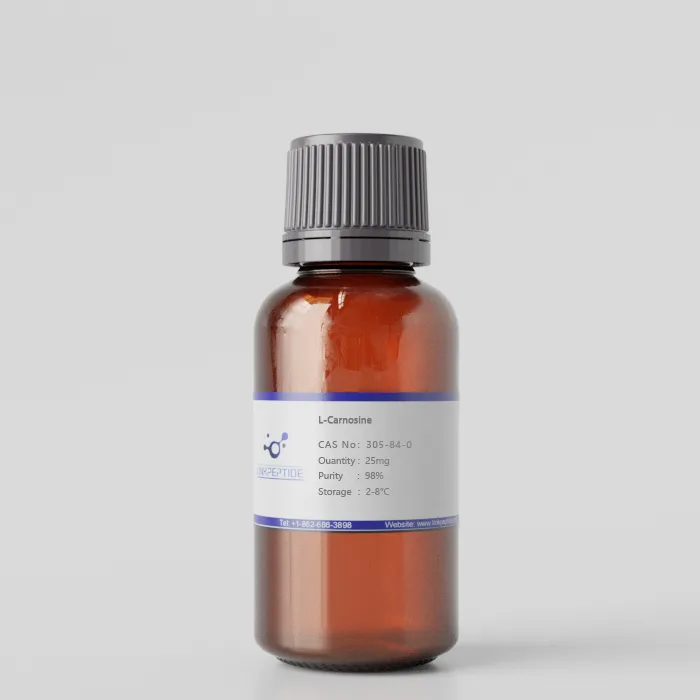
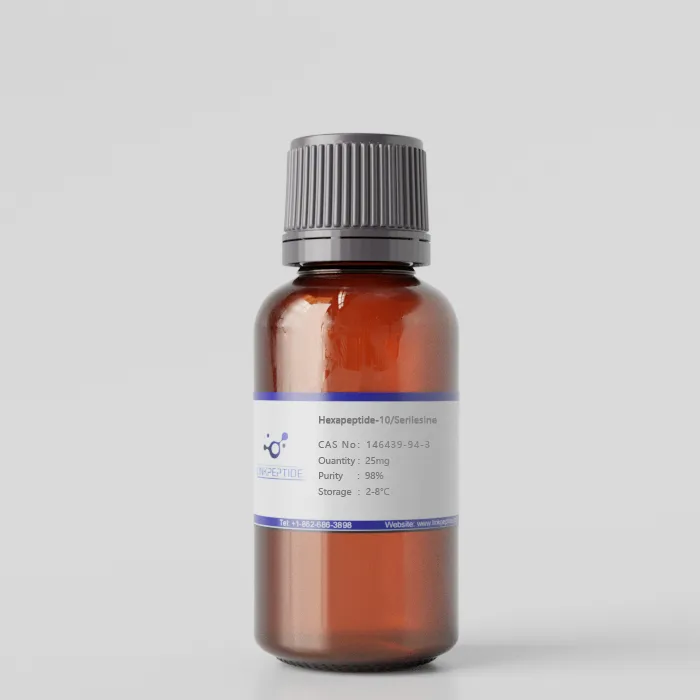
Product Name:L-Carnosine
Form:free base
Purity:98%
Storage:2-8 degree Celsius
Cas No:305-84-0
Molar Mass:226.23
Chemical Formula:C9H14N4O3
Synonyms:beta-Alanyl-L-histidine
IUPAC Name:(2S)-2-(3-aminopropanoylamino)-3-(1H-imidazol-5-yl)propanoic acid
SMILES:C1=C(NC=N1)C[C@@H](C(=O)O)NC(=O)CCN
InChIKey:CQOVPNPJLQNMDC-ZETCQYMHSA-N
InChI:InChI=1S/C9H14N4O3/c10-2-1-8(14)13-7(9(15)16)3-6-4-11-5-12-6/h4-5,7H,1-3,10H2,(H,11,12)(H,13,14)(H,15,16)/t7-/m0/s1
Sequence:β-Ala-His
Application:
L-Carnosine is a naturally occurring dipeptide composed of β-alanine and L-histidine, known for its powerful antioxidant, anti-glycation, and anti-aging properties. It plays a vital role in protecting cellular structures from oxidative stress and preventing protein damage caused by glycation. L-Carnosine is widely studied for its ability to improve skin elasticity, cognitive function, and muscle endurance. In skincare, it helps reduce fine lines, protect against UV damage, and maintain skin firmness. Additionally, its neuroprotective and anti-inflammatory effects make it a valuable supplement for promoting longevity and overall health. It is commonly found in anti-aging creams, dietary supplements, and functional foods.
Current Research:
L-Carnosine is a naturally occurring dipeptide composed of β-alanine and L-histidine, found predominantly in muscle and brain tissues. It has gained considerable attention in biomedical research due to its multifunctional properties, particularly in anti-aging, neuroprotection, muscle performance, and metabolic regulation.
Anti-Aging and Skin Health
One of the primary areas of L-Carnosine research is its ability to prevent skin aging through its anti-glycation and antioxidant effects. Glycation, a process where sugars bind to proteins, leads to the formation of advanced glycation end-products (AGEs), which contribute to collagen degradation and skin aging. L-Carnosine has been shown to inhibit glycation, thereby preserving collagen integrity and improving skin elasticity.
Additionally, it acts as a potent antioxidant, neutralizing reactive oxygen species (ROS) that cause cellular damage and premature aging. Studies have demonstrated that L-Carnosine can protect against UV-induced oxidative stress, making it a promising ingredient in anti-aging skincare products.
Neuroprotective Effects and Cognitive Function
L-Carnosine is widely studied for its potential neuroprotective effects. Research suggests that it can help protect neurons from oxidative damage, reduce neuroinflammation, and improve mitochondrial function. Studies indicate that it may be beneficial in neurodegenerative diseases, such as Alzheimer’s and Parkinson’s disease, due to its ability to inhibit amyloid-beta plaque formation.
A study published in Neuroscience Letters found that L-Carnosine supplementation improved cognitive function, memory, and focus in older adults, highlighting its role in brain health. Researchers are also exploring its potential use in preventing age-related cognitive decline and enhancing mental clarity.
Muscle Performance and Metabolic Health
L-Carnosine is found in high concentrations in muscle tissue, where it functions as a pH buffer, reducing muscle fatigue and improving endurance. It helps delay the accumulation of lactic acid during intense exercise, allowing for prolonged physical performance. Athletes often use L-Carnosine supplements to enhance stamina and reduce muscle soreness post-exercise.
Additionally, recent research suggests that L-Carnosine may help regulate blood sugar levels and improve insulin sensitivity, making it a potential therapeutic agent for diabetes and metabolic syndrome. Its ability to reduce inflammation and oxidative stress further supports its role in metabolic health.
Future Research and Applications
Ongoing studies are exploring L-Carnosine’s potential in anti-aging medicine, neurodegenerative disease prevention, and metabolic regulation. Its incorporation into functional foods, cosmetics, and pharmaceuticals is expanding due to its diverse biological benefits.
With its anti-glycation, antioxidant, neuroprotective, and muscle-enhancing properties, L-Carnosine continues to be a key compound in longevity research, offering promising benefits for skin health, cognitive function, and overall well-being.
Reference:
Get a Quote
 LinkPeptide