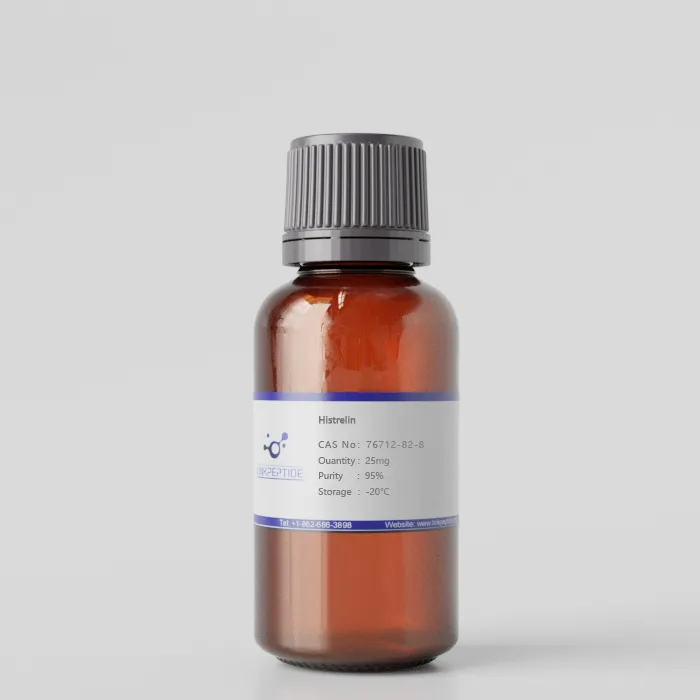
Product Name:Histrelin
CAS No:76712-82-8
Purity:95%
Molar Mass:1323.5
Chemical Formula:C66H86N18O12
Storage:Store at -20 degrees Celsius
Sequence:{Pyr}-HWSYHLRP-NHEt
Target:GnRH
Application:
Histrelin is a potent synthetic analog of gonadotropin-releasing hormone (GnRH), primarily used in the treatment of hormone-sensitive conditions such as prostate cancer and central precocious puberty. By acting as a GnRH agonist, Histrelin stimulates the release of luteinizing hormone (LH) and follicle-stimulating hormone (FSH) initially, followed by desensitization and a sustained suppression of gonadal steroid production. This suppression helps reduce testosterone levels in men and estrogen levels in women, aiding in the management of hormone-dependent diseases. Histrelin is also studied for its effects on endocrine regulation and reproductive health in clinical and research settings.
Current Research:
Histrelin, a potent gonadotropin-releasing hormone (GnRH) agonist, has gained significant attention in pharmaceutical and bioscience research due to its clinical efficacy and molecular specificity. Its primary mechanism of action involves binding to GnRH receptors, leading to the transient release of luteinizing hormone (LH) and follicle-stimulating hormone (FSH). This effect is followed by receptor desensitization and suppression of gonadal steroidogenesis, making Histrelin a valuable tool in addressing hormone-dependent conditions.
Current research focuses on the pharmacokinetics and pharmacodynamics of Histrelin, particularly its long-acting depot formulations for sustained therapeutic effects. Studies have demonstrated its effectiveness in managing hormone-sensitive prostate cancer, where it reduces testosterone levels to castration-like states, improving patient outcomes. Moreover, Histrelin is extensively studied for its role in treating central precocious puberty (CPP), a condition marked by premature activation of the hypothalamic-pituitary-gonadal axis. Clinical trials underscore its ability to effectively delay the progression of puberty while exhibiting a favorable safety profile.
Another burgeoning area of research is the application of Histrelin in non-traditional domains, such as endometriosis and other gynecological disorders. Preclinical studies suggest its potential in reducing endometrial lesions by modulating the hormonal environment. In neuroscience, investigations are ongoing into the drug’s potential to modulate cognitive and behavioral effects linked to hormonal dysregulation.
Emerging studies are exploring Histrelin’s analogs and derivatives to enhance receptor affinity, minimize side effects, and broaden its therapeutic applications. Additionally, advanced delivery systems, such as biodegradable implants, are being developed to optimize dosing regimens and patient compliance.
Further research is warranted to fully elucidate Histrelin’s molecular pathways and its long-term impact in diverse therapeutic contexts. As interest grows, Histrelin continues to serve as a cornerstone for advancements in endocrinology and beyond.
Reference:
Get a Quote
 LinkPeptide