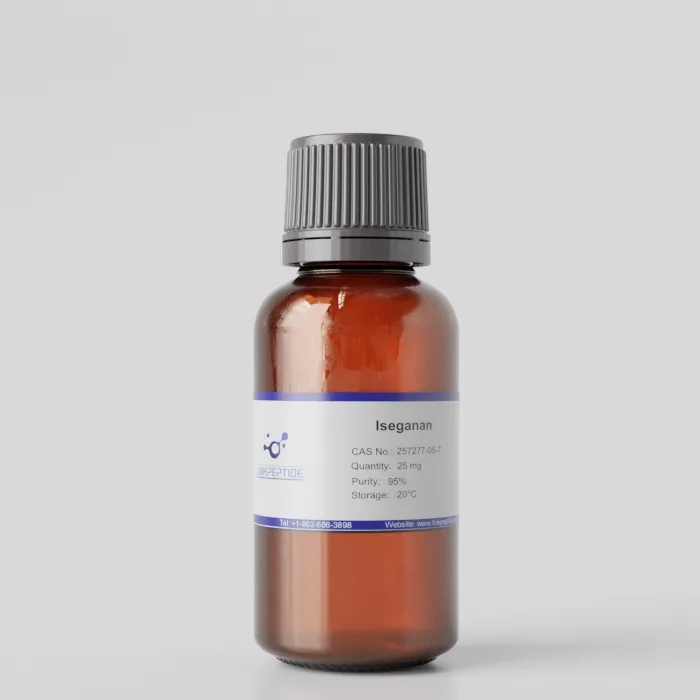
Product Name: Iseganan
Form: Free base
CAS No: 257277-05-7
Molar Mass: 1900.28
Chemical Formula: C78H126N30O18S4
Synonyms: IB-367
Storage: Store at -20℃
Sequence: RGGLCYCRGRFCVCVGR
Target: antibacterial
Application:
Iseganan (CAS: 257277-05-7) is a synthetic antimicrobial peptide that has demonstrated potent activity against a wide range of Gram-positive and Gram-negative bacteria, as well as fungi. It works by disrupting microbial cell membranes, leading to cell lysis and death. Iseganan has shown promise in the treatment of various infections, including oral mucositis, a common complication of chemotherapy and radiation therapy in cancer patients. Its topical formulation allows for direct application to affected mucosal surfaces, where it can exert its antimicrobial effects while minimizing systemic exposure and potential side effects. Clinical trials have indicated that iseganan may help reduce the severity and duration of oral mucositis and improve patients' quality of life during cancer treatment. Additionally, iseganan's low propensity for inducing resistance makes it an attractive option for the management of multidrug-resistant infections. Despite its potential benefits, further research is needed to optimize dosing regimens, evaluate long-term safety, and explore additional therapeutic indications for iseganan. Overall, iseganan represents a promising antimicrobial agent with the potential to address unmet medical needs in the treatment of infectious diseases and oral mucositis.
Current Research:
Iseganan (also known as Iseganan hydrochloride or Iseganan HCl) is a synthetic antimicrobial peptide developed primarily for the treatment of oral infections. It is a member of the cationic antimicrobial peptide (AMP) class, which is known for its ability to effectively combat a wide range of bacterial pathogens through a membrane-disrupting mechanism. Iseganan has been studied primarily for topical applications, including oral care and the treatment of periodontal diseases, and has shown potential as an alternative to traditional antibiotics, particularly in the face of growing antibiotic resistance.
Mechanism of Action
Iseganan acts through the same general mechanism common to most cationic antimicrobial peptides. It binds to the negatively charged components of bacterial cell membranes, such as phospholipids or lipopolysaccharides (in the case of Gram-negative bacteria). Due to its positive charge, Iseganan attaches to the bacterial membrane and forms pores, leading to membrane disruption. This disruption causes leakage of essential intracellular components, ultimately resulting in cell death.
The peptide's mechanism is broad-spectrum, affecting a wide variety of bacteria, including Gram-positive and Gram-negative bacteria, making it a versatile agent against mixed infections. Iseganan's membrane-disrupting action is considered less likely to lead to resistance than antibiotics that target specific bacterial enzymes or proteins, such as beta-lactam antibiotics or quinolones. As a result, Iseganan is viewed as a promising alternative in the treatment of infections caused by antibiotic-resistant organisms.
Clinical Applications
Iseganan has been primarily investigated for the topical treatment of oral infections, particularly in the context of periodontal disease and gingivitis. Periodontal diseases, including gingivitis and periodontitis, are common conditions caused by bacterial infections of the gums and supporting structures of the teeth. These infections are often difficult to treat with conventional antibiotics due to the bacteria's ability to form biofilms that protect them from antimicrobial agents.
In clinical trials, Iseganan has demonstrated effectiveness in reducing gingival inflammation and plaque formation in patients with gingivitis. The peptide’s action against oral pathogens like Porphyromonas gingivalis, Fusobacterium nucleatum, and Streptococcus mutans suggests that it could be an effective topical treatment for periodontal disease.
In addition to its use in oral care, Iseganan has also been explored for treating upper respiratory infections and wound infections, though its main focus has been on oral health. The peptide has been formulated in mouthwashes, gels, and lozenges, providing a localized application that limits the risk of systemic side effects.
Advantages Over Traditional Antibiotics
Broad-Spectrum Activity: Iseganan has demonstrated activity against a wide range of oral pathogens, including Gram-positive bacteria (e.g., Streptococcus species) and Gram-negative bacteria (e.g., Fusobacterium nucleatum). Its ability to target both types of bacteria makes it effective against mixed infections, a common occurrence in oral diseases.
Low Resistance Development: One of the main advantages of Iseganan is its low likelihood of resistance. Since the peptide works by disrupting bacterial membranes rather than targeting specific proteins or enzymes, bacteria have fewer opportunities to develop resistance mechanisms, which is a significant concern with conventional antibiotics.
Topical Administration: Iseganan is applied topically to the site of infection, such as in mouthwashes or gels. This means that the peptide can be used locally to treat infections without the risk of systemic side effects, such as gastrointestinal upset, nephrotoxicity, or hepatotoxicity that can occur with oral or intravenous antibiotics.
Biofilm Disruption: Oral infections often involve bacteria that form biofilms, which are more resistant to conventional antibiotics. Iseganan has been shown to disrupt these biofilms, potentially improving the efficacy of treatment and reducing the risk of chronic or recurring infections.
Safety Profile: In clinical trials, Iseganan has been generally well tolerated, with few reported side effects. Since it is applied topically, the risk of serious adverse effects is minimal, making it a safe option for long-term use in patients with chronic oral conditions.
Clinical Trials and Efficacy
Clinical trials have shown that Iseganan is effective in reducing oral infections, particularly gingivitis and plaque formation. In a Phase 2 clinical trial, Iseganan was used as a mouthwash and demonstrated statistically significant improvements in gum health and reduction of oral bacterial load compared to placebo. The peptide also showed good biofilm-disrupting activity, which is a key factor in treating chronic oral infections.
In addition to its role in oral health, Iseganan has been studied for its potential use in treating upper respiratory tract infections and wound infections, though its primary clinical application remains in oral care.
Safety and Tolerability
Iseganan has been shown to have a favorable safety profile. In clinical studies, mild local irritation or stinging was reported in a small number of patients, but these side effects were transient and resolved upon discontinuation of the treatment. Because Iseganan is used topically, the risk of systemic side effects such as gastrointestinal disturbances or renal or hepatic toxicity is minimal.
The low potential for toxicity combined with the localized application makes Iseganan a suitable option for patients with chronic oral infections who may require long-term treatment or have other health conditions that preclude the use of systemic antibiotics.
Future Directions
Future research on Iseganan is likely to focus on expanding its clinical applications beyond oral infections. For example, Iseganan’s ability to disrupt biofilms and its broad-spectrum antimicrobial activity may make it useful in treating wound infections, particularly those caused by biofilm-forming bacteria such as Staphylococcus aureus and Pseudomonas aeruginosa. Further studies are also being conducted to explore its efficacy in treating upper respiratory infections, where local application could provide a non-systemic treatment option.
Additionally, Iseganan is being evaluated in combination therapies with other antimicrobial agents to improve efficacy in treating infections caused by multidrug-resistant organisms. Research into its potential use in preventing infections in surgical wounds and chronic conditions like diabetes may also be explored.
Conclusion
Iseganan represents a promising therapeutic option for the treatment of oral infections, particularly gingivitis, periodontal disease, and plaque formation. Its broad-spectrum antimicrobial activity, low resistance development, and local application make it an attractive alternative to conventional antibiotics. While its primary use has been in oral care, ongoing research into its potential for wound infections and upper respiratory infections could expand its clinical applications. As antibiotic resistance continues to rise, Iseganan may play an important role in providing a safe, effective alternative to traditional antibiotics in managing oral and topical infections.
Reference:
Get a Quote
 LinkPeptide