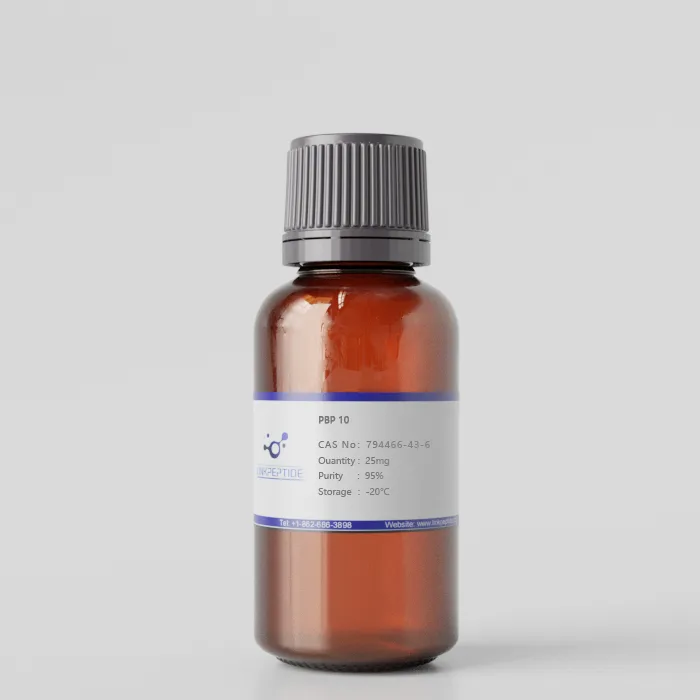
Product Name:PBP 10
CAS No:794466-43-6
Purity:95%
Molar Mass:1713.06
Chemical Formula:C84H127N24O15+
Storage:Store at -20 degrees Celsius
Sequence:RhB-QRLFQVKGRR-OH
Target:FPR2
Application:
PBP 10 is a synthetic peptide that functions as an antagonist of FPR2 (formyl peptide receptor 2), a receptor involved in regulating immune responses, inflammation, and cell migration. FPR2 mediates signaling pathways linked to both pro-inflammatory and anti-inflammatory responses, making it a critical player in immune regulation. PBP 10 is widely used in research to block FPR2 activity, allowing scientists to study its role in various pathological conditions, including inflammatory diseases, immune disorders, and cancer. By targeting FPR2, PBP 10 helps researchers investigate potential therapeutic approaches for modulating immune responses and inflammation.
Current Research:
PBP 10 (CAS: 794466-43-6) is a rhodamine B-conjugated decapeptide derived from the phosphatidylinositol 4,5-bisphosphate (PIP?)-binding domain of gelsolin. It acts as a selective antagonist of formyl peptide receptor 2 (FPR2), also known as formyl peptide receptor-like 1 (FPRL1), and exhibits antimicrobial, anti-inflammatory, and immunomodulatory activities.
Biological Activity
FPR2 Antagonism: PBP 10 selectively blocks FPR2-mediated signaling pathways, such as NADPH oxidase activity, without significantly affecting other formyl peptide receptors like FPR1. This property allows for precise modulation of FPR2-specific immune responses.
Antimicrobial Effects: PBP 10 disrupts bacterial cell membranes and displays potent activity against both Gram-positive and Gram-negative bacteria. It targets bacterial components, including lipopolysaccharides (LPS) and lipoteichoic acid (LTA), leading to microbial cell death.
Anti-Inflammatory Properties: The peptide inhibits cell motility and cytoskeletal reorganization by binding to PIP?, thus modulating inflammatory responses. It also exhibits antiviral effects, particularly against influenza viruses, by interfering with virus-induced ERK signaling pathways.
Applications in Research
PBP 10 is widely utilized in:
Inflammation Studies: Investigating the role of FPR2 in immune cell migration, inflammatory signaling, and resolution of inflammation.
Antimicrobial Research: Exploring host defense mechanisms and developing antimicrobial strategies.
Cellular Dynamics: Studying cytoskeletal organization, actin assembly, and cell motility in response to external stimuli.
Conclusion
PBP 10 is an indispensable tool in immunology and microbiology research, providing insights into FPR2-mediated signaling and its implications in inflammation, infection, and antiviral defense mechanisms.
Reference:
Get a Quote
 LinkPeptide