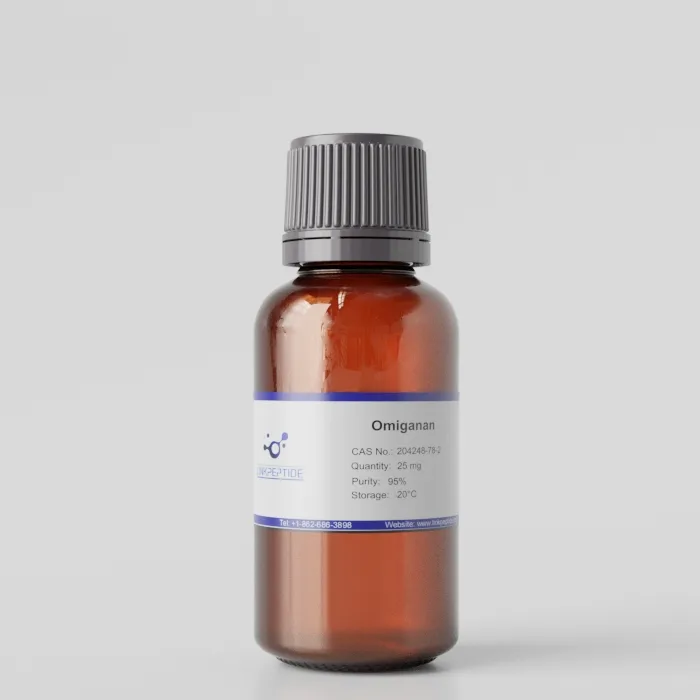
Product Name: Omiganan
Form: Free base
CAS No: 204248-78-2
Molar Mass: 1779.15
Chemical Formula: C90H127N27O12
Storage: Store at -20℃
Sequence: ILRWPWWPWRRK
Target: antibacterial
Application:
Omiganan (CAS: 204248-78-2) is a synthetic antimicrobial peptide with broad-spectrum activity against bacteria, fungi, and some viruses. It is derived from indolicidin, a natural antimicrobial peptide found in bovine neutrophils. Omiganan works by disrupting microbial cell membranes, leading to cell lysis and death. It has demonstrated efficacy against a wide range of pathogens, including antibiotic-resistant strains such as methicillin-resistant Staphylococcus aureus (MRSA) and vancomycin-resistant Enterococcus (VRE). Omiganan has been investigated for various clinical applications, including the treatment of skin and wound infections, oral mucositis, and urinary tract infections. It is available in topical formulations such as creams, gels, and mouth rinses. Clinical trials have shown promising results, with omiganan demonstrating efficacy in reducing bacterial burden and promoting wound healing. Additionally, its broad-spectrum activity and low propensity for resistance make it a valuable option for the management of multidrug-resistant infections. Despite its potential, further research is needed to optimize dosing regimens, evaluate long-term safety, and explore additional therapeutic indications for omiganan. Overall, omiganan represents a promising antimicrobial agent with the potential to address the growing challenge of antimicrobial resistance and improve outcomes for patients with infectious diseases.
Current Research:
Omiganan (also known as OM-101) is a synthetic antimicrobial peptide (AMP) designed to combat skin infections caused by both Gram-positive and Gram-negative bacteria. It belongs to a class of cationic peptides, which exhibit broad-spectrum antimicrobial properties by targeting bacterial cell membranes. As a topical antimicrobial agent, omiganan has demonstrated potential in treating a variety of cutaneous infections, particularly in patients with conditions such as diabetic foot infections (DFI), wounds, and burns.
Mechanism of Action
Omiganan works through a well-established mechanism common to many antimicrobial peptides. It interacts with the lipid bilayer of bacterial membranes, which are often negatively charged due to components like phospholipids and lipopolysaccharides (in the case of Gram-negative bacteria). The positively charged nature of omiganan allows it to bind to the negatively charged components of the bacterial membrane, causing disruption and permeabilization. This results in leakage of intracellular contents, cell lysis, and bacterial death.
In contrast to traditional antibiotics, which often target specific bacterial enzymes or proteins, omiganan’s mechanism of action is based on disrupting the integrity of the bacterial membrane, making it less likely to induce resistance. This broad mechanism allows omiganan to act against a wide variety of pathogens, including multidrug-resistant strains that have developed resistance to conventional antibiotics.
Clinical Applications
Omiganan has primarily been investigated for the treatment of skin infections. It is typically used in topical formulations to treat minor cuts, abrasions, wounds, burns, and diabetic foot infections. Diabetic patients, who are prone to chronic wounds and infections due to compromised immunity and poor circulation, stand to benefit from the use of omiganan as a topical antimicrobial.
The peptide has shown promising results in clinical trials, especially in the context of diabetic foot infections (DFIs). Diabetic foot ulcers (DFUs) are difficult to manage due to the presence of both aerobic and anaerobic bacteria, as well as the potential for biofilm formation, which protects bacteria from conventional antibiotics. Omiganan has demonstrated efficacy in treating these types of infections by reducing bacterial load and promoting wound healing without the need for systemic antibiotics.
In addition to DFIs, omiganan is also being investigated for its use in treating superficial skin infections, such as those caused by Staphylococcus aureus (including methicillin-resistant Staphylococcus aureus, or MRSA), Escherichia coli, and Pseudomonas aeruginosa—common pathogens in hospital and community-acquired skin infections.
Advantages Over Traditional Antibiotics
Broad-Spectrum Activity: Omiganan is effective against a wide range of bacterial pathogens, including both Gram-positive and Gram-negative bacteria. This makes it a versatile agent for treating mixed infections, which are often present in chronic wounds or skin lesions.
Minimal Resistance Development: One of the key advantages of antimicrobial peptides like omiganan is their low likelihood of resistance. Because they act by disrupting bacterial membranes, bacteria have fewer opportunities to develop resistance compared to traditional antibiotics that target specific proteins or enzymes.
Topical Application: As a topical agent, omiganan is applied directly to the infection site, minimizing the risk of systemic side effects such as gastrointestinal issues or nephrotoxicity associated with oral or intravenous antibiotics. This makes it particularly suitable for treating superficial or localized infections.
Safety Profile: Omiganan is generally well tolerated with a low incidence of adverse effects. Its localized application means it does not cause the common systemic side effects associated with oral or IV antibiotics, making it a safer option for chronic or long-term use.
Effective Against Resistant Strains: Omiganan has demonstrated effectiveness against methicillin-resistant Staphylococcus aureus (MRSA) and other multidrug-resistant (MDR) pathogens, which are a growing concern in healthcare settings. The peptide's action on bacterial membranes reduces the likelihood of developing resistance, which is a major advantage over conventional antibiotics.
Clinical Trials and Efficacy
Several clinical trials have assessed the safety and efficacy of omiganan in the treatment of skin infections. In one Phase 2 trial, omiganan was applied topically to patients with diabetic foot ulcers and showed positive results in terms of reducing bacterial load and promoting healing, with a good safety profile. The PEP-01 trial, specifically focused on diabetic foot infections, showed that omiganan was non-inferior to oral antibiotics, such as ciprofloxacin, in terms of efficacy while being associated with fewer side effects.
Although omiganan has shown excellent efficacy in treating mild to moderate skin infections, it is not typically used for deep tissue infections or severe systemic infections due to its topical application and limited penetration into deeper tissues. However, it has proven useful in preventing infection in surgical wounds and minor burns, especially in patients who may be at risk of infection due to compromised immune systems.
Safety and Tolerability
Omiganan has been shown to be generally well tolerated when applied topically. The most common adverse effects are local skin reactions, such as irritation, itching, or redness at the application site. These side effects are typically mild and resolve once treatment is discontinued.
Because omiganan is not absorbed into the bloodstream to any significant degree, the risk of systemic toxicity is extremely low. This makes it an ideal option for patients with chronic conditions like diabetes, where systemic antibiotic use may be more risky or impractical.
Future Directions
The clinical use of omiganan is expanding beyond diabetic foot infections to include other skin conditions such as burns, chronic wounds, and surgical site infections. Research is also ongoing to investigate its potential in preventing infections in patients with compromised immune systems or post-surgical patients who are at increased risk for skin infections.
Additionally, combination therapies involving omiganan and other antimicrobial agents are being explored, particularly for infections caused by biofilm-forming pathogens that are resistant to conventional antibiotics. Omiganan’s ability to disrupt biofilms, a common feature in chronic wounds, could make it an effective adjunct in the treatment of chronic infections.
Conclusion
Omiganan represents a promising topical antimicrobial peptide for the treatment of cutaneous infections, particularly in diabetic foot infections, chronic wounds, and burns. Its broad-spectrum activity, low risk of resistance, and local application offer significant advantages over traditional antibiotics. Though its use is primarily limited to mild to moderate infections, its effectiveness in preventing and treating skin infections—particularly those caused by multidrug-resistant pathogens—makes it a valuable tool in modern antimicrobial therapy. Further research will likely expand its use and explore its potential in more severe infection contexts.
Reference:
Get a Quote
 LinkPeptide