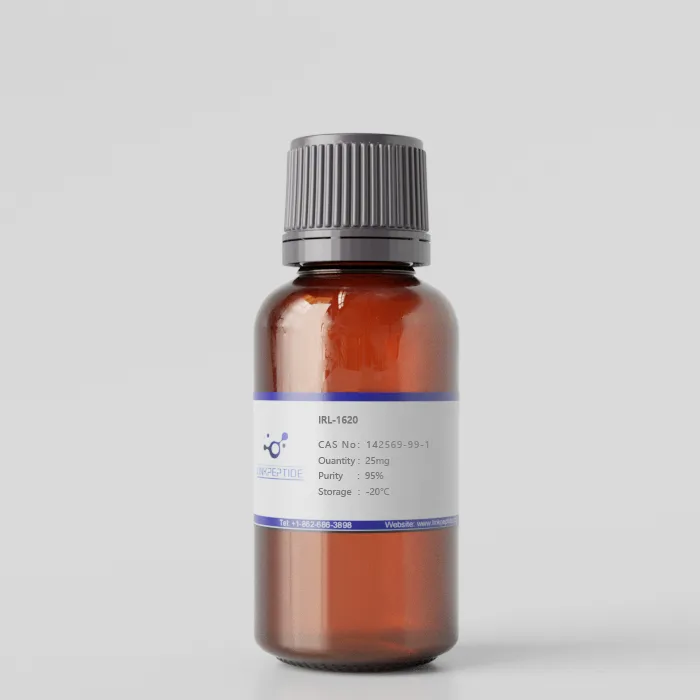
Product Name:Lys-Bradykinin
CAS No:342-10-9
Purity:95%
Molar Mass:1188.39
Chemical Formula:C56H85N17O12
Storage:Store at -20 degrees Celsius
Sequence:KRPPGFSPFR
Target:bradykinin
Application:
Lys-Bradykinin is a modified form of bradykinin in which the terminal arginine (Arg9) is replaced by lysine. This alteration affects the peptide's interaction with bradykinin receptors, primarily enhancing its affinity for the B2 receptor while having a reduced affinity for the B1 receptor. Lys-Bradykinin is used in research to study the physiological roles of bradykinin in vasodilation, pain, and inflammation. It helps in understanding the receptor-specific actions of bradykinin and is valuable in investigating the mechanisms underlying cardiovascular and inflammatory responses.
Current Research:
Lys-Bradykinin, also known as kallidin, is a decapeptide (ten amino acids) that functions as a potent vasodilator and mediator in various physiological processes, including inflammation, blood pressure regulation, and pain sensation. Its amino acid sequence is Lys-Arg-Pro-Pro-Gly-Phe-Ser-Pro-Phe-Arg.
Biosynthesis and Activation
Kallidin is generated through the enzymatic cleavage of low-molecular-weight kininogen by tissue kallikrein. This process is a key component of the kinin–kallikrein system, which plays a crucial role in cardiovascular homeostasis and inflammatory responses. Upon release, kallidin can be further processed by carboxypeptidases, such as kininase I, to produce des-Arg¹⁰-kallidin, an active metabolite that selectively activates bradykinin B₁ receptors.
Receptor Interactions
Kallidin exerts its biological effects primarily through activation of bradykinin B₂ receptors, which are constitutively expressed in various tissues. Binding to these receptors leads to vasodilation, increased vascular permeability, and stimulation of nociceptive pathways, contributing to pain and inflammatory responses. The metabolite des-Arg¹⁰-kallidin, on the other hand, selectively activates B₁ receptors, which are upregulated during tissue injury and inflammation, further modulating inflammatory processes.
Physiological and Pathological Roles
As a potent vasodilator, kallidin contributes to the regulation of blood pressure by promoting the relaxation of vascular smooth muscle. Its role in increasing vascular permeability facilitates the extravasation of immune cells to sites of injury or infection, thereby enhancing inflammatory responses. Additionally, kallidin's activation of sensory neurons is associated with the sensation of pain, linking it to nociceptive pathways.
Dysregulation of kallidin production or degradation has been implicated in various pathological conditions, including hypertension, chronic inflammatory diseases, and certain pain disorders. Elevated levels of kallidin and its metabolites can lead to excessive vasodilation and increased vascular permeability, contributing to edema and hypotension.
Therapeutic Implications
Understanding the role of kallidin in these processes has spurred interest in developing therapeutic agents that modulate its activity or its interactions with bradykinin receptors. For instance, bradykinin receptor antagonists are being explored for their potential to treat conditions characterized by excessive inflammation and pain.
Conclusion
Lys-Bradykinin (kallidin) is a critical mediator in the kinin–kallikrein system, influencing vascular tone, inflammatory responses, and pain perception. Ongoing research into its mechanisms of action and interactions with bradykinin receptors continues to provide insights into its roles in health and disease, paving the way for potential therapeutic interventions targeting related pathways.
Reference:
Get a Quote
 LinkPeptide

![[Orn5]-URP](https://www.linkpeptide.com/wp-content/uploads/2024/10/Orn5-URP-jpg-3.webp "[Orn5]-URP")