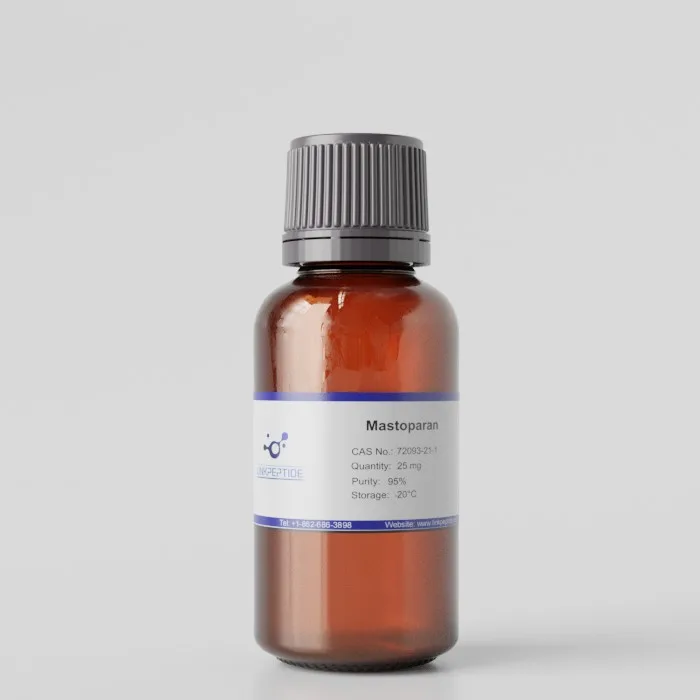
Product Name: Mastoparan
CAS No: 72093-21-1
Purity: 95%
Molar Mass: 1478.9
Chemical Formula: C70H131N19O15
Storage: Store at -20 degrees Celsius
Sequence: INLKALAALAKKIL
Application:
Mastoparan is a peptide toxin derived from wasp venom, known for its ability to interact with G-protein coupled receptors (GPCRs). It stimulates the activation of G-proteins, leading to increased intracellular calcium levels and the release of various cellular mediators. Mastoparan's mechanism of action involves the activation of phospholipase C, which subsequently generates inositol triphosphate and diacylglycerol, amplifying cellular responses. This peptide has been used extensively in research to study GPCR signaling pathways, exocytosis, and cellular communication. Additionally, its unique properties hold potential for therapeutic applications in modulating immune responses and treating certain inflammatory conditions.
Current Research:
Mastoparan, a 14-amino-acid peptide derived from wasp venom, is a potent modulator of cellular signaling pathways, making it a valuable tool in drug discovery and molecular research. Its amphipathic helical structure enables it to interact with biological membranes and activate G-proteins independently of classical receptors, influencing a wide array of cellular processes.
Mechanism of Action
Mastoparan exerts its effects by directly activating heterotrimeric G-proteins, mimicking receptor-mediated signaling. This leads to downstream effects such as increased phospholipase C activity, calcium mobilization, and cAMP production. Additionally, mastoparan disrupts membrane integrity and induces pore formation, which is implicated in its cytotoxic and antimicrobial activities.
Research Applications
Signal Transduction Studies
Mastoparan serves as a model for studying G-protein activation and signaling pathways. Its receptor-independent mechanism provides insights into the regulation of G-protein-coupled signaling in various physiological and pathological contexts.
Antimicrobial Activity
Mastoparan exhibits broad-spectrum antimicrobial effects by disrupting bacterial membranes. This property positions it as a candidate for developing novel antimicrobial agents, particularly against drug-resistant pathogens.
Cancer Research
The peptide’s ability to modulate cellular membranes and induce apoptosis has made it a focus in oncology research. Preclinical studies suggest its potential in selectively targeting cancer cells while sparing normal tissues.
Immune Modulation
Mastoparan has shown the ability to influence immune cell activation and cytokine release, suggesting potential applications in immunotherapy and inflammatory disease research.
Challenges and Future Directions
While mastoparan’s bioactivity is promising, its hemolytic and cytotoxic effects pose challenges for therapeutic development. Research efforts are focused on engineering mastoparan analogs to enhance selectivity and reduce toxicity, broadening its applicability.
For researchers, mastoparan offers a unique platform to explore G-protein signaling, membrane dynamics, and therapeutic strategies, reinforcing its significance in cellular and molecular research.
Reference:
Get a Quote
 LinkPeptide