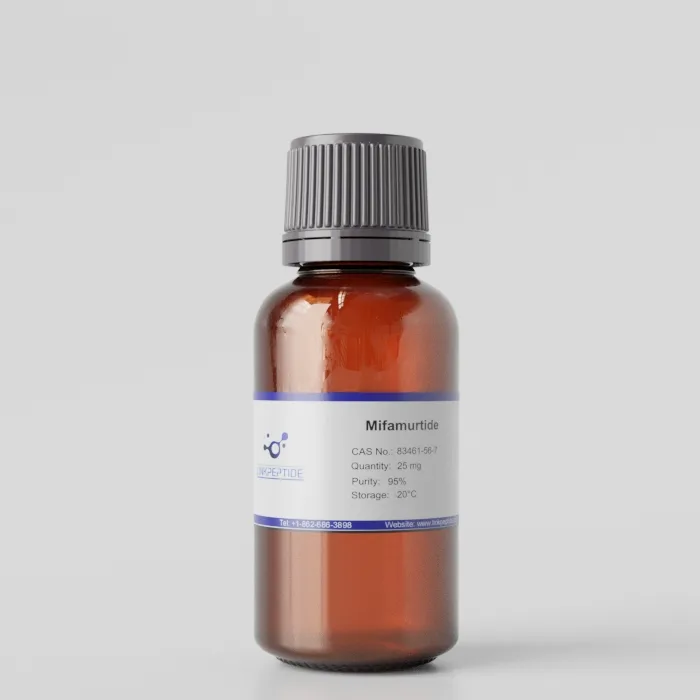
Product Name: Mifamurtide
Form: Free base
CAS No: 83461-56-7
Molar Mass: 1237.5
Chemical Formula: C59H109N6O19P
Synonyms: CGP 19835, L-MTP-PE, MLV 19835
Storage: Store at -20℃
Target: NOD2
Application:
Mifamurtide (CAS: 83461-56-7), also known as muramyl dipeptide-phosphatidylethanolamine, is a synthetic immunostimulant drug used in the treatment of osteosarcoma, a type of bone cancer. It functions by activating monocytes and macrophages via interaction with toll-like receptor 2 (TLR2), leading to the release of cytokines such as interleukin-1 (IL-1) and tumor necrosis factor-alpha (TNF-α). This immune activation enhances the body's antitumor response and helps in the elimination of cancer cells. Mifamurtide is typically administered as adjuvant therapy following surgical resection of osteosarcoma to reduce the risk of disease recurrence. In pharmaceutical chemistry, the development of mifamurtide represents a milestone in the field of cancer immunotherapy, providing a targeted approach to bolster the immune system's ability to recognize and destroy malignant cells. Its application in osteosarcoma treatment underscores its significance in improving outcomes for patients with this aggressive form of cancer. Additionally, ongoing research explores mifamurtide's potential in combination therapies and its efficacy in other malignancies, reflecting its importance in advancing cancer treatment strategies.
Current Research:
Mifamurtide, also known by its brand name Mepact, is an immunotherapy drug used primarily in the treatment of osteosarcoma, a type of bone cancer, particularly in patients with high-risk localized osteosarcoma after surgery. It is a liposomal formulation of a synthetic analogue of a macrophage-activating factor (MAF), which stimulates the immune system to target and destroy cancer cells. By activating the innate immune response, mifamurtide enhances the body’s ability to recognize and attack osteosarcoma cells, thus improving outcomes for patients undergoing adjuvant therapy post-surgery.
Mechanism of Action
Mifamurtide works by binding to toll-like receptor 2 (TLR2) on the surface of macrophages, which are immune cells involved in detecting and responding to threats in the body. Once bound, mifamurtide activates these macrophages, triggering an immune response that includes the release of pro-inflammatory cytokines and activation of the immune system’s cytotoxic functions. This leads to the destruction of osteosarcoma cells through both direct cytotoxic effects and the stimulation of other immune responses such as the recruitment of natural killer cells and T-cells to the tumor site. The drug also enhances the recognition of osteosarcoma cells by the immune system, which helps in clearing residual tumor cells after surgery.
Indications and Uses
Mifamurtide is approved for use in patients with high-risk localized osteosarcoma, typically in combination with standard chemotherapy following surgical resection of the tumor. It is used to reduce the risk of recurrence and to improve overall survival in patients who have undergone complete surgical removal of the primary tumor. Mifamurtide is administered as an intravenous infusion, typically over a series of weeks to months, depending on the treatment plan. The drug is usually given in conjunction with other chemotherapy agents as part of a comprehensive treatment regimen aimed at preventing relapse and improving long-term outcomes for patients with osteosarcoma.
Efficacy and Clinical Benefits
Clinical studies have shown that mifamurtide significantly improves the overall survival rate and reduces the risk of recurrence in patients with high-risk localized osteosarcoma. In a pivotal trial, patients treated with mifamurtide after surgery demonstrated improved event-free survival compared to those receiving chemotherapy alone. This improvement was particularly significant in patients who had previously undergone resection of the primary tumor and were at high risk for relapse. The addition of mifamurtide to standard chemotherapy regimens has proven to be an effective strategy for improving the prognosis of patients with this aggressive form of cancer.
Safety and Tolerability
Mifamurtide is generally well tolerated, but it can cause a range of side effects, the most common of which are related to infusion reactions. These may include fever, chills, nausea, and fatigue, which are typically managed with supportive care. In some cases, patients may experience more severe reactions such as hypotension, respiratory symptoms, or anaphylactic responses, which necessitate close monitoring during administration. Other potential side effects include hematologic toxicities such as thrombocytopenia, neutropenia, and anemia, which are common in cancer treatment regimens. Despite these risks, the benefits of mifamurtide in reducing the risk of recurrence in high-risk osteosarcoma patients outweigh the potential adverse effects.
Advantages and Limitations
The main advantage of mifamurtide is its ability to improve long-term survival and reduce the risk of recurrence in patients with osteosarcoma, particularly when used as part of an adjuvant therapy regimen after surgery. It is one of the few immunotherapy options available for osteosarcoma, a disease that has limited treatment options beyond surgery and chemotherapy. However, the drug is not without its limitations. The intravenous infusion requirement may be cumbersome for patients, and the drug's side effect profile requires careful monitoring. Furthermore, mifamurtide's use is limited to osteosarcoma, and its efficacy in other cancer types has not been established.
Future Directions
Research is ongoing to explore the potential of mifamurtide in combination with newer cancer therapies, such as immune checkpoint inhibitors or targeted therapies. These combinations could further enhance its effectiveness and expand its use in other cancers beyond osteosarcoma. Additionally, studies are looking into optimizing mifamurtide’s dosing and administration schedule to improve patient convenience and minimize side effects. Long-term studies are also needed to assess the potential for mifamurtide in preventing metastasis or improving outcomes in patients with metastatic osteosarcoma.
Reference:
Get a Quote
 LinkPeptide