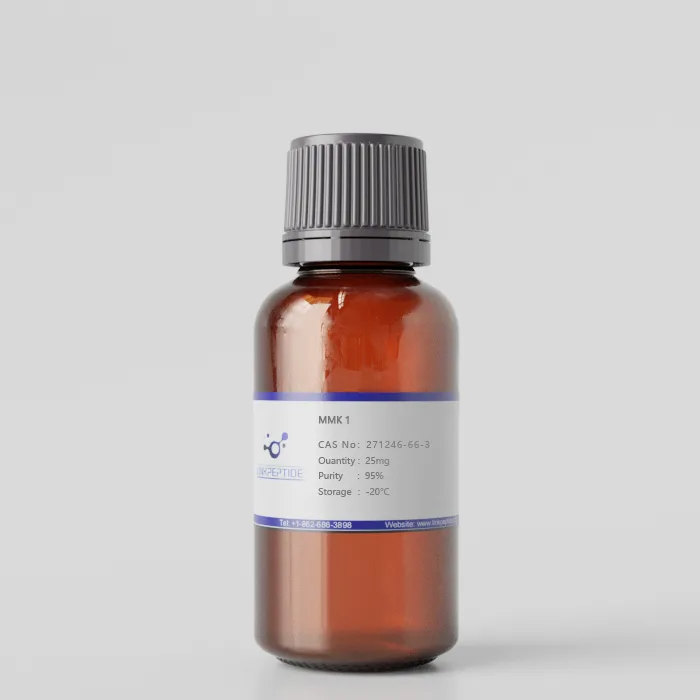
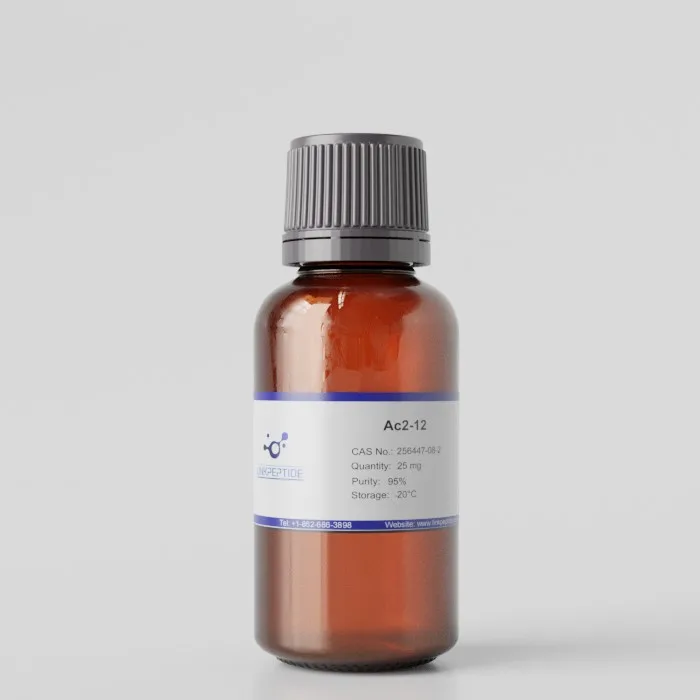
Product Name:MMK 1
CAS No:271246-66-3
Purity:95%
Molar Mass:1610.97
Chemical Formula:C75H123N19O18S
Storage:Store at -20 degrees Celsius
Sequence:LESIFRSLLFRVM
Target:FPR2
Application:
MMK 1 is a selective antagonist of the formyl peptide receptor 2 (FPR2), also known as FPRL1. FPR2 is a G protein-coupled receptor involved in modulating immune responses, including chemotaxis and inflammation. By inhibiting FPR2, MMK 1 helps researchers study the receptor's role in inflammatory diseases, immune system regulation, and potential therapeutic interventions. Its use is significant in exploring the mechanisms of inflammation and developing treatments for conditions associated with excessive or dysregulated immune responses.
Current Research:
MMK-1 (CAS: 271246-66-3) is a synthetic peptide recognized for its potent and selective agonistic activity toward the formyl peptide receptor-like 1 (FPRL-1), also known as formyl peptide receptor 2 (FPR2). This receptor is integral to immune responses, particularly in the chemotaxis and activation of phagocytic leukocytes.
Biological Activity
MMK-1 exhibits high specificity for FPR2, with an effective concentration (EC₅₀) of less than 2 nM, while demonstrating minimal activity on FPR1 (EC₅₀ > 10,000 nM). This selectivity enables MMK-1 to effectively induce chemotaxis and calcium mobilization in human monocytes and neutrophils. Additionally, MMK-1 enhances the production of pro-inflammatory cytokines, such as interleukin-1 beta (IL-1β) and interleukin-6 (IL-6), in human monocytes. Notably, it has been observed to exert anxiolytic-like effects in murine models.
Applications in Research
Due to its specificity and efficacy, MMK-1 serves as a valuable tool in immunological research, particularly in:
Studying FPR2-Mediated Signaling Pathways: MMK-1 aids in elucidating the mechanisms by which FPR2 modulates immune cell behavior and inflammatory responses.
Investigating Chemotaxis and Calcium Mobilization: Researchers utilize MMK-1 to understand how immune cells migrate toward infection sites and how intracellular calcium levels are regulated during immune responses.
Exploring Neuroimmune Interactions: The peptide's anxiolytic-like activity provides insights into the interplay between the immune system and neurological functions.
Storage and Handling
For optimal stability, MMK-1 should be stored at -20°C in a desiccated environment. It is recommended to reconstitute the peptide in sterile water or an appropriate buffer before use.
Conclusion
MMK-1 is a potent and selective FPR2 agonist that significantly contributes to the study of immune cell dynamics and receptor-specific signaling pathways. Its application enhances the understanding of immune responses and supports the development of therapeutic strategies targeting inflammatory and neuroimmune disorders.
Reference:
Get a Quote
 LinkPeptide