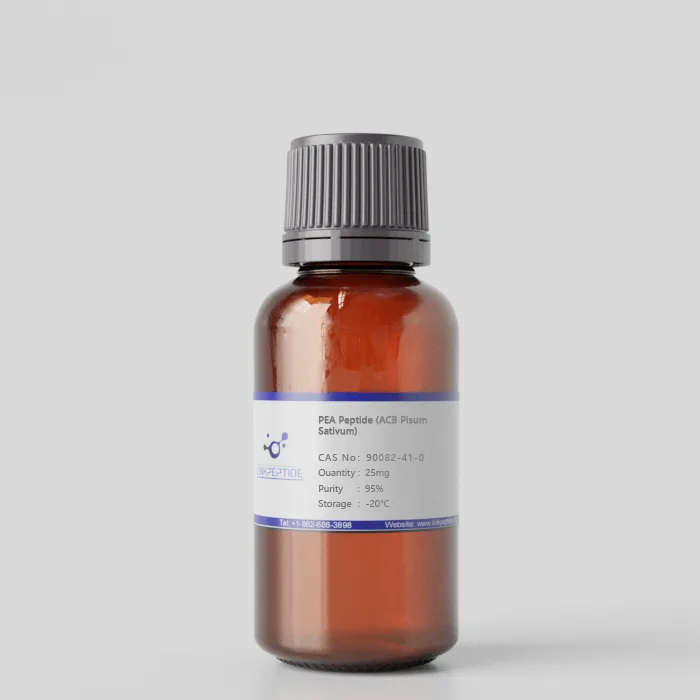
Product Name: PEA Peptide (ACB Pisum Sativum)
Cas No: 90082-41-0
Purity: 95%
Storage: Keep in dark and cool dry place -5~8 degree Celsius
Application:
PEA Peptide (ACB Pisum Sativum) is a plant-derived peptide complex obtained from Pisum sativum (pea), known for its ability to support skin firmness, smoothness, and overall resilience. Rich in amino acids and low–molecular weight peptides, it helps promote a strengthened skin barrier while improving hydration and texture. In cosmetic research, PEA Peptide is frequently used to explore anti-aging benefits, soothing activity, and skin-revitalizing mechanisms. Its excellent stability and compatibility with water-based formulations make it ideal for serums, creams, and restorative treatments targeting elasticity, suppleness, and a more refined appearance.
Current Research:
PEA Peptide (ACB Pisum Sativum) is a cosmetic active based on hydrolyzed pea protein (Pisum sativum peptide), positioned as a plant-derived multifunctional ingredient for skin and hair. It’s typically supplied as a water-soluble peptide complex with film-forming, conditioning, and antioxidant properties, designed for moisturising, anti-aging and volumizing claims in modern formulations.
Origin and general cosmetic profile
ACB Pisum Sativum Peptide is produced by controlled hydrolysis of pea proteins, yielding low-molecular-weight peptides that are more bioavailable than whole proteins and easier to formulate into serums, emulsions, and haircare. Supplier data and technical sheets consistently describe it as a plant-based, hypoallergenic protein hydrolysate that provides antioxidant, smoothing, hydrating and anti-aging benefits for both skin and hair, with additional volumizing effects in hair-care formats.
Skin barrier, hydration and texture
Current technical and marketing literature around pea peptides emphasises barrier support and long-lasting hydration. Pea protein peptides are reported to strengthen the skin barrier, reduce transepidermal water loss, and promote a more supple, resilient stratum corneum—effects that translate into improved softness and reduced dryness in cosmetic use. These properties are useful for “barrier-repair,” “skin resilience,” and “comforting hydration” concepts, especially for dry or environmentally stressed skin.
Several overviews of pea extract and peptide actives note that pea-derived ingredients can help enhance firmness and elasticity and improve overall skin texture with regular use, which fits well with anti-aging and “skin vitality” positioning.
Antioxidant, anti-aging and collagen support
Pea peptide actives are regularly positioned as antioxidants that help neutralise free radicals and reduce oxidative stress induced by UV and pollution—mechanisms central to photoaging and dullness. A summary of cosmetic science data reports that Pisum sativum peptide fractions can reduce UV-induced oxidative stress and inhibit collagen breakdown in skin models, while pea protein hydrolysates show matrix metalloproteinase (MMP)–inhibitory and antioxidant activity. Together, these support claims around protecting dermal structure and helping maintain skin firmness.
A recent clinical study on a retinol topical formulation combining low-dose retinol, a pea peptide identified via AI screening, and an antioxidant blend showed improvements in visible signs of aging, hydration, elasticity and transepidermal water loss over an eight-week period. While this formulation includes other actives, it illustrates how pea peptides are being integrated into sophisticated anti-aging systems, often as supportive, tolerance-enhancing components alongside retinoids.
More broadly, recent reviews on cosmetic peptides highlight plant-derived peptides, delivery systems (such as nanocarriers) and AI-assisted peptide discovery as growing areas in anti-aging R&D, into which Pisum sativum peptides comfortably fit as “green,” multifunctional options.
Brightening and radiance
Some commercial pea peptide complexes, often marketed as “natural pea peptide,” are documented to provide skin brightening and tone-evening benefits. In vitro data from supplier fact sheets indicate that pea extract/peptide systems can reduce melanin production in treated skin cells, leading to lighter and more even-looking skin. This supports cosmetic claims around radiance, luminosity and dark-spot–prone skin, especially when PEA Peptide is combined with niacinamide or other brightening agents.
Hair, scalp and anti-pollution benefits
For haircare, ACB Pisum Sativum Peptide is promoted as a volumizing and conditioning active. Technical data emphasise its film-forming ability on the hair shaft, which helps “seal” the cuticle, increase perceived hair thickness, and improve smoothness and manageability. Supplier testing also describes benefits for scalp and follicle health and anti-pollution protection of hair fibres when used at recommended levels—useful for “urban shield,” “scalp care,” and “fuller hair” concepts.
How to position PEA Peptide (ACB Pisum Sativum)
Putting this together, current research and technical literature support positioning PEA Peptide as:
A plant-based peptide active with antioxidant and collagen-protective properties for anti-aging lines.
A barrier-supporting, hydrating peptide that reduces TEWL and improves skin comfort and texture.
A brightening-support ingredient in radiance formulas, especially when paired with niacinamide or other depigmenting cosmetics.
A hair and scalp care booster that adds volume, smoothness and protection from environmental stressors.
For your product copy, you can confidently frame PEA Peptide (ACB Pisum Sativum) as a versatile, sustainable peptide active that supports smoother, firmer, more resilient-looking skin and fuller, healthier-looking hair, while aligning well with vegan and “green peptide” stories.
Get a Quote
 LinkPeptide