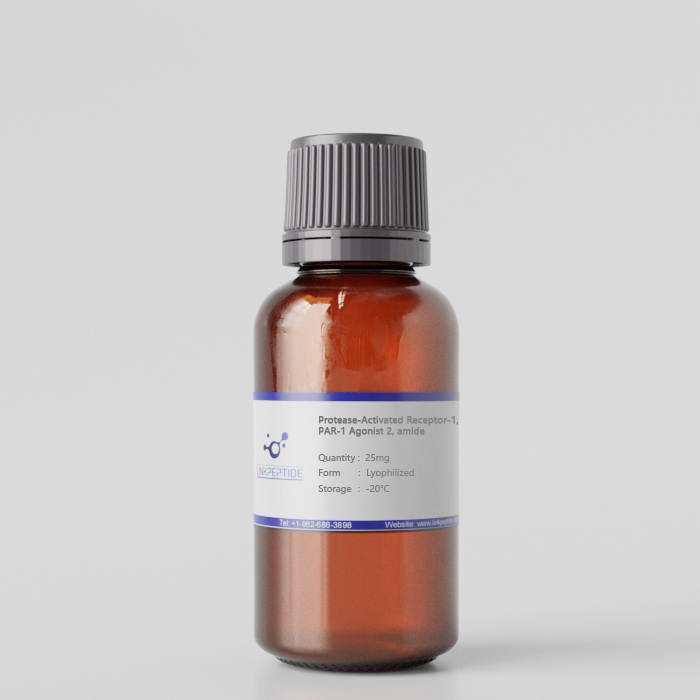
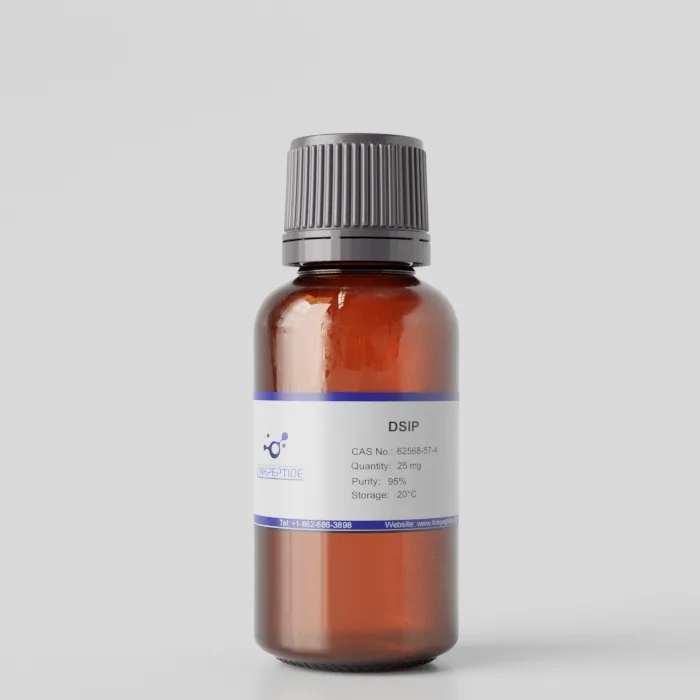
Product Name: Protease-Activated Receptor-1, PAR-1 Agonist 2, amide
Sequence One Letter Code: TFLLRNPNDK-NH2
Sequence Three Letter Code: H-Thr-Phe-Leu-Leu-Arg-Asn-Pro-Asn-Asp-Lys-NH2
Chemical Formula:C54H89N17O15
Molecular Weight: 1216.5
Purity: 95%
Form: Lyophilized
Storage Conditions: - 20 °C
Research Area: Cardiovascular Disease Research
Source / Species: human
Conjugation: Unconjugated
Code Nacres: NA.26
Application: This thrombin receptor-activating peptide functions as a selective agonist of Protease-Activated Receptor-1 (PAR-1). It mimics the tethered ligand sequence exposed upon thrombin-mediated proteolytic cleavage, thereby reversibly activating PAR-1 signaling without enzymatic cleavage. Activation induces cellular responses similar to thrombin stimulation, including increased vascular permeability and pro-inflammatory signaling. The peptide is widely used in studies of coagulation pathways, endothelial cell biology, vascular barrier regulation, and protease-activated receptor pharmacology. It provides a controlled tool for dissecting PAR-1–mediated signaling cascades in inflammation and thrombosis research.
Current Research: Protease-activated receptors (PARs) are a unique class of G protein–coupled receptors that are activated through proteolytic cleavage rather than traditional ligand binding. Among them, Protease-Activated Receptor-1 (PAR-1) plays a central role in coagulation, vascular signaling, and inflammatory responses. PAR-1 is the primary receptor through which thrombin, a key enzyme in the coagulation cascade, exerts many of its cellular effects. To study PAR-1 signaling independently of enzymatic proteolysis, researchers often use thrombin receptor–activating peptides (TRAPs)—synthetic peptides that mimic the receptor’s natural tethered ligand sequence. These peptides provide a precise and controllable method for activating PAR-1–mediated signaling pathways in experimental systems. Mechanism of PAR-1 Activation PAR-1 belongs to the family of protease-activated receptors, which are activated when extracellular proteases cleave the receptor’s N-terminal domain. In the case of PAR-1, thrombin cleaves the receptor at a specific site, exposing a new N-terminal sequence that functions as a tethered ligand. This newly exposed sequence folds back and binds intramolecularly to the receptor itself, triggering receptor activation and initiating intracellular signaling. The synthetic thrombin receptor–activating peptide reproduces this tethered ligand sequence. When added to cells, the peptide binds directly to the receptor’s activation site, mimicking the effect of thrombin cleavage without requiring enzymatic proteolysis. This allows researchers to activate PAR-1 signaling in a reversible and highly controlled manner. Advantages of Synthetic PAR-1 Agonist Peptides Using a thrombin receptor–activating peptide provides several advantages compared with stimulation using thrombin itself. Thrombin is a multifunctional enzyme that participates in numerous biochemical processes, including fibrin formation, platelet activation, and proteolysis of various substrates. These additional activities can complicate interpretation of experimental results. In contrast, TRAP peptides selectively activate PAR-1 signaling without initiating broader proteolytic effects. This specificity allows investigators to isolate receptor-mediated pathways and examine downstream signaling events more clearly. Because the peptide acts as a direct receptor agonist, it also enables precise control over concentration, timing, and duration of receptor activation in cell-based assays. PAR-1 Signaling Pathways Activation of PAR-1 initiates a cascade of intracellular signaling events mediated by heterotrimeric G proteins and other regulatory molecules. Once activated, PAR-1 can couple to multiple G protein pathways, including Gq, Gi, and G12/13 signaling, leading to activation of phospholipase C, intracellular calcium mobilization, and cytoskeletal rearrangements. These signaling pathways influence a wide range of cellular responses, including changes in cell morphology, secretion of inflammatory mediators, and modulation of gene expression. In endothelial cells, PAR-1 activation plays a critical role in regulating vascular barrier function and inflammatory responses. Because PAR-1 signaling intersects with many biological processes, controlled activation using TRAP peptides has become a valuable experimental strategy for dissecting these pathways. Effects on Vascular and Endothelial Cells One of the most well-characterized effects of PAR-1 activation occurs in vascular endothelial cells, which line the interior surface of blood vessels. When PAR-1 is stimulated by thrombin or TRAP peptides, endothelial cells undergo cytoskeletal rearrangements that can alter the integrity of the vascular barrier. These changes may lead to increased vascular permeability, allowing plasma proteins and immune cells to pass through the endothelial layer. While this response can contribute to host defense and tissue repair during injury, excessive activation can promote inflammation and vascular leakage. By using thrombin receptor–activating peptides, researchers can investigate how PAR-1 signaling regulates endothelial barrier dynamics and vascular homeostasis. Applications in Coagulation and Thrombosis Research PAR-1 is closely linked to the coagulation system, as thrombin is generated during the clotting cascade and activates PAR-1 on platelets, endothelial cells, and other vascular cell types. Through these interactions, PAR-1 contributes to platelet activation, clot stabilization, and vascular signaling during hemostasis. TRAP peptides allow investigators to examine these processes without introducing active thrombin into experimental systems. This approach is particularly useful in studies focused on platelet activation pathways, coagulation signaling networks, and thrombosis mechanisms. Investigating Inflammation and Immune Signaling Beyond its role in coagulation, PAR-1 signaling also contributes to inflammatory responses. Activation of PAR-1 can stimulate production of cytokines, chemokines, and other inflammatory mediators in endothelial cells and immune cells. These responses link coagulation pathways with inflammatory signaling, a relationship often referred to as thromboinflammation. TRAP peptides provide a controlled method for studying how PAR-1 activation influences inflammatory signaling pathways and immune cell behavior. Such studies are particularly relevant in conditions where inflammation and coagulation pathways intersect, including vascular injury, infection, and inflammatory diseases. Applications in Receptor Pharmacology Thrombin receptor–activating peptides are also widely used in protease-activated receptor pharmacology. Because they directly stimulate PAR-1 without protease activity, they serve as standard reagents for characterizing receptor function, signaling pathways, and ligand interactions. Researchers use these peptides to investigate receptor desensitization, signaling bias, and cross-talk between PAR-1 and other receptor systems. These experiments contribute to understanding how protease-activated receptors function in physiological and pathological contexts. Conclusion The thrombin receptor–activating peptide (TRAP) serves as a selective agonist for Protease-Activated Receptor-1, reproducing the tethered ligand sequence that normally appears following thrombin-mediated cleavage. By activating PAR-1 without enzymatic proteolysis, the peptide provides a controlled and specific tool for studying receptor-mediated signaling. Its applications span coagulation research, endothelial cell biology, vascular permeability studies, inflammatory signaling, and receptor pharmacology. Through these experimental uses, TRAP peptides continue to support investigations into the complex signaling networks linking thrombosis, vascular regulation, and inflammation.
Get a Quote
 LinkPeptide