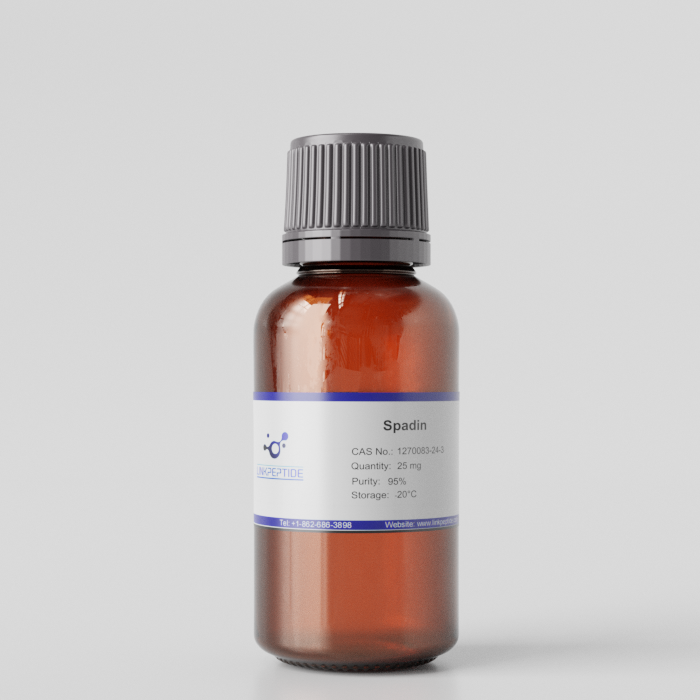
Product Name: Spadin
CAS No: 1270083-24-3
Purity: 95%
Molar Mass: 2012.3
Chemical Formula: C96H142N26O22
Storage: Store at -20 degrees Celsius
Sequence: YAPLPRWSGPIGVSWGLR
Target: TREK-1 channel blocker
Application:
Spadin is a peptide derived from the propeptide sortilin that acts as a potent antidepressant by targeting the TREK-1 (TWIK-related K+ channel 1) potassium channel. By inhibiting TREK-1, Spadin enhances neuronal excitability and increases the levels of neurotrophic factors, which are crucial for neurogenesis and synaptic plasticity. This peptide shows significant potential in the treatment of major depressive disorder, offering a rapid onset of antidepressant effects with fewer side effects compared to traditional therapies. Spadin's unique mechanism of action positions it as a promising candidate for novel antidepressant development and advancing mental health research.
Current Research:
Spadin is a peptide derived from the propeptide generated during the maturation of neurotensin receptor 3 (NTSR3), also known as sortilin. It functions as a potent antagonist of the two-pore domain potassium channel TREK-1 (KCNK2), which has been implicated in the pathophysiology of depression. The inhibition of TREK-1 by spadin leads to antidepressant effects, positioning it as a promising candidate for novel therapeutic approaches in mood disorders.
Mechanism of Action
Spadin binds specifically to TREK-1 channels with high affinity, effectively blocking their activity. This blockade results in the modulation of neuronal excitability and enhancement of serotonergic neurotransmission, both of which are critical factors in mood regulation. Electrophysiological studies have demonstrated that spadin inhibits TREK-1 currents in various neuronal models, thereby increasing neuronal firing rates and promoting antidepressant-like effects.
Antidepressant Effects
In vivo studies have shown that spadin administration produces rapid antidepressant effects in rodent models. Behavioral assessments, such as the forced swimming test and tail suspension test, indicate that spadin-treated animals exhibit reduced immobility times, comparable to those observed with conventional antidepressants. Moreover, spadin has been found to enhance hippocampal neurogenesis and increase the phosphorylation of cAMP response element-binding protein (CREB), both of which are associated with antidepressant efficacy.
Pharmacokinetics and Safety
Preclinical evaluations suggest that spadin has favorable pharmacokinetic properties, including adequate bioavailability and a rapid onset of action. Importantly, spadin does not appear to affect other potassium channels, such as TREK-2 or TRAAK, indicating a high degree of specificity for TREK-1. This specificity minimizes potential off-target effects, enhancing its safety profile.
Clinical Implications
The unique mechanism of action of spadin, targeting TREK-1 channels, offers a novel approach to antidepressant therapy, especially for patients who are resistant to traditional treatments. Its rapid onset of action addresses a significant limitation of current antidepressants, which often require weeks to achieve therapeutic effects. Ongoing research aims to further elucidate the therapeutic potential of spadin and its analogs in clinical settings.
Conclusion
Spadin represents a promising advancement in the development of antidepressant agents, with its specific inhibition of TREK-1 channels leading to rapid and effective mood regulation. Continued research is essential to fully understand its therapeutic potential and to facilitate its translation from preclinical studies to clinical applications.
Reference:
Get a Quote
 LinkPeptide

![[Leu31,Pro34]-Neuropeptide Y (human, rat)](https://www.linkpeptide.com/wp-content/uploads/2024/10/Leu31Pro34-Neuropeptide-Y-human-rat-jpg-3.webp "[Leu31,Pro34]-Neuropeptide Y (human, rat)")