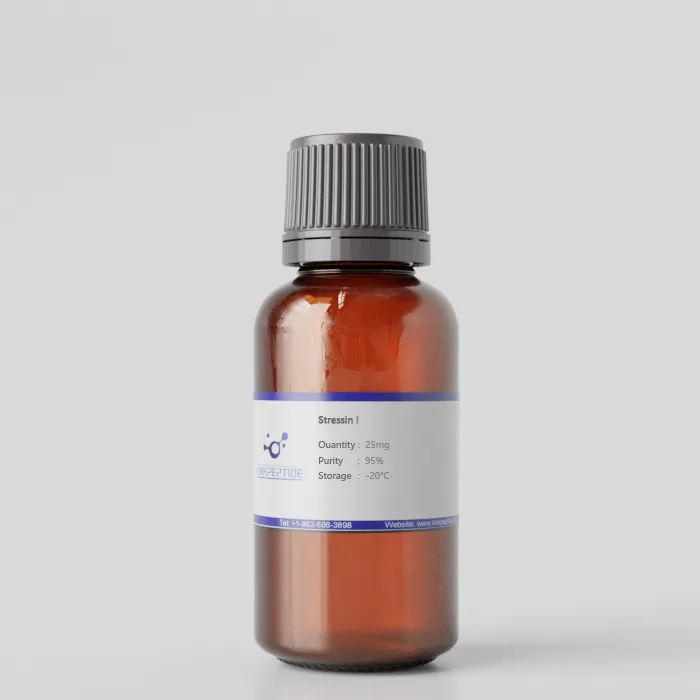
Product Name:Stressin I
Synonyms:Cyclo(31-34)[DPhe12,Nle21,38,Glu31,Lys34]Ac-hCRF(4-41)
Purity:95%
Molar Mass:4472.2
Chemical Formula:C203H337N57O56
Storage:Store at -20 degrees Celsius
Sequence:Ac-PPISLDLT-{d-Phe}-HLLREVLE-{Nle}-ARAEQLAQQEHSKRKLXEII-NH2
Target:CRF1 receptor-selective agonist
Application:
Stressin I is a synthetic peptide derived from the corticotropin-releasing factor (CRF) that is primarily used in research to study the physiological and behavioral effects of stress. As a potent CRF agonist, Stressin I binds to CRF receptors, particularly CRF1, and mimics the body's natural response to stress by stimulating the release of adrenocorticotropic hormone (ACTH) from the pituitary gland. This peptide is invaluable for investigating the mechanisms of stress-related disorders, such as anxiety, depression, and neuroendocrine dysfunction. Its high purity and stability make it ideal for use in experimental settings, offering reliable results in stress pathway research.
Current Research:
Stressin I, a synthetic peptide, represents a pivotal molecule in the exploration of receptor-targeted therapies. Its specific action on corticotropin-releasing factor (CRF) receptors, particularly CRF1, underscores its importance in studying stress-related pathways. Recent research highlights the role of Stressin I in modulating neuroendocrine responses and its potential to provide insights into the pathophysiology of psychiatric and neurodegenerative disorders.
CRF receptors, distributed across the central nervous system, mediate stress response, making them prime targets for novel therapeutic interventions. Stressin I has demonstrated high selectivity and efficacy in binding CRF1 receptors, enabling the dissection of receptor-specific signaling pathways. This precision is particularly valuable in differentiating CRF1 from CRF2 receptor-mediated effects, a distinction critical for therapeutic targeting in disorders such as anxiety, depression, and post-traumatic stress disorder (PTSD).
In preclinical studies, Stressin I has shown the capability to modulate hypothalamic-pituitary-adrenal (HPA) axis activity. By precisely inhibiting CRF1-mediated pathways, it offers a model to understand the receptor's involvement in stress hormone release and its downstream effects on immune and metabolic systems. This mechanism opens avenues for its potential application in developing treatments for stress-induced metabolic and inflammatory disorders.
Emerging research also explores the utility of Stressin I in high-throughput screening assays for CRF receptor modulators. Its robust pharmacological profile and stability make it a reliable tool for validating receptor-specific compounds, facilitating drug discovery pipelines.
Stressin I's contributions extend beyond basic research, serving as a cornerstone in the pursuit of targeted therapies for complex, stress-related conditions. As studies progress, its role in the advancement of receptor-specific drug discovery promises significant therapeutic breakthroughs.
Reference:
Get a Quote
 LinkPeptide