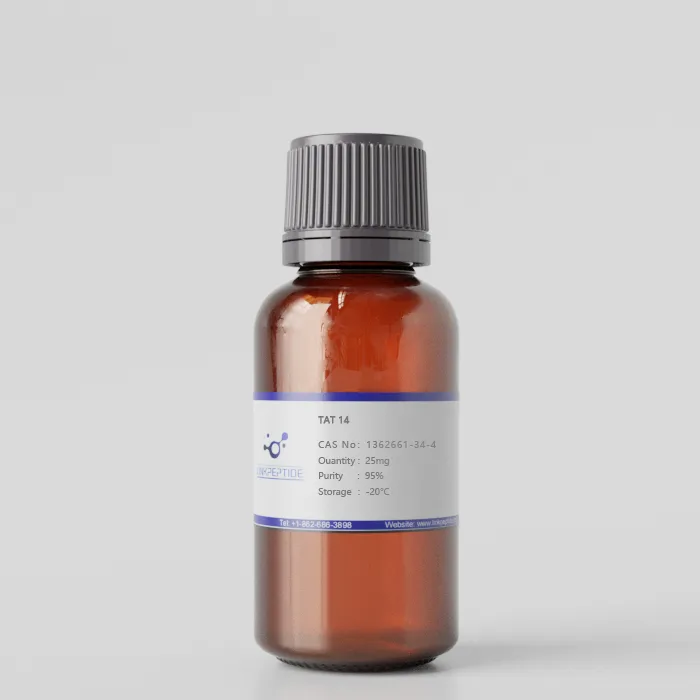
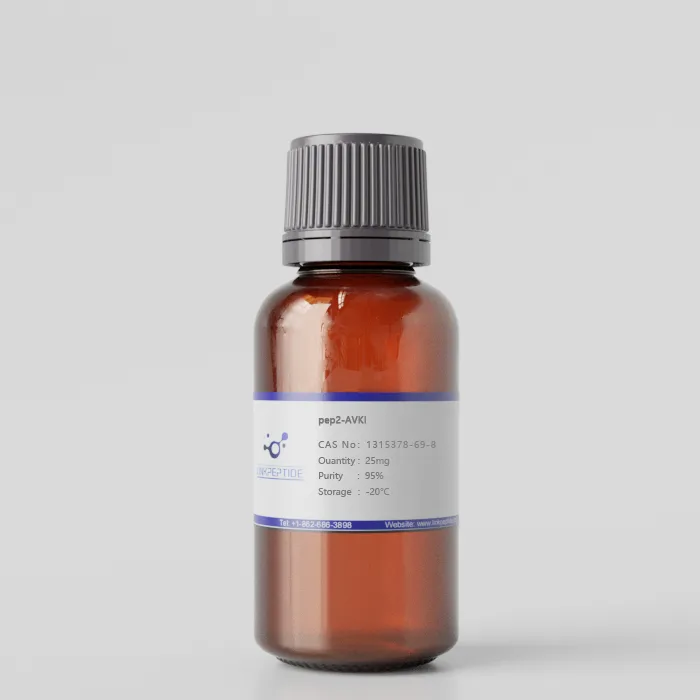
Product Name:TAT 14
CAS No:1362661-34-4
Purity:95%
Molar Mass:3173.6
Chemical Formula:C137H230N48O39
Storage:Store at -20 degrees Celsius
Sequence:YGRKKRRQRRRLQLDEETGEFLPIQ
Target:Nrf2 activator
Application:
TAT 14, as an Nrf2 activator, plays a role in modulating the nuclear factor erythroid 2?Crelated factor 2 (Nrf2) pathway, which is crucial for cellular defense against oxidative stress. Activating Nrf2 promotes the expression of antioxidant and cytoprotective genes, contributing to reduced cellular damage from reactive oxygen species. In this context, TAT 14 may be involved in therapeutic strategies aimed at enhancing the body??s natural antioxidant defenses, potentially providing benefits in conditions linked to oxidative stress, such as neurodegenerative diseases, inflammation, and cancer.
Current Research:
TAT 14 (CAS: 1362661-34-4) is a 14-amino-acid peptide that functions as an activator of nuclear factor erythroid 2–related factor 2 (Nrf2), exhibiting notable anti-inflammatory properties. It achieves this by disrupting the interaction between Nrf2 and its inhibitor, Kelch-like ECH-associated protein 1 (Keap1), thereby promoting Nrf2 stabilization and activity.
Mechanism of Action
TAT 14 comprises a sequence that enables it to bind to the Nrf2 binding site on Keap1, effectively preventing Keap1 from targeting Nrf2 for degradation. This inhibition leads to an increase in Nrf2 protein levels without altering Nrf2 mRNA expression. The stabilized Nrf2 translocates to the nucleus, where it binds to antioxidant response elements (ARE) in the DNA, initiating the transcription of genes involved in antioxidant defense and anti-inflammatory responses.
Biological Activity
By activating the Nrf2 pathway, TAT 14 upregulates the expression of downstream genes, including heme oxygenase-1 (HO-1), a critical enzyme in cellular defense against oxidative stress. Additionally, TAT 14 suppresses lipopolysaccharide (LPS)-induced tumor necrosis factor-alpha (TNF-α) expression in THP-1 cells, demonstrating its anti-inflammatory capabilities.
Research Applications
TAT 14 serves as a valuable tool in research focused on oxidative stress, inflammation, and related pathologies. Its ability to modulate the Nrf2/Keap1 interaction makes it instrumental in studies exploring therapeutic strategies for conditions such as neurodegenerative diseases, cardiovascular disorders, and cancer, where oxidative stress and inflammation play pivotal roles.
Reference:
Get a Quote
 LinkPeptide