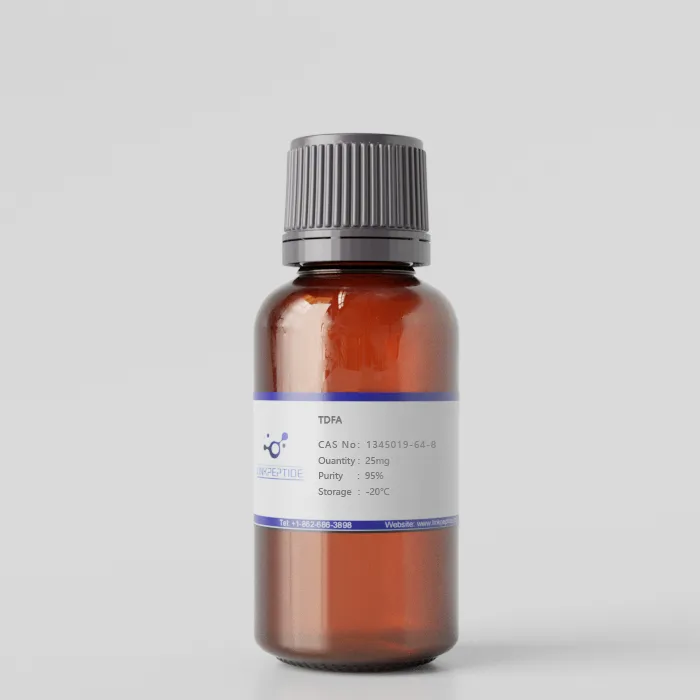
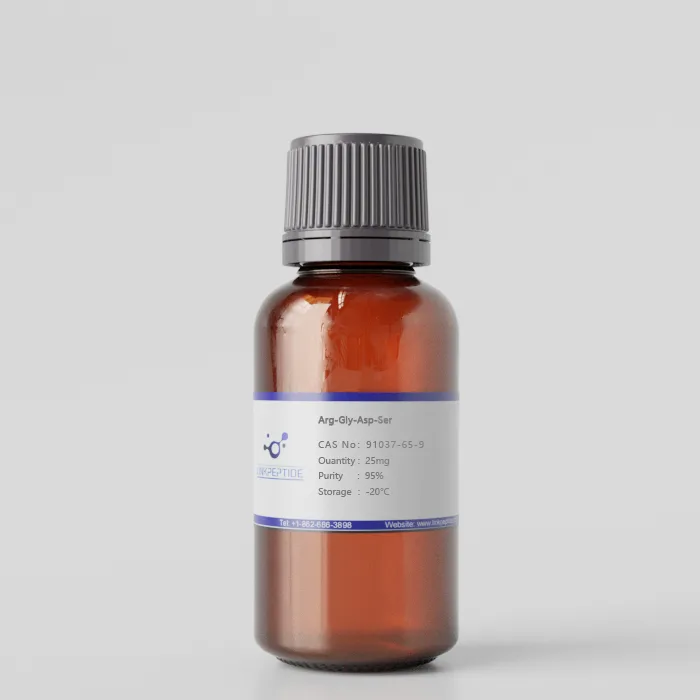
Product Name:TDFA
CAS No:1345019-64-8
Purity:95%
Molar Mass:448.45
Chemical Formula:C17H29FN6O7
Storage:Store at -20 degrees Celsius
Sequence:Ac-TD-X
Target:PAD4
Application:TDFA is related to the enzyme peptidylarginine deiminase 4 (PAD4), which is involved in the post-translational modification of proteins through the process of citrullination, converting arginine residues into citrulline. PAD4 plays a crucial role in gene regulation, immune responses, and the formation of neutrophil extracellular traps (NETs) during inflammation. Inhibitors like TDFA are important in studying the role of PAD4 in autoimmune diseases, such as rheumatoid arthritis, and in cancer. By targeting PAD4, TDFA can help researchers explore therapeutic strategies aimed at reducing abnormal citrullination and its pathological consequences.
Current Research:
TDFA, also known as Thr-Asp-F-amidine, is a potent and selective inhibitor of protein arginine deiminase 4 (PAD4), an enzyme implicated in various physiological and pathological processes, including autoimmune disorders. The compound exhibits an IC?? of 2.3 ??M for PAD4, demonstrating significant selectivity over other PAD isoforms, with IC?? values of 8.5 ??M for PAD1, 26 ??M for PAD3, and 71 ??M for PAD2.
Structural Characteristics
TDFA is a modified tripeptide with the sequence Ac-Thr-Asp-Orn, where the ornithine residue is substituted with a 2-fluoro-1-iminoethyl group, forming a haloacetamidine moiety. This structural modification enhances its inhibitory activity and selectivity towards PAD4.
Mechanism of Action
The haloacetamidine group in TDFA covalently modifies the active site cysteine residue of PAD4, leading to irreversible inhibition of the enzyme. This covalent interaction effectively blocks the catalytic activity of PAD4, preventing the conversion of arginine residues into citrulline, a post-translational modification involved in gene regulation and immune responses.
Biological Activity
TDFA has been shown to inhibit PAD4 activity in cellular models, making it a valuable tool for studying the enzyme's role in various biological processes. Its high selectivity and potency allow for precise modulation of PAD4 activity without significantly affecting other PAD isoforms.
Potential Therapeutic Applications
Given the involvement of PAD4 in autoimmune diseases, such as rheumatoid arthritis, TDFA serves as a lead compound for developing therapeutic agents targeting PAD4. By inhibiting PAD4 activity, TDFA and its derivatives may reduce the aberrant citrullination associated with autoimmune pathogenesis, offering a novel approach for treatment.
Conclusion
TDFA is a potent and selective PAD4 inhibitor with significant potential in research and therapeutic development. Its ability to irreversibly inhibit PAD4 provides a valuable tool for elucidating the enzyme's functions and exploring new treatments for diseases linked to dysregulated PAD4 activity.
Reference:
Get a Quote
 LinkPeptide