[Expand product categories]

Fluorogenic Substrates

Fluorogenic Substrates for Sensitive Enzyme Detection and Real-Time Activity Assays


Fluorogenic substrates are specialized peptide-based tools designed to generate a fluorescent signal upon enzymatic cleavage or activation. These substrates are widely used in biochemical assays, molecular biology, and drug discovery for highly sensitive detection of enzyme activity in real time. At Linkpeptide, we offer a comprehensive range of fluorogenic peptide substrates optimized for use in protease assays, kinase/phosphatase studies, and high-throughput screening platforms. Our fluorogenic substrates are engineered for high sensitivity, low background, and reproducible performance, enabling accurate measurement of enzymatic processes across diverse research applications.
Default Ranking Price By Date
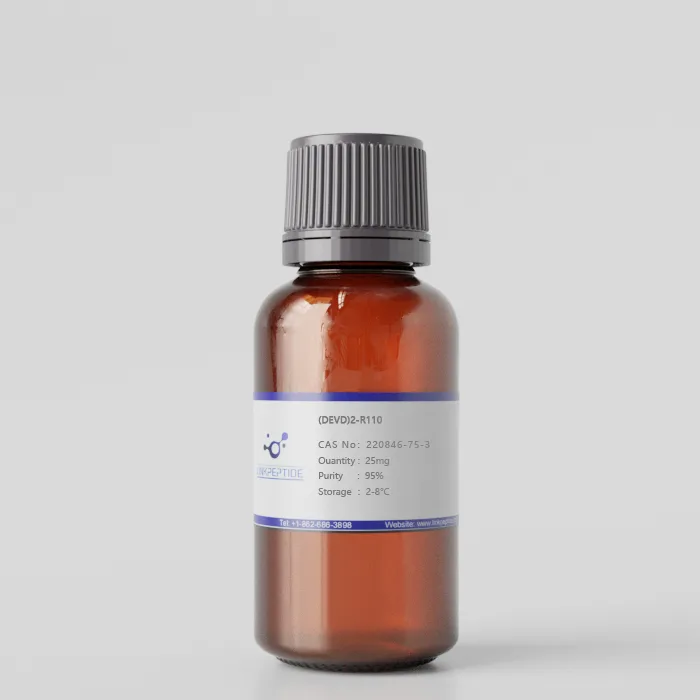
(DEVD)2-R110

(DEVD)2-R110

$2,995.00
Add Inquiry
Ac-IEPD-AFC

Ac-IEPD-AFC

Add Inquiry
Mca-YVADAPK(Dnp)

Mca-YVADAPK(Dnp)

$2,485.00
Add Inquiry

What Are Fluorogenic Substrates?

Fluorogenic substrates are peptides conjugated with fluorescent groups that remain non-fluorescent or weakly fluorescent until activated by a specific biological event—typically enzymatic cleavage. Upon cleavage, the fluorophore is released or separated from a quencher, resulting in a measurable fluorescence signal. These substrates are designed to mimic natural enzyme targets while incorporating detection elements for real-time monitoring. Key characteristics include:
  1. Fluorescence activation upon enzymatic reaction
  2. High sensitivity and low detection limits
  3. Real-time monitoring capability
  4. Compatibility with fluorescence-based detection systems
Fluorogenic substrates are essential for studying enzyme kinetics, activity, and inhibition.

Key Types of Fluorogenic Substrates

This category includes several widely used fluorogenic labeling strategies :

AMC / AFC-Labeled Substrates

AMC (7-amino-4-methylcoumarin) and AFC (7-amino-4-trifluoromethyl coumarin) are commonly used fluorophores in protease substrates. Key features:
  1. Strong fluorescence upon cleavage
  2. Suitable for a wide range of proteases
  3. High sensitivity and simplicity
Applications:
  1. Caspase activity assays
  2. General protease screening
  3. Enzyme kinetics studies

FRET-Based Substrates

FRET (Fluorescence Resonance Energy Transfer) substrates contain both a donor fluorophore and an acceptor (quencher or second fluorophore). Fluorescence changes occur when the peptide is cleaved. Key features:
  1. Real-time monitoring of enzymatic activity
  2. High specificity and sensitivity
  3. Suitable for complex biological systems
Applications:
  1. Protease activity assays
  2. Signal pathway studies
  3. High-throughput screening

Quencher-Fluorophore Substrates

These substrates combine a fluorophore and a quencher in close proximity. Cleavage separates them, restoring fluorescence. Key features:
  1. Low background signal
  2. High signal-to-noise ratio
  3. Precise detection of enzymatic events
Applications:
  1. Diagnostic assays
  2. Enzyme inhibition studies
  3. Biosensor development

Mechanism of Action in Fluorescent Detection

Fluorogenic substrates operate through fluorescence activation mechanisms: Enzymatic Cleavage Activation The target enzyme recognizes and cleaves the peptide sequence, triggering fluorescence. Fluorophore Release or Separation Cleavage either releases the fluorophore or separates it from a quencher, resulting in increased fluorescence intensity. Real-Time Signal Generation Fluorescence can be continuously monitored, allowing dynamic tracking of enzyme activity. Quantitative Analysis The rate of fluorescence increase correlates with enzyme activity, enabling kinetic and quantitative measurements.

Applications in Research and Drug Discovery

Fluorogenic substrates are widely used across multiple scientific fields: Protease Activity Assays Measure enzyme activity in apoptosis, cancer, and infectious disease research. Drug Discovery and Screening Identify inhibitors or modulators of enzyme activity in high-throughput assays. Signal Transduction Research Analyze enzyme-driven signaling pathways in cells. Diagnostic and Biosensor Development Used in sensitive detection platforms for disease biomarkers. Live-Cell and In Vivo Studies Enable real-time monitoring of enzyme activity in biological systems.

Advantages of Fluorogenic Substrates

Compared to traditional assay methods:
  1. High sensitivity and low detection limits
  2. Real-time monitoring capability
  3. Low background signal (especially quencher systems)
  4. Non-radioactive and safe detection
  5. Compatible with high-throughput screening platforms
These advantages make fluorogenic substrates indispensable tools in modern biochemical research.

Why Choose Linkpeptide Fluorogenic Substrates

  1. High purity peptides with optimized labeling
  2. Strong fluorescence performance and low background
  3. Consistent batch quality for reproducible results
  4. Wide selection for different enzyme classes
  5. Custom synthesis tailored to specific assay needs

Custom Fluorogenic Substrate Services

At Linkpeptide, we provide advanced customization options:
  1. Selection of fluorophores (AMC, AFC, FRET pairs, etc.)
  2. Sequence optimization for enzyme specificity
  3. Quencher–fluorophore design for improved sensitivity
  4. Development of assay-ready substrates
  5. Scale-up synthesis for screening and industrial applications

FAQ

What are fluorogenic substrates used for?

They are used to detect enzyme activity through fluorescence generation upon substrate cleavage.

What is the difference between fluorogenic and chromogenic substrates?

Fluorogenic substrates produce fluorescence, while chromogenic substrates generate a color change.

Why are fluorogenic substrates highly sensitive?

They produce strong signals with low background, allowing detection of low enzyme activity.

Can fluorogenic substrates be used in real-time assays?

Yes, they are ideal for continuous monitoring of enzymatic reactions.

Does Linkpeptide offer custom fluorogenic substrates?

Yes, we provide tailored design and synthesis for specific enzymes and applications.
Add InquiryUp to 12 can be added

No products in the cart.