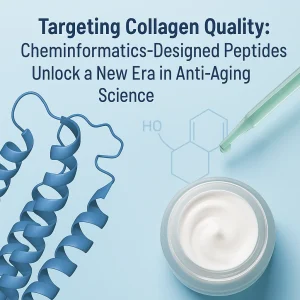
• The Next Big Leap in Skincare? Peptides with a Purpose

    Abstract The global skincare market is entering a new era defined by scientific innovation and consumer demand for efficacy. Among the most promising breakthroughs are peptides, biomimetic molecules that deliver regenerative benefits by stimulating collagen, repairing the skin barrier, and supporting a balanced microbiome. Unlike traditional actives, peptides work in harmony with the body’s natural […]

  • From Wrinkles to Radiance: How Bioactive Peptides Renew Your Skin

    Abstract Aging skin is one of the most common concerns among customers today, with fine lines, loss of firmness, and uneven tone often linked to declining collagen and environmental stress. Modern science has introduced a powerful solution: bioactive oligopeptides. These tiny chains of amino acids penetrate deeply into the skin, signaling cells to regenerate, repair, […]

  • Beyond the Blue: How Methylene Blue Shapes Medicine and the Environment

    Abstract Methylene blue (MB) is a compound that has journeyed far beyond its origins as a textile dye. Today, it plays a pivotal role in medicine, industry, and environmental science, thanks to its unique chemical properties. In healthcare, methylene blue serves as a treatment for methemoglobinemia, a diagnostic tool in surgery, and a subject of […]

  • Cosmetic Peptides Explained: Why They Matter and What’s Holding Them Back

    Abstract Cosmetic peptides are emerging as some of the most promising ingredients in modern skincare, celebrated for their biocompatibility, safety, and ability to target multiple aspects of skin health. From stimulating collagen production and delivering vital minerals to relaxing wrinkles and protecting against protein degradation, peptides offer unparalleled versatility. However, their path to commercialization is […]

  • Science-Backed Skincare: Peptides, Biotics, and Marine Biopolymers Redefining Cosmeceuticals

    Abstract Cosmeceuticals are transforming the skincare industry by bridging the gap between cosmetics and pharmaceuticals. Unlike traditional beauty products that focus only on appearance, cosmeceuticals incorporate bioactive ingredients that interact with skin biology to deliver measurable benefits. This article explores three leading classes of cosmeceutical innovations: peptides, biotics, and marine biopolymers. Peptides act as precise […]

  • Beyond Clean Beauty: Harnessing Peptides, Probiotics, Antioxidants, and Plant Power for Healthier Skin

    Abstract The skincare industry is entering a new chapter where consumers demand products that are not only effective but also safe, sustainable, and backed by science. This shift has placed four natural ingredient groups—plant extracts, peptides, antioxidants, and probiotics—at the center of innovation. Plant extracts deliver time-tested benefits like soothing, brightening, and healing. Peptides use […]

  • From Lab to Luxury: The Rise of Peptides in Anti-Aging and Skin Health

    Abstract Peptides have emerged as one of the most exciting frontiers in modern skincare. Originally developed as powerful tools in medicine, these short chains of amino acids are now redefining beauty by offering precise, science-backed solutions to common skin concerns. From their early role in life-saving therapies like insulin to their current presence in creams […]

  • Latex-Derived Peptides and Enzymes: Nature’s Answer to Antibiotic Resistance

    Abstract The rapid rise of antimicrobial resistance has intensified the global search for alternatives to conventional antibiotics. Among the most promising candidates are antimicrobial peptides (AMPs), naturally occurring molecules with broad-spectrum activity and unique mechanisms that limit resistance development. Recent research highlights latex from medicinal plants as a rich but underexplored reservoir of AMPs, enzymes, […]

  • Next-Generation PROTACs: Peptide Strategies for Advanced Therapeutics

    Abstract Proteolysis-targeting chimeras (PROTACs) have emerged as a transformative modality in drug discovery by leveraging the ubiquitin–proteasome system to selectively degrade disease-associated proteins. While small-molecule PROTACs have demonstrated success, their reliance on well-defined ligandable pockets leaves many clinically relevant proteins beyond reach. Peptide-based PROTACs (p-PROTACs) address this limitation by recognizing large protein–protein interaction (PPI) surfaces, […]

  • Smarter Drug Design: How Artificial Intelligence is Unlocking the Potential of PDCs

    Abstract Peptide–drug conjugates (PDCs) are emerging as powerful tools in precision medicine, designed to deliver potent therapies directly to diseased tissues while sparing healthy cells. Unlike antibody–drug conjugates (ADCs), PDCs use small, flexible peptides as targeting agents, offering advantages such as deeper tissue penetration, lower immunogenicity, and reduced production costs. However, their development has lagged […]

No products in the cart.