[Expand product categories]

Antimicrobial Peptides

Broad-Spectrum Effectors of Host Defense and Immune Modulation

Overview

Antimicrobial peptides (AMPs) are a diverse class of bioactive molecules that serve as essential components of the innate immune system. These peptides provide rapid, first-line defense against a wide range of pathogens, including bacteria, fungi, viruses, and parasites. In addition to their direct antimicrobial activity, AMPs also play important roles in modulating immune responses and maintaining host–pathogen balance. Due to their unique mechanisms of action and reduced susceptibility to resistance compared to traditional antibiotics, antimicrobial peptides have become increasingly important in infection biology, immunology, and therapeutic research.
Default Ranking Price By Date
Bacitracin A

Bacitracin A

Add Inquiry
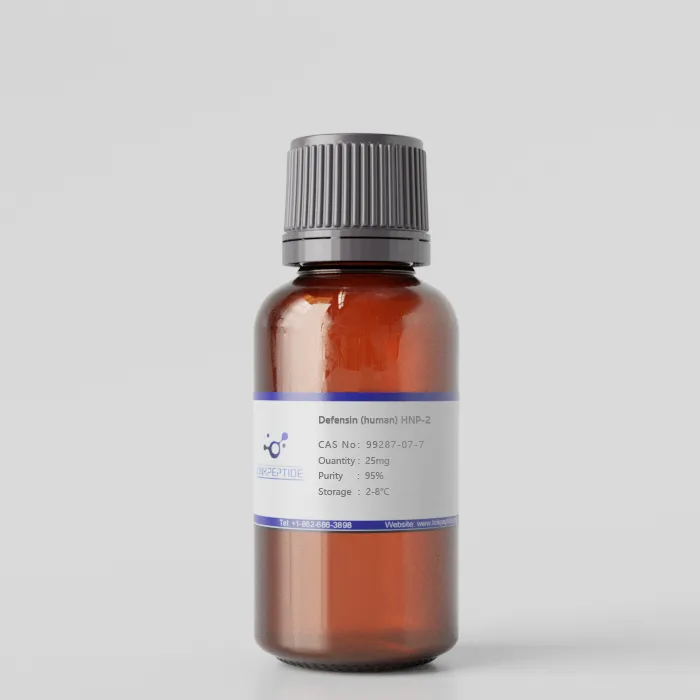
Defensin (human) HNP-2

Defensin (human) HNP-2

$4,885.00
Add Inquiry
Iseganan

Iseganan

$488.00
Add Inquiry
Lauryl-LF 11

Lauryl-LF 11

Add Inquiry
LF 11

LF 11

Add Inquiry
LL-37

LL-37

Add Inquiry
Murepavadin

Murepavadin

$480.00
Add Inquiry
Omiganan

Omiganan

$258.00
Add Inquiry
Paracelsin

Paracelsin

Add Inquiry
PBP 10

PBP 10

Add Inquiry
Peceleganan

Peceleganan

$288.00
Add Inquiry
Pexiganan

Pexiganan

$238.00
Add Inquiry

Biological Function & Mechanisms

Antimicrobial peptides exert their effects through multiple complementary mechanisms, making them highly effective in complex biological environments:
  • Disruption of microbial cell membranes, leading to rapid lysis and cell death
  • Formation of pores or destabilization of lipid bilayers in pathogens
  • Interaction with intracellular targets, interfering with DNA, RNA, or protein synthesis
  • Neutralization of endotoxins such as lipopolysaccharides (LPS)
  • Modulation of host immune signaling, including cytokine production and immune cell recruitment
Beyond direct antimicrobial effects, many AMPs regulate immune pathways such as NF-κB signaling, helping to balance pro-inflammatory and anti-inflammatory responses.

Research Context & Significance

Antimicrobial peptides have attracted significant attention due to the global rise in antimicrobial resistance (AMR). Their ability to target pathogens through physical membrane disruption rather than single molecular targets reduces the likelihood of resistance development. In research, AMPs are widely used in:
  • Host–pathogen interaction studies, to understand mechanisms of microbial invasion and immune defense
  • Inflammation research, where AMPs act as immunomodulators
  • Drug discovery programs, focused on developing next-generation anti-infective agents
  • Microbiome studies, examining interactions between host defense peptides and microbial communities
Their dual role as both antimicrobial agents and immune regulators positions them at the intersection of immunology and infectious disease research.

Key Subcategories

Defensins Cysteine-rich peptides with broad-spectrum antimicrobial activity and roles in immune signaling Cathelicidins Peptides such as LL-37 that combine antimicrobial activity with immunomodulatory functions Synthetic Antimicrobial Peptides Engineered peptides designed for improved stability, selectivity, and potency Host Defense Peptide Analogs Modified peptides optimized for mechanistic studies and therapeutic exploration

Applications

Infectious Disease Research Studying antimicrobial mechanisms and resistance pathways in bacteria, fungi, and viruses Innate Immunity Studies Exploring endogenous defense systems and peptide-mediated immune responses Inflammation & Immunology Research Investigating cytokine regulation and immune signaling interactions Drug Discovery & Development Screening and optimizing peptide-based antimicrobial and anti-infective agents Biomaterials & Surface Coating Research Incorporating AMPs into materials to prevent microbial contamination and biofilm formation

Representative Peptides

Commonly studied antimicrobial peptides include:
  • LL-37 – a human cathelicidin with antimicrobial and immunomodulatory functions
  • Human β-defensins (hBD-1, hBD-2, hBD-3) – key components of epithelial defense
  • Magainin peptides – amphibian-derived peptides widely used in membrane studies
  • Melittin-derived peptides – used to study membrane disruption and immune modulation
These peptides are frequently used as model systems for understanding antimicrobial mechanisms and developing new therapeutic strategies.

Why Choose LinkPeptide

  • Extensive portfolio of natural and synthetic antimicrobial peptides
  • High reproducibility for microbiological and immunological assays
  • Custom peptide design for structure–activity relationship studies
  • Reliable analytical validation for consistent experimental performance

Related Categories

Immunoregulatory Peptides → for broader immune modulation and cytokine signaling Infection Disease Research Peptides → for pathogen-targeted research applications Inflammation-Modulating Peptides → for studying immune and inflammatory pathways Membrane-Active Peptides → for peptide–lipid interaction and mechanism studies Peptide Inhibitors → for targeted suppression of microbial or host signaling pathways
Add InquiryUp to 12 can be added

No products in the cart.